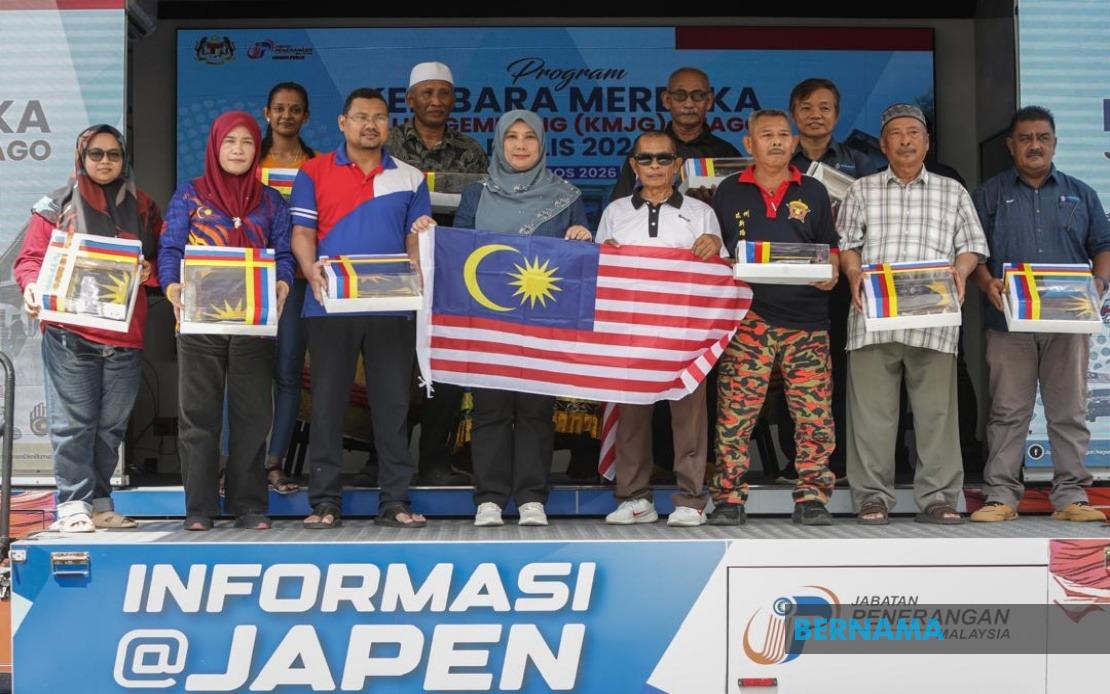
Perlis has launched an expanded push to deepen patriotic sentiment among residents through the 1 House, 1 Jalur Gemilang initiative, a coordinated effort designed to encourage the widespread display of the Malaysian flag ahead of next year's National Day and Malaysia Day celebrations. The campaign represents a strategic attempt to embed symbols of national unity into everyday community life, moving beyond ceremonial gestures to create sustained civic engagement. State Information director Aidatul Shima Che Hassan outlined the multipronged approach during the official launch of a mobile convoy programme at Kampung Pauh Setia in Arau, signalling the state's commitment to building momentum for the 2026 festivities well in advance.
The strategic backbone of this campaign rests on activating all 45 MADANI Communities distributed throughout Perlis, leveraging existing neighbourhood networks to organise nation-building activities at the grassroots level. By channelling the campaign through these community structures rather than relying solely on top-down government messaging, organisers aim to foster organic participation and authentic patriotic expression. This decentralised approach reflects broader thinking about how to make national symbols resonate beyond formal government channels, embedding the Jalur Gemilang into the visual and cultural fabric of ordinary residential areas and business districts.
Hassan emphasised the symbolic importance of proper flag maintenance and display, calling on citizens to replace worn or damaged flags with new ones rather than allowing deteriorated standards to undermine the campaign's message. This attention to the condition of national symbols speaks to a broader concern about how patriotism is visibly expressed in public spaces. The state information department has already set an example by installing flags throughout the Tun Haji Abdul Razak Building in Kangar, the state administrative headquarters, demonstrating institutional commitment to the initiative.
Median coverage plays a crucial supporting role in amplifying the campaign's reach. Perlis plans to leverage PERLISfm radio and the state information department's social media channels to continuously promote the message, ensuring that citizens encounter reminders about flag display across multiple platforms. This multimedia approach reflects contemporary communication strategies that recognise how information circulates through both traditional broadcast media and digital networks, particularly important in reaching younger demographics who consume news primarily through social platforms.
The mobile convoy element, branded as Kembara Merdeka Jalur Gemilang X JAPEN Arena Penggerak Komuniti 2026, brings visibility and momentum to the campaign by physically moving through communities. The participating agencies—including the Perlis Federal Development Office, Broadcasting Department, Malaysian Communications and Multimedia Commission office, Pos Malaysia, and Civil Defence Force—represent coordination across government bodies that typically operate in separate spheres. This inter-agency cooperation demonstrates that the patriotism campaign extends beyond information and cultural dimensions to involve organisations responsible for infrastructure, communications, and emergency services.
Perlis holds the distinction of being the first state to formally launch the national convoy programme this year, positioning itself as a leader in preliminary preparations for the 2026 celebrations. This early start provides neighbouring states with a template for their own campaigns while allowing Perlis to refine its approach based on community feedback and participation levels. The significance of launching these festivities so far in advance suggests that organisers view patriotic campaigns as requiring sustained effort rather than concentrated activity immediately before national holidays.
The broader national context for this state-level initiative stems from Prime Minister Datuk Seri Anwar Ibrahim's July 19 launch of the National Month and Fly the Jalur Gemilang 2026 campaign in Perak. Anwar's unveiling of the overarching campaign, themed Malaysia MADANI: Kesejahteraan Dinikmati (Malaysia MADANI: Shared Prosperity), provided the framework within which state-level efforts like Perlis's campaign operate. This thematic emphasis on shared prosperity suggests that the 2026 celebrations are intended to connect national symbols with economic messaging about inclusive development and citizen welfare.
The choice to emphasise flag display in homes, office buildings, government premises, and vehicles reflects a deliberate strategy to saturate the physical environment with national symbols. When citizens see flags displayed by their neighbours, in business districts, and on passing vehicles, the cumulative effect creates a visual ecosystem of patriotism that normalises national pride as an everyday expression rather than something confined to formal ceremonies. Hassan's explicit call for citizens to display flags in these specific locations demonstrates how the campaign seeks to shift patriotic practice from occasional to habitual.
For Malaysia's Northeast region, this Perlis initiative carries implications for how other states might structure their own patriotism campaigns. The integration of community groups, media platforms, mobile convoys, and multi-agency coordination offers a replicable model that smaller states with limited budgets can adapt. Additionally, the early timeline signals to businesses and community organisations that 2026 will be marked by sustained patriotic campaigns, allowing them to plan their own participation or sponsorship accordingly.
The partnership with the Royal Malaysia Police provides crucial logistical support for the mobile convoy, ensuring safe passage through communities and potentially adding an official presence that underscores the campaign's legitimacy. This police involvement, while primarily facilitative, also demonstrates how security and civic engagement infrastructure intersect in executing national campaigns. The coordination between these typically distinct government functions shows how patriotism campaigns mobilise multiple institutional resources simultaneously.
Looking toward 2026, the success of this early-stage campaign will likely depend on sustained community engagement beyond the initial launches and convoy activities. The challenge facing organisers lies in maintaining momentum across the next 18 months without allowing the campaign to become repetitive or perceived as obligatory. The emphasis on community-led programmes rather than government directives suggests awareness that authentic patriotism cannot be imposed but must emerge from genuine citizen participation.
This Perlis campaign ultimately reflects evolving approaches to national pride and unity in contemporary Malaysia. Rather than relying solely on top-down patriotic messaging or ceremonial national holidays, the 1 House, 1 Jalur Gemilang initiative attempts to distribute responsibility for patriotic expression across society, positioning ordinary citizens as custodians of national symbols. By making flag display a community-oriented activity supported by government resources and media coverage, the campaign seeks to transform patriotism from a state-mandated obligation into a locally-rooted expression of collective identity.

