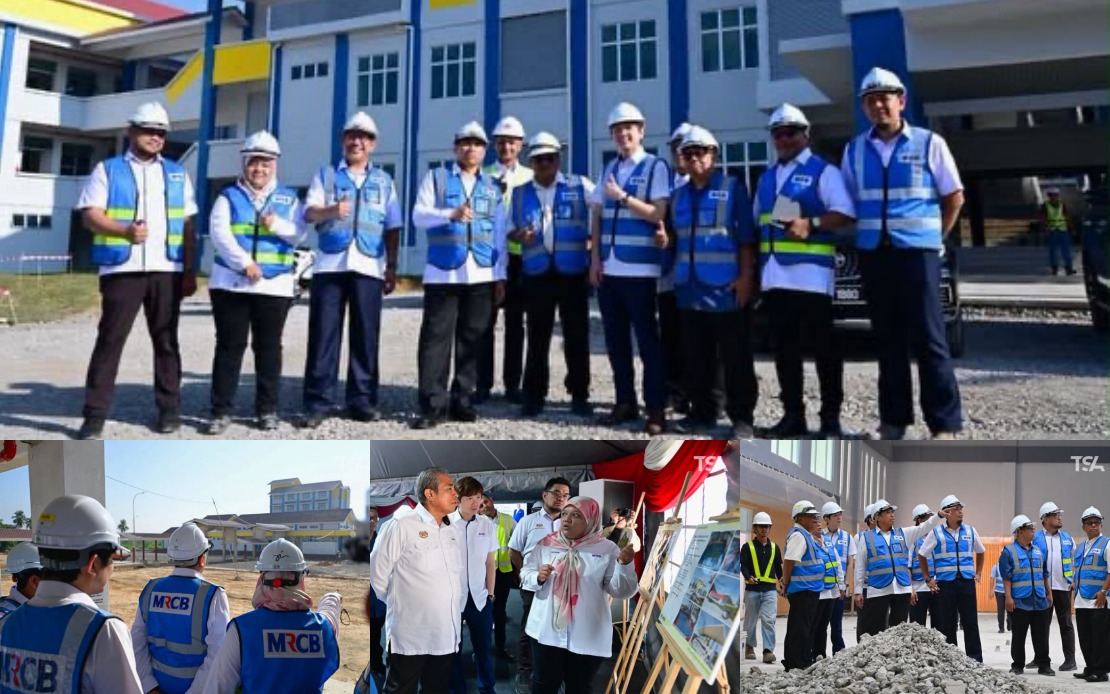
The Perlis Malaysia Sports School, which has languished incomplete for over a decade at Bukit Chabang in Padang Besar, is expected to finally open its doors in January 2027 if current construction momentum persists. Chief Secretary to the Government Tan Sri Shamsul Azri Abu Bakar announced the revised timeline following a site inspection, expressing confidence that the first phase of development is tracking appropriately with progress now standing between 85 and 90 percent completion.
The project's resurrection marks a turning point for an initiative that has consumed resources and generated frustration since its abandonment in 2013. Throughout the intervening years, the incomplete facility stood as a visible emblem of infrastructure delays that have periodically plagued Malaysia's sports development agenda. Shamsul Azri's statement that critical obstacles have been surmounted—particularly chronic labour shortages and persistent contractor difficulties that previously derailed progress—suggests that administrative solutions rather than financial constraints have finally been implemented effectively.
The acceleration of this project gained momentum after Prime Minister Datuk Seri Anwar Ibrahim issued a direct order last April directing that responsibility be transferred to a government-owned enterprise with demonstrable capacity to deliver results. This intervention reflects a broader governmental emphasis on achieving tangible outcomes through institutional reorganisation rather than policy adjustments alone. The shift in management oversight appears to have produced measurable improvements in on-site productivity and coordination, translating departmental oversight into concrete construction progress.
The venue's eventual completion holds significance for northern Malaysian sports development, as the facility will provide enhanced training infrastructure for athletes across multiple disciplines. For Perlis in particular, the sports school represents an opportunity to cultivate local sporting talent and reduce the current concentration of elite training facilities in the Klang Valley and other established centres. The project also carries broader implications for regional competitiveness, potentially strengthening Malaysia's capacity to develop athletes capable of performing at international competitions.
Parallel to discussing infrastructure advancement, Shamsul Azri used the occasion of the Iltizam 2026 Convention at Universiti Utara Malaysia to highlight governmental efficiency initiatives that underscore the administration's commitment to institutional reform. The Government Service Efficiency Commitment Act 2025, formally gazetted in May and fully operational since December 1, represents a legislative framework intended to dismantle administrative obstacles that typically slow bureaucratic processes. By codifying efficiency standards in law rather than leaving them as administrative guidelines, the government has created enforceable benchmarks for service delivery across public institutions.
The scope of this bureaucratic reform programme has already demonstrated measurable impact. Since the Bureaucratic Red-Tape Reform initiative commenced in 2024, government agencies have successfully completed 439 distinct projects aimed at streamlining processes and reducing compliance burdens. These interventions have generated an estimated RM2.95 billion in compliance cost savings for Malaysian citizens and the business community combined. Such figures, while requiring contextualisation against the scale of total government spending, indicate that systematically targeting procedural inefficiencies can yield meaningful financial returns without requiring proportional increases in government expenditure.
These reform efforts align with Malaysia's broader objective to position itself as an investment destination that balances regulatory oversight with operational efficiency. International investors frequently cite bureaucratic opacity and extended processing timelines as deterrents to expanding operations in the region. By implementing measurable service standards and codifying efficiency expectations, the government seeks to address these long-standing criticisms and demonstrate that Malaysia can deliver predictable, timely administrative outcomes comparable to higher-income economies.
The Public Service Reform Agenda that encompasses these red-tape reduction projects extends beyond mere administrative tidiness. Improved efficiency in government service delivery has direct economic consequences, reducing the hidden tax that regulatory delays impose on business operations and citizen interactions with public institutions. When a business application that previously required three months of navigation through departmental processes can be completed in weeks, the cumulative time and cost savings across thousands of transactions become economically significant.
Shamsul Azri's remarks regarding civil service political engagement demonstrate continued governmental attention to maintaining institutional independence during periods of electoral uncertainty. The administration has reiterated existing prohibitions against public servants participating in partisan political activities, noting that no complaints have surfaced regarding violations. This emphasis appears designed to reinforce professional boundaries within the bureaucracy and maintain public confidence that government services operate according to merit and procedure rather than political patronage considerations.
The convergence of these initiatives—infrastructure completion, administrative reform, and institutional discipline—suggests a coordinated governmental strategy to demonstrate improved capacity and reliability across multiple governance dimensions. For Malaysian observers and investors assessing governmental performance, the Perlis sports school's progress offers tangible evidence that previously intractable projects can move forward when institutional responsibility is clarified and management oversight is properly resourced. The broader efficiency reforms provide supporting documentation that government processes can be measurably improved through legislative and structural intervention rather than rhetorical commitment alone.

