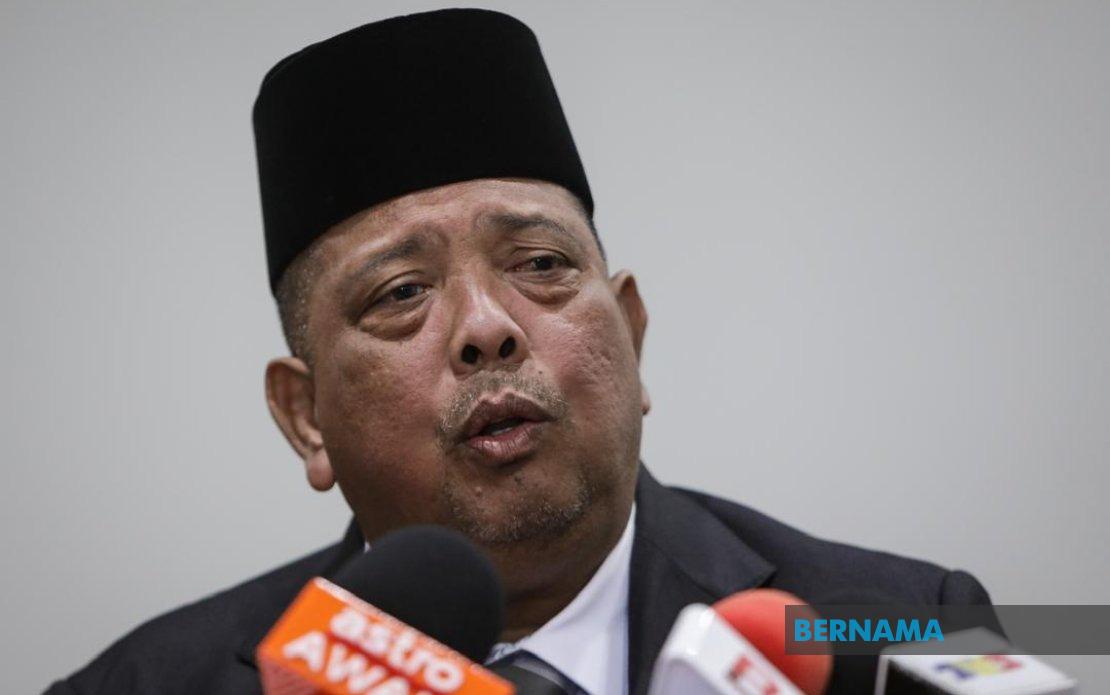
Perlis Menteri Besar Abu Bakar Hamzah has stepped down from the Parti Pribumi Bersatu Malaysia (Bersatu) Supreme Leadership Council, submitting his resignation letter to the party's central leadership last week. The decision reflects a deliberate strategic choice to concentrate his efforts on managing the northern state as it approaches the conclusion of the current legislative assembly term in 2025.
Abu Bakar made the announcement in Kangar during a welcoming ceremony for a delegation from Thailand's Satun province, marking the resumption of cross-border ferry services between Kuala Perlis and Satun. The ferry connection, which had been suspended since the start of the COVID-19 pandemic, symbolises the restoration of regional economic ties and represents a priority project for the state leadership. The timing and venue of his announcement underscore his intent to concentrate on tangible developmental work rather than party-level political engagement.
Despite stepping away from the Supreme Leadership Council, Abu Bakar clarified that he remains the chief of the Perlis Bersatu state branch and continues as the Kangar division chief. This distinction is significant: his move targets the federal-level council specifically, leaving his authority within the state party structure intact. The separation allows him to maintain a presence in grassroots party affairs while freeing himself from the obligations and time commitments of the party's apex decision-making body.
The Menteri Besar articulated his reasoning with candour, explaining that the heavy workload and mounting challenges facing Perlis administration made it impossible to deliver the full commitment expected of Supreme Leadership Council members. With roughly a year remaining before the state legislative assembly term concludes, Abu Bakar emphasised that his priority must be executing the state government's development agenda, particularly in attracting foreign investment and meeting key performance indicators. This timeline creates obvious pressure: demonstrating tangible progress in the final stretch of his administration could significantly influence public perception heading into electoral considerations.
About a month earlier, in June, the Raja of Perlis, Tuanku Syed Sirajuddin Jamalullail, had issued a formal directive during the opening of the state legislative assembly, instructing that Abu Bakar be afforded the necessary operational freedom to lead the state unimpeded through the remainder of the assembly term. This royal backing provides institutional legitimacy to the Menteri Besar's focus on state-level governance. The sultan's decree also signals royal confidence in Abu Bakar's stewardship, which carries weight in a constitutional monarchy like Malaysia where the institution of the Duli Yang Maha Mulia functions as a guardian of good governance.
The resignation comes against a backdrop of evolving dynamics within Bersatu at the federal level. The party, which has served as a linchpin in various coalition arrangements since its formation, continues to navigate shifting political allegiances. Abu Bakar's step back from the Supreme Leadership Council, while maintaining state-level party positions, reflects a pragmatic assessment that individual state leaders may face competing pressures between party obligations and regional governance demands. This tension has become increasingly pronounced as Malaysian politics has fragmented into multiple competing coalitions and alignments.
Abu Bakar also noted that Sena assemblyman and Perlis state executive councillor Datin Marzita Mansor had similarly resigned from Bersatu as a Supreme Leadership Council member, though Bernama could not reach Marzita for confirmation at the time of reporting. If confirmed, this would suggest a coordinated or parallel approach among Perlis leadership to the same strategic priority: concentrating on state administration rather than federal party politics. Such a pattern might indicate a broader realignment within the state government.
Perlis, Malaysia's smallest state by population and area, occupies a distinctive position in the nation's political landscape. Located at the northwestern tip of Peninsular Malaysia and bordering Thailand, it has historically maintained somewhat distinct political dynamics from larger states. The state's relatively compact size and close-knit political community mean that governance decisions carry outsized visibility. The focus on investor attraction and KPI achievement suggests Abu Bakar is conscious of Perlis's need to demonstrate competitive economic development compared to neighbouring states like Kedah.
The ferry service resumption epitomises the type of initiative Abu Bakar appears determined to prioritise during his remaining tenure. Cross-border trade and tourism represent genuine economic drivers for the state, and restoring the Kuala Perlis-Satun connection addresses a practical infrastructure need that directly affects livelihoods in border communities. Such projects, while perhaps less glamorous than major industrial development, resonate with voters and provide measurable evidence of administrative effectiveness.
Abу Bakar's move also reflects a broader pattern observable in Malaysian politics where state-level leaders increasingly assert autonomy from federal party structures. The decentralisation of administrative authority and growing sophistication of state-level governance have empowered chief ministers and menteri besar to operate with greater independence from party headquarters. This shift has both stabilised state governments—by allowing leaders to focus on local issues—and occasionally complicated party cohesion at the federal level.
Looking forward, Abu Bakar's decision sets a precedent within Bersatu's Perlis branch regarding the balance between party obligations and state governance responsibilities. His framing of the resignation as necessitated by time constraints and workload pressures is diplomatic but conveys a clear message: effective state administration cannot be squeezed into the margins of party duties. Whether other state leaders within Bersatu or other coalitions follow a similar path could reshape how the party's state apparatus functions relative to its federal structure.
The Perlis situation also carries implications for Malaysia's broader governance framework. As states assume greater responsibility for economic development and social provision, the question of how political parties should balance state and federal demands becomes increasingly pertinent. Abu Bakar's approach—maintaining party loyalty while ring-fencing administrative focus—offers one model for managing these competing pressures, one that may gain traction among other state leaders facing similar time and resource constraints.

