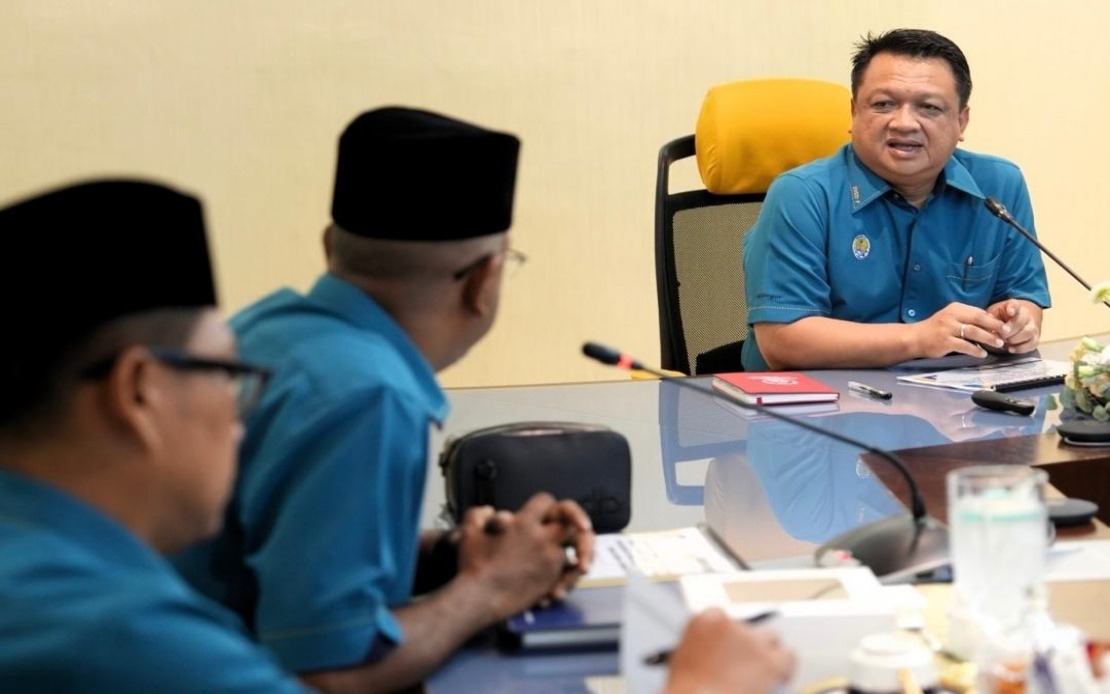
The Raja Muda of Perlis, Tuanku Syed Faizuddin Putra Jamalullail, has put forward an ambitious vision to transform the northern state into a laboratory for testing innovative sustainability practices across Malaysia. Speaking during an official audience at the Arau Royal Gallery, the royal leader suggested that Perlis' compact size and manageable scale present a unique opportunity to pioneer comprehensive environmental policies that could eventually be replicated throughout the nation. This strategic positioning aligns with growing global momentum towards decarbonisation while positioning Malaysia as a proactive player in addressing climate challenges at the subnational level.
The Raja Muda's proposal centres on Perlis becoming a "Green Smart State" through deliberate adoption of renewable energy infrastructure and modernised waste systems. Given the state's geographical and demographic profile, he emphasised that Perlis should aspire to lead Malaysia in transitioning away from conventional energy sources. The focus extends specifically towards harnessing solar power and biomass energy, technologies increasingly viable in tropical Southeast Asian contexts where consistent sunlight and agricultural residues provide abundant feedstock. Should Perlis successfully achieve zero-carbon status as envisioned, the state would not merely address local environmental concerns but also demonstrate Malaysia's credibility in fulfilling international climate commitments under frameworks like the Paris Agreement.
The practical dimension of this vision found expression through the Kangar Municipal Council's presentation of its Green City Action Plan, a comprehensive strategic document developed through collaboration involving Malaysia's Ministry of Economy, the IMT-GT Joint Business Council, international sustainability network ICLEI, and the Asian Development Bank. This multilayered partnership reflects the complexity of modern urban sustainability challenges, which demand expertise spanning economic policy, local governance, international best practices, and development financing. The GCAP's approval by the municipal council in February established a formal roadmap for Perlis' environmental transformation, signalling institutional commitment beyond rhetorical gestures.
The action plan identifies five priority projects designed to catalyse Perlis' transition into a lower-carbon, more resilient economy. Among the most immediately impactful is the installation of solar photovoltaic systems across government facilities, public institutions, and private buildings throughout the state. This widespread solar deployment would simultaneously reduce electricity costs for the state budget, decrease grid strain during peak demand periods, and provide tangible demonstrations of renewable technology viability that could influence private sector investment decisions. Coupled with this energy transition sits the development of a Low Carbon Transport Plan, reflecting recognition that Southeast Asian cities increasingly face congestion and emissions challenges as motorisation rates accelerate.
Transport decarbonisation in Perlis will take shape through two complementary mechanisms: the creation of dedicated Micro-Mobility Zones and the expansion of non-motorised transport infrastructure. These initiatives acknowledge that not all journeys require conventional vehicles, and that walkable, cyclable environments improve public health, reduce air pollution, and enhance urban livability. For Malaysian policymakers observing from other states, Perlis' experimental approach to mobility offers valuable data on whether Southeast Asian cities can successfully reduce vehicular dependence through infrastructure redesign and zone-based planning. The emphasis on practical, ground-level interventions suggests this is not abstract environmental policy but implementation focused on tangible quality-of-life improvements.
Solid waste management constitutes another critical pillar of Perlis' sustainability framework. The proposed Material Recovery Facility with 80-tonne-per-day processing capacity represents a significant upgrade to current waste handling practices, enabling mechanical sorting of recyclables and recovery of valuable materials currently destined for landfills. Malaysia's waste generation rates have climbed substantially as incomes rise, and most states lack adequate infrastructure to move beyond traditional dump-and-cover approaches. Perlis' MRF investment therefore carries implications extending beyond the state's borders, as successful operation could catalyse similar facilities across the region and demonstrate economic viability of circular economy principles to private sector investors throughout Southeast Asia.
Water security features prominently in the sustainability strategy through implementation of comprehensive rainwater harvesting systems across Perlis. Given that Malaysia experiences annual monsoons delivering abundant precipitation, systematic capture and storage of seasonal rainfall provides a natural hedge against dry periods and reduces pressure on conventional water extraction. This approach proves particularly relevant for a state like Perlis that, despite geographic proximity to major water sources, faces infrastructure challenges in equitable distribution. The rainwater strategy exemplifies how sustainability measures often deliver multiple co-benefits: environmental conservation, enhanced water security, reduced infrastructure costs, and improved climate resilience.
Disaster preparedness emerged as an additional priority area, with the Kangar Municipal Council proposing strengthening of the Perlis Integrated Command Centre and development of a comprehensive state disaster management plan. This dimension reflects hardening reality of climate change impacts across Southeast Asia, where rising sea levels, intensified rainfall events, and extended droughts increasingly disrupt livelihoods and economic activity. By integrating disaster preparedness into the broader sustainability framework rather than treating it as a separate concern, Perlis acknowledges that genuinely resilient communities require simultaneous attention to environmental conservation, infrastructure adaptation, and emergency response capacity.
The Green City Action Plan's explicit alignment with Malaysia's national sustainable development goals commitment and greenhouse gas emission reduction targets positions Perlis within wider policy architecture. Malaysia has pledged to reduce emissions intensity by 45 percent by 2030 relative to 2005 levels, a commitment requiring concrete implementation across multiple sectors and jurisdictions. Perlis' pilot status allows testing of policy instruments, financing mechanisms, and governance arrangements that could subsequently inform national-scale deployment. This nested approach—linking local experimentation to national targets—exemplifies how federal systems can leverage subnational diversity to accelerate environmental transition.
For regional observers, Perlis' initiative carries significance that extends beyond Malaysia's borders. Southeast Asia faces accelerating urbanisation, rising energy demand, and intensifying climate pressures, yet many governments still lack comprehensive frameworks for managing the interplay between development and environmental stewardship. A functioning Green Smart State in Perlis could serve as a reference point for policymakers across Thailand, Vietnam, Indonesia, and Philippines contemplating similar transitions. The involvement of international actors like ADB and ICLEI ensures that learning from Perlis experience disseminates beyond Malaysian circuits, potentially influencing development approaches across a broader geography of countries facing parallel sustainability challenges.

