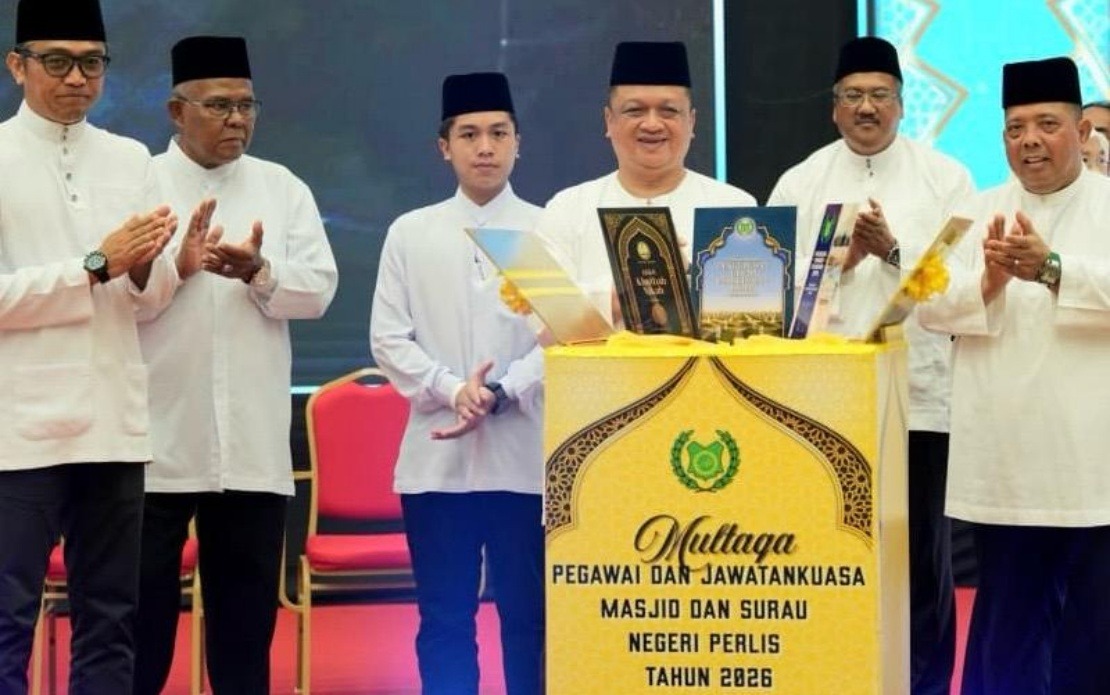
Tuanku Syed Faizuddin Putra Jamalullail, the Raja Muda of Perlis, has delivered a significant call to religious institution leaders across the state, emphasizing that those entrusted with managing mosques and suraus must demonstrate unwavering integrity in their administrative responsibilities. Speaking at the inaugural 2026 Perlis State Mosque and Surau Officers and Committees Multaqa Programme held at Dewan 2020 in Kangar, the royal dignitary underscored the necessity of cultivating disciplined, systematic management practices that command public confidence and reflect Islamic principles.
The programme represents a structured effort to elevate governance standards within Perlis's religious infrastructure at a time when communities increasingly scrutinize how their places of worship are administered. By convening this multaqa—a forum bringing together officers and committee members responsible for mosque and surau operations—state authorities have created a platform for disseminating standardized guidelines and ensuring consistent implementation across all municipalities within the state.
Tuanku Syed Faizuddin Putra stressed that all officials and committee members must familiarize themselves thoroughly with frameworks established by the Perlis Islamic Religious and Malay Customs Council (MAIPs) and the Perlis Islamic Religious Affairs Department (JAIPs). These regulatory bodies provide essential guidance on operational procedures, ensuring that community affairs are conducted efficiently while remaining anchored to both Islamic jurisprudence and applicable state legislation. The emphasis on adherence to established protocols reflects broader concerns about standardizing practices across diverse communities and organizational structures throughout the state.
This year's multaqa programme has been structured around three substantive areas with direct relevance to Muslim community life and spiritual welfare. The first component addresses guidelines for managing Muslim cemeteries—a responsibility often overlooked but deeply significant to families and communities. The second focuses on formal mosque management procedures, establishing best practices for financial stewardship, maintenance, and operational protocols. The third examines regulations governing marriage registration and the role of jurunikah (marriage solemnizers), officials who perform critical functions within Islamic family law administration.
The Raja Muda articulated a vision of religious institutions that transcend their traditional role as places of congregational prayer. In contemporary society, he noted, communities increasingly expect mosques and suraus to function as professional organizations delivering responsive services while maintaining transparent operations and strict ethical standards. This expectation reflects demographic and social changes across Malaysia, where better-educated congregations demand accountability and clarity regarding how donations are managed, facilities are maintained, and organizational decisions are made.
Significantly, this year's iteration of the multaqa expanded its scope to include surau committees alongside mosque officials, a deliberate recognition that these smaller prayer halls serve complementary functions within the religious ecosystem. Suraus often serve neighbourhoods and residential areas where mosques may be geographically distant, providing essential spiritual infrastructure in housing developments, workplaces, and community centers. By coordinating guidance across both institutional types, Perlis authorities aim to create a unified framework that ensures consistent standards regardless of whether a Muslim community gathers in a major mosque or a modest surau.
The expansion of the programme highlights pragmatic governance challenges facing state religious administrations across Malaysia. While mosques typically have well-established committees and professional staff, suraus frequently operate on volunteer basis with less formal infrastructure. Bringing both under a coherent regulatory umbrella requires sensitive management that acknowledges their different operational contexts while establishing common principles around transparency, financial accountability, and service quality.
Tuanku Syed Faizuddin Putra emphasized that the multaqa serves an instrumental purpose beyond mere information dissemination. It functions as an official channel for communicating state-level religious policy direction to frontline administrators who implement these frameworks daily. This direct engagement between senior officials and those managing institutions at community level creates opportunity for clarifying complex guidelines, addressing practical implementation challenges, and building consensus around evolving practices.
The focus on professional management and integrity resonates beyond Perlis's borders, reflecting concerns within Malaysia's broader Islamic institutional framework. States across the peninsula face similar challenges balancing traditional religious governance with modern organizational standards. The emphasis on systematic work culture and adherence to established procedures addresses perennial criticisms regarding variable standards across different mosques and suraus, inconsistent financial practices, and occasionally, allegations of mismanagement.
From a Malaysian governance perspective, this initiative demonstrates how state-level religious authorities can employ structured professional development programmes to elevate institutional standards without imposing heavy-handed oversight. By creating forums for discussion, clarification, and collective learning, Perlis is fostering a culture where compliance with regulations derives from understanding their rationale rather than mere top-down enforcement.
The multaqa programme also reflects understanding that religious institution management increasingly requires specialized knowledge. Cemetery management involves legal registration, environmental health considerations, and dignified maintenance standards. Marriage registration demands precision in documentation and understanding of Islamic family law. Mosque administration encompasses financial management, facility maintenance, community programming, and donor relations. Providing officers and committee members with clear guidelines and opportunities to seek clarification helps ensure these responsibilities are discharged competently.
Looking forward, the success of such programmes may influence approaches adopted by other Malaysian states seeking to standardize and professionalize religious institutional management. As Muslim communities continue urbanizing and diversifying, the expectations for transparent, accountable, professionally-managed religious institutions will likely intensify. Initiatives like Perlis's multaqa offer a model for addressing these expectations while maintaining connection to Islamic principles and respecting the autonomy of community-based religious organizations.

