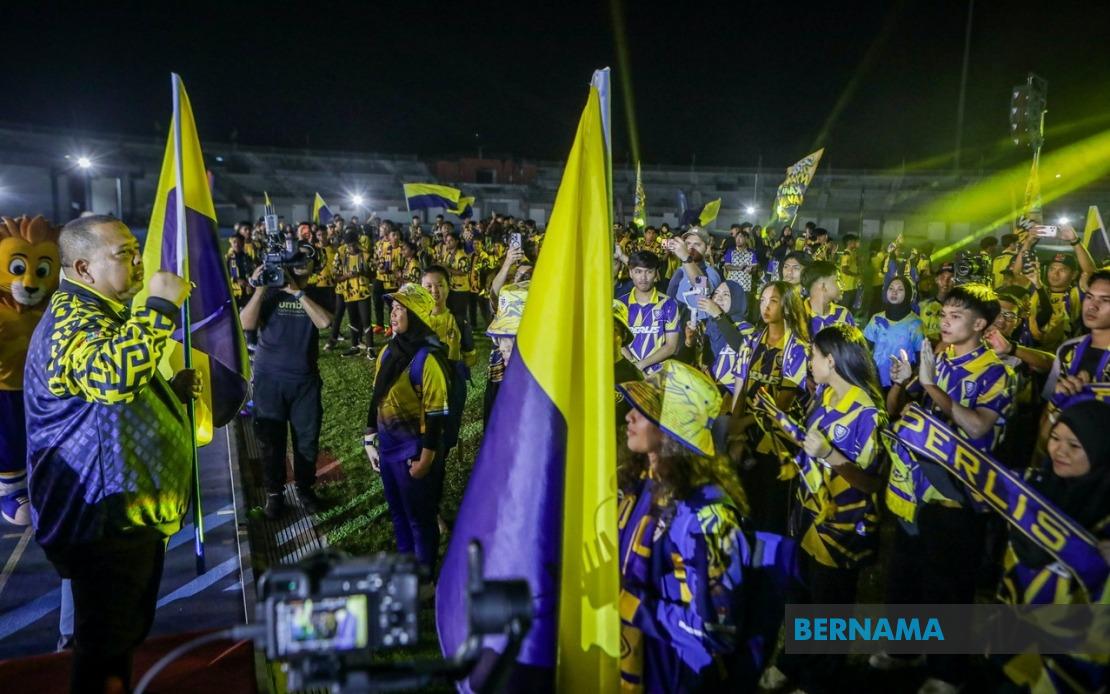
The northern state of Perlis has set a new benchmark for itself at the 2026 Malaysia Games in Selangor, capturing 17 gold medals in what Menteri Besar Abu Bakar Hamzah described as the most successful SUKMA participation in the state's sporting annals. This watershed moment reflects the payoff from years of strategic investment in athletic talent and competitive infrastructure, signalling that Perlis's focused approach to sports development is delivering measurable results at the national level.
The scale of Perlis's accomplishment becomes clearer when viewed against the state's historical participation in SUKMA. Earning 17 gold medals represents a significant leap forward, demonstrating that sustained commitment to nurturing homegrown talent and attracting quality coaching has begun to translate into medals and records. Abu Bakar, speaking after chairing an Exco Meeting in Kangar, framed this achievement not as a isolated success but as validation of the state government's deliberate strategy to strengthen competitive sports across multiple disciplines.
Among the standout performances were record-breaking displays from Perlis athletes competing in shot put, where state representatives surpassed the games' established benchmarks. The weightlifting contingent proved particularly dominant, capturing the overall championship in their event at SUKMA Selangor 2026. These individual triumphs underscore the depth of talent development occurring within Perlis, where certain disciplines have moved from competitive participation to genuine championship-level performance.
The Perlis contingent's overall medal tally of 42 medals—comprising the 17 golds alongside seven silver and 18 bronze medals—places the state among the stronger performing contingents at these national games. This balanced distribution across medal colours suggests a fairly broad base of competitive capability rather than reliance on isolated pockets of excellence. For a state with Perlis's population and resource base, maintaining competitiveness across multiple sports represents a notable administrative and financial commitment.
Abu Bakar outlined the government's vision for sustaining and building on this momentum, emphasizing continued prioritization of talent identification and development programmes. The Menteri Besar stressed that high-performance training initiatives, professional coaching standards, sports science integration, facility development, and athlete welfare provisions would remain central to policy planning. This framework acknowledges that gold medals do not emerge spontaneously but result from systematic approaches to athlete development and institutional support.
The state government is currently finalizing incentive packages for athletes who delivered medals at SUKMA Selangor 2026, with formal recognition ceremonies scheduled to follow the conclusion of Para SUKMA events. This approach demonstrates recognition that athlete rewards serve both as immediate gratification and as signals to emerging competitors about career prospects in sports. Such investment in recognition can prove instrumental in attracting younger generations into competitive training pipelines.
For Malaysian sports observers, Perlis's performance carries broader implications for how smaller states with constrained budgets can nevertheless achieve competitive success at national games. The state's approach suggests that strategic focus on particular disciplines, combined with institutional infrastructure and professional coaching, can yield disproportionate returns relative to expenditure. This model may hold lessons for other states seeking to improve SUKMA standings without astronomical spending.
The achievement also reflects shifting dynamics within Malaysia's regional sports competitions, where traditionally strong performers increasingly face competition from states implementing comprehensive talent development systems. Perlis's emergence as a genuine medal contender, particularly in specific disciplines, suggests a competitive landscape that rewards planning and consistency rather than simply legacy status or population size.
Looking ahead, sustaining this trajectory will require maintaining political commitment and budgetary support beyond the immediate post-SUKMA euphoria. Sports infrastructure, coaching salaries, and athlete stipends demand ongoing allocation of state resources in an environment where competing demands on public finances remain substantial. The question now becomes whether Perlis can institutionalize these gains and avoid the common pattern where SUKMA successes prove difficult to repeat at subsequent editions of the games.

