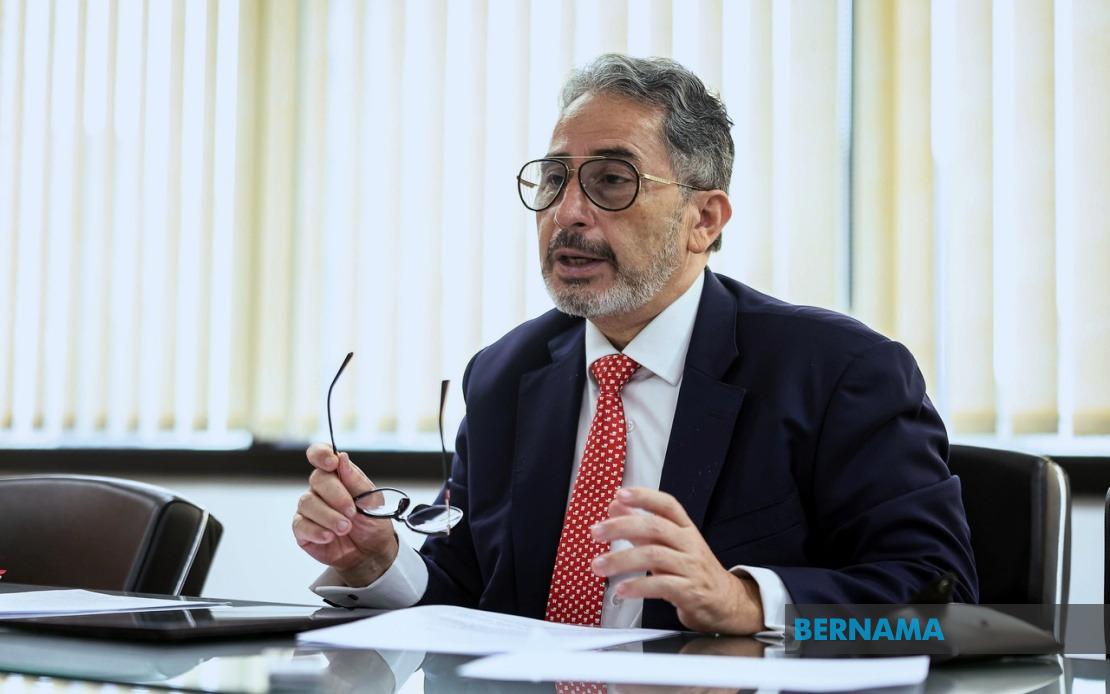
The relationship between Peru and Malaysia has reached a maturation point where both nations are ready to shift from symbolic diplomacy into concrete economic collaboration. This year marks the 40th anniversary of formal ties established in April 1986, a milestone that Peru's Ambassador to Malaysia Ricardo Estanislao Morote Canales says represents not an endpoint but rather a launchpad for substantially deeper engagement. Speaking to journalists this week, the envoy outlined an ambitious agenda that reflects Peru's broader reorientation towards the Asia-Pacific region and Malaysia's own strategic interests in Latin America.
The foundation for this upgraded partnership was laid through sustained political engagement at the highest levels. President Alberto Fujimori's visit to Malaysia in 1996 marked the first presidential-level encounter, establishing a precedent for regular dialogue that has continued through subsequent administrations. That initial visit proved consequential, culminating in Malaysia's crucial support for Peru's entry into the Asia-Pacific Economic Cooperation forum two years later—a diplomatic achievement that expanded Peru's influence within the region's most important economic grouping. Such early backing created enduring goodwill that has withstood the inevitable fluctuations that accompany most bilateral relationships over extended periods.
The trajectory of these ties accelerated noticeably following Prime Minister Datuk Seri Anwar Ibrahim's attendance at the APEC Leaders' Meeting in Peru in 2024. Rather than serving as a ceremonial occasion, this gathering prompted concrete follow-up action that has resulted in a formal Joint Declaration charting the course for bilateral cooperation across multiple domains. The declaration, adopted following the Prime Minister's subsequent official visit to Peru in November, functions as more than symbolic rhetoric—it establishes specific benchmarks for expanding trade relationships, deepening investment flows, and identifying priority sectors where Malaysian and Peruvian capabilities can complement each other.
Among the most significant outcomes of this diplomatic momentum has been the execution of three memoranda of understanding covering halal certification frameworks, agricultural development, and gastronomy-related hospitality ventures. The agricultural protocols have already yielded tangible results, with pilot schemes currently underway to introduce Peruvian chilli and tomato varieties to Malaysian farming communities whilst also exploring cattle crossbreeding initiatives that could enhance livestock productivity. These practical collaborative projects demonstrate that both countries are moving beyond rhetorical commitments to implement strategies that generate measurable benefits for their respective agricultural sectors.
The economic dimension of this partnership has proven remarkably robust, particularly since both nations incorporated the Comprehensive and Progressive Agreement for Trans-Pacific Partnership into their legal frameworks. Peru's accession to this multilateral arrangement took effect in September 2021, whilst Malaysia's implementation came later in November 2022, yet the intervening period has witnessed sustained expansion of bilateral commerce. During 2025 alone, trade volumes reached US$526 million, positioning Peru as Malaysia's ninth-largest trading partner throughout Asia and reflecting the potency of preferential trade arrangements in stimulating commercial exchange.
Peruvian exporters have demonstrated exceptional performance in accessing the Malaysian market, with shipments valued at US$357.15 million during 2025—a remarkable 32.84 percent surge compared with the preceding year. This expansion reflects the growing competitiveness of Peruvian products in Malaysian retail and wholesale channels, extending well beyond traditional commodity categories. Agricultural items increasingly dominate Peru's export basket to Malaysia, with avocados, mangoes, and pomegranates gaining substantial market share as Malaysian consumers develop preferences for premium fruit varieties and alternative protein sources that align with evolving dietary patterns across Southeast Asia.
Malaysian exports flowing in the opposite direction totalled approximately US$168.85 million throughout 2025, consisting predominantly of sophisticated manufactured goods and technology-intensive products that reflect Malaysia's positioning within global supply chains for electronics, automotive components, and industrial machinery. This composition underscores complementarity between the two economies: Peru functions primarily as a resource and agricultural supplier whilst Malaysia contributes capital goods and technological products, a dynamic that reduces competitive friction and maximises mutual benefit.
Beyond straightforward merchandise trade, both governments have identified specific infrastructure opportunities that could amplify commercial connectivity across the Pacific region. Malaysia has expressed keen interest in establishing a specialised halal economic zone at Peru's Port of Chancay, situated near Lima in the northern coastal region. This port facility, which represents a significant Chinese infrastructure investment designed to facilitate trade flows along South America's western seaboard, could serve as a crucial transshipment hub for Malaysian businesses seeking to expand their commercial presence throughout Latin America. Such a designation would position Malaysian companies to leverage established halal certification capabilities and experience whilst simultaneously providing Peruvian producers and exporters with direct access to Islamic-compliant supply chain infrastructure.
The halal component of this partnership warrants particular attention given Malaysia's pre-eminent position in global Islamic certification standards. Peru's substantial Muslim communities and growing awareness among multinational corporations regarding the commercial significance of halal certification have created demand that Malaysian expertise is uniquely positioned to satisfy. The memorandum of understanding in this sector represents not merely symbolic recognition but rather acknowledgment that Malaysia's regulatory infrastructure and certification experience constitute valuable commercial assets capable of generating revenue streams whilst simultaneously expanding Malaysia's influence throughout the Latin American region.
Tourism represents another frontier where complementary strengths could generate mutual advantage. Peru's UNESCO World Heritage sites, particularly Machu Picchu and the broader Andean cultural landscape, attract growing numbers of Malaysian visitors seeking premium experiential travel. Conversely, Malaysian tourism operators possess sophisticated capacity in hospitality management and experience orchestrating visits from diverse East Asian markets. The gastronomy memorandum reflects recognition that culinary tourism has emerged as a significant economic driver, particularly for destinations marketing authentic cultural experiences. Malaysian chefs and hospitality entrepreneurs can leverage Peru's gastronomic heritage—itself increasingly celebrated within international fine dining circles—to develop innovative travel packages targeting affluent Southeast Asian consumers.
Clean energy and hydrogen technologies constitute emerging areas where Peru possesses substantial natural advantages that complement Malaysia's technological capabilities. Peru's abundant hydroelectric capacity, solar resources in the coastal and highland regions, and potential for green hydrogen production position the country as an attractive partner for Malaysian renewable energy companies seeking to diversify their portfolios beyond Southeast Asia. Malaysia's existing expertise in solar technology deployment and energy infrastructure development could facilitate Peru's transition towards lower-carbon economic models, creating commercial opportunities whilst advancing both nations' climate commitments under international agreements.
Biodiverse conservation initiatives offer additional collaboration opportunities reflecting both nations' tropical forest ecosystems and shared interest in environmental stewardship. Malaysia's extensive experience managing forest reserves and implementing biodiversity protection frameworks could inform Peruvian conservation strategies, particularly regarding the Amazon basin where deforestation pressures remain acute. Educational exchanges between Malaysian and Peruvian environmental scientists and forestry professionals could strengthen institutional capacity on both sides whilst generating intellectual property and research output that contributes to global understanding of tropical ecosystem management.
The ambassador's expression of optimism regarding an imminent presidential visit to Malaysia signals that political momentum continues building. Such high-level engagement would provide opportunity to review progress against the joint declaration, launch additional cooperative initiatives, and establish personal relationships amongst senior officials that typically smooth implementation of bilateral agreements. The frequency and substance of such visits often correlate directly with relationship quality and implementation effectiveness, suggesting that Peru values the Malaysia partnership sufficiently to allocate presidential time and diplomatic capital to deepening ties.
For Malaysia, this Latin American partnership diversifies political relationships beyond traditional regional focus, establishing footholds in a strategically important region whilst building influence within APEC and other multilateral forums where Peru maintains significance. For Peru, engagement with Malaysia provides access to East Asian markets and investment sources whilst demonstrating positioning as a dynamic Pacific-facing economy capable of attracting partnerships with sophisticated Asian players. Both nations appear to have recognised that sustained engagement requires moving beyond diplomatic niceties towards institutionalised collaboration mechanisms, concrete projects, and economic stakes sufficient to withstand political transitions and external pressures.

