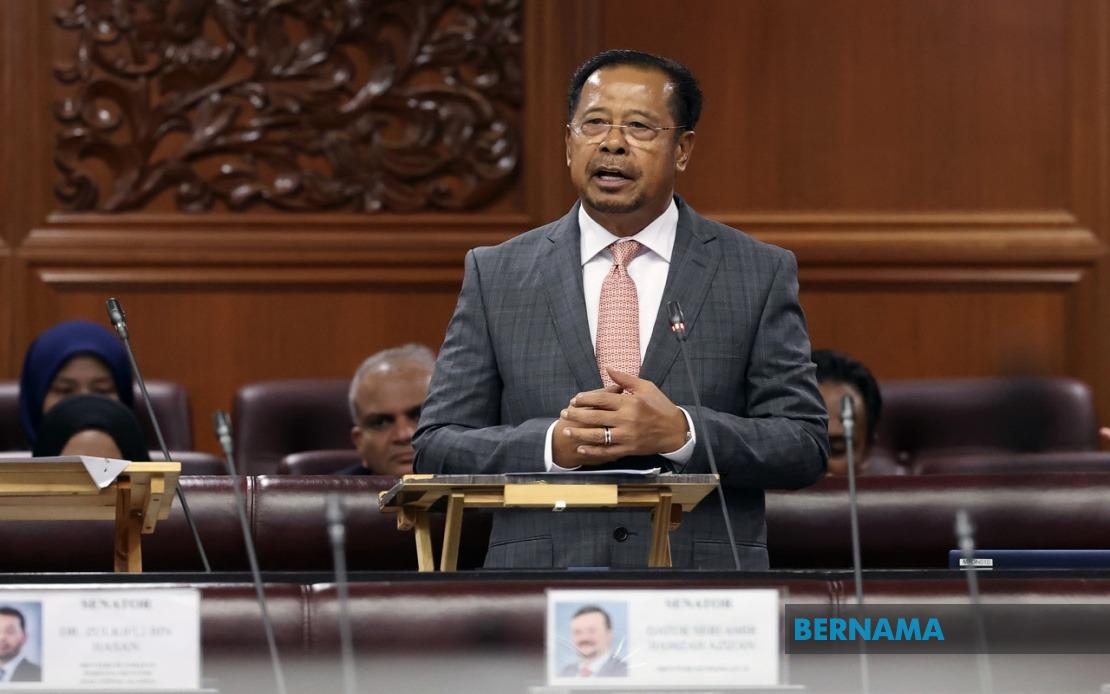
The Ministry of Energy Transition and Water Transformation (PETRA) has announced plans to undertake an extensive research initiative spanning at least 12 months to formulate a comprehensive Industrial Water Reclamation Policy. The move signals a significant commitment by the Malaysian government to address mounting pressures on the nation's freshwater resources through a systematic approach to water reuse in the industrial sector. Deputy Minister Datuk Seri Abdul Rahman Mohamad disclosed the timeline during parliamentary proceedings in the Dewan Negara, responding to concerns raised by Senator Musoddak Ahmad regarding implementation specifics and regulatory mechanisms.
The proposed policy framework is designed to serve as a strategic guide for multiple industrial segments that consume substantial volumes of water but do not necessarily require potable-quality supplies. Priority sectors identified for the initiative include food and beverage manufacturing, rapidly expanding data centre operations, semiconductor production facilities, and public cleaning service providers. These industries represent significant water consumers within Malaysia's economy, and the introduction of reclaimed water as an alternative supply source could substantially reduce demand on municipal water systems that currently serve both domestic and industrial users.
According to the deputy minister, the government views water reclamation as a critical component of its broader strategy to bolster national water supply resilience. Rather than relying exclusively on conventional freshwater sources, which face increasing strain from climate variability and population growth, the reclamation approach represents a paradigm shift toward circular water management. This philosophy recognises that treated wastewater from municipal and industrial sources contains significant usable resources that can be redirected toward applications where drinking-quality standards are unnecessary, thereby preserving premium freshwater reserves for residential consumption and sensitive applications.
The research phase will encompass multiple analytical dimensions to ensure the resulting policy possesses both practical applicability and legal robustness. PETRA plans to conduct detailed technical assessments examining infrastructure requirements, treatment processes, and distribution systems necessary to deliver reclaimed water at scale. Simultaneously, the study will analyse legal frameworks required to establish clear accountability mechanisms, safety standards, and regulatory oversight. Financial and economic components will evaluate implementation costs, potential subsidies or incentives for industrial adopters, and the long-term cost-benefit profile compared to conventional water sourcing.
Crucially, the research will address quality control protocols for reclaimed water destined for industrial use. Establishing standardised specifications and monitoring procedures represents a foundational requirement for building industrial and public confidence in the reclamation system. The study will examine international best practices and adapt proven methodologies to Malaysia's regulatory environment, ensuring that reclaimed water meets appropriate safety thresholds for its intended applications while maintaining the integrity of receiving environments if discharge occurs.
Infrastructure assessment constitutes another central pillar of the investigation. Current water treatment and distribution networks across Malaysia were designed primarily for potable supply, and integrating reclaimed water systems will require substantial investment in parallel infrastructure, treatment facilities, and conveyance networks. The study will identify geographic priority areas where reclamation could yield the greatest benefit relative to implementation costs, potentially focusing initially on industrial clusters and areas experiencing acute water stress. This spatial analysis will inform phased rollout strategies that optimise resource allocation.
Recognising that water management in Malaysia operates across multiple jurisdictions, PETRA has emphasised the importance of stakeholder engagement throughout the research process. State governments retain significant authority over water resources within their territories, and cooperation from these entities remains essential for successful policy implementation. Water operators, including the national concessionaires and regional suppliers, must participate in discussions to ensure technical feasibility and alignment with existing operational frameworks. The engagement process also encompasses Indah Water Konsortium (IWK), which manages wastewater treatment across much of the peninsula, alongside industry representatives who will ultimately adopt reclaimed water systems.
This collaborative approach reflects the complexity of water governance in the Malaysian context, where responsibilities are distributed among federal and state authorities, diverse operational entities, and end-users with varying requirements. The inclusion of industry players in early consultations facilitates bottom-up input regarding practical barriers, cost sensitivities, and operational integration challenges that technical experts might overlook. Water operators' participation ensures that treatment and distribution recommendations align with existing or planned infrastructure capabilities.
The policy development initiative arrives amid broader global recognition of water security challenges. Southeast Asia faces mounting pressure from urbanisation, industrial expansion, and climatic uncertainties, with water stress expected to intensify across the region. Malaysia's proactive approach to formalising water reclamation policies positions it as a regional leader in adaptive water management, potentially offering insights applicable to neighbouring countries facing similar constraints. As nations throughout Southeast Asia grapple with balancing industrial growth against environmental sustainability, Malaysia's experience developing and implementing such a policy framework could inform regional cooperation on transboundary water issues.
For Malaysian industries, particularly those dependent on substantial water inputs, the eventual policy could reshape operational economics and supply reliability. Companies currently vulnerable to water supply interruptions or tariff volatility might gain access to more stable alternative sources, though adoption will depend on treatment costs and infrastructure proximity. The semiconductor and data centre sectors, both critical to Malaysia's high-technology aspirations and substantial water consumers, stand to benefit significantly from reclaimed water availability, potentially reducing operational costs and enhancing sustainability credentials valued by global investors and clients.
The 12-month study timeline suggests PETRA intends to move expeditiously toward policy implementation, though comprehensive research into multiple analytical domains typically requires extensive consultation and iterative refinement. The government's commitment to this timeline indicates recognition of water security as an urgent policy matter requiring accelerated attention. Upon completion of the research phase, PETRA will face the distinct challenge of translating findings into operational mechanisms that state governments, water operators, and industrial users can effectively implement, requiring sustained political will and coordination beyond the study period itself.

