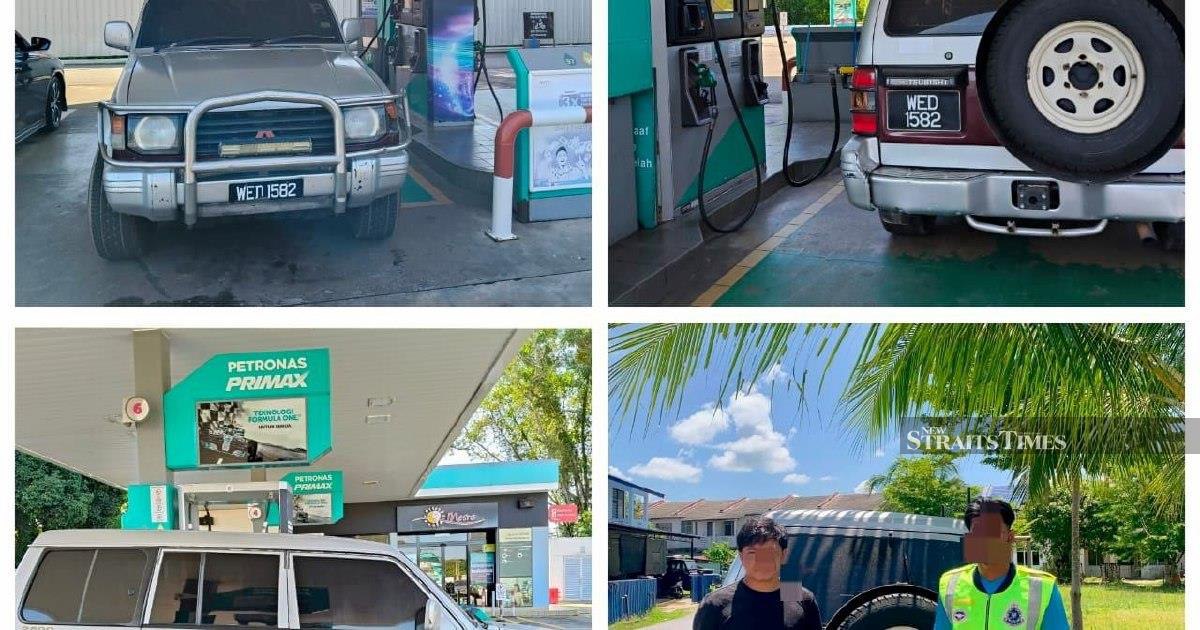
A 36-year-old Malaysian was arrested at a petrol station in Rantau Panjang yesterday on suspicion of systematically purchasing fuel for illegal smuggling into Thailand, marking another enforcement action against cross-border contraband networks that continue to exploit price differentials between the two countries.
The suspect's repeated visits to the petrol pump drew the attention of authorities monitoring illicit trafficking patterns at the Kelantan border town. His coordinated pattern of filling multiple containers suggested an organised operation rather than casual personal consumption, prompting officers to intervene and detain him for questioning.
Fuel smuggling remains a persistent challenge along Malaysia's northern frontier, driven by substantial price gaps between Malaysian and Thai markets. Malaysian petrol remains significantly cheaper than its Thai counterpart, creating strong economic incentives for cross-border contraband operations. Smuggling networks exploit these price differentials by purchasing bulk quantities domestically and transporting them across porous border regions where enforcement resources remain stretched.
Rantau Panjang, strategically positioned as a major Malaysia-Thailand crossing point in Kelantan, serves as a focal point for smuggling activities. The location's heavy foot traffic and vehicular movement creates operational challenges for border officials attempting to monitor and intercept contraband flows. Criminal syndicates have established networks that coordinate fuel purchases across multiple petrol stations, deliberately fragmenting their operations to avoid raising suspicion through single large transactions.
The arrest underscores the distinction between isolated petrol transactions and organised smuggling schemes. Authorities have become increasingly attuned to identifying suspicious purchasing patterns that indicate systematic contraband operations. Repeated rapid refueling, purchasing of containers beyond personal vehicle capacity, and coordinated timing between multiple individuals all serve as indicators of larger trafficking networks requiring investigation.
Malaysia's border enforcement agencies face considerable resource constraints managing the lengthy Malaysia-Thailand boundary. The prevalence of smuggling operations reflects both the economic motivation of cross-border traders and the operational difficulties facing customs and police units tasked with interdiction. Petrol smuggling sits alongside other contraband priorities including trafficking in narcotics, cigarettes, and agricultural products, fragmenting enforcement focus across multiple illicit trade categories.
Thailand's domestic fuel pricing structures directly influence smuggling pressure on the Malaysian side. Energy subsidies and market regulations in Thailand create price disparities that fundamentally incentivise illegal importation of cheaper Malaysian fuel. International fuel price volatility further exacerbates smuggling motivation, as wider price gaps between neighbouring jurisdictions correlate with increased contraband activity.
The investigation into the Rantau Panjang arrest will likely extend beyond the individual apprehended to identify upstream suppliers, downstream distributors, and co-conspirators within the smuggling network. Authorities typically trace purchasing patterns backwards to petrol station operators who may knowingly facilitate bulk sales, and forwards to receivers on the Thai side who integrate smuggled fuel into local distribution channels.
Cross-border smuggling operations require coordination across multiple parties spanning both countries. Malaysian suppliers connect with Thai receiving networks through established smuggling corridors. These operations have become increasingly professionalised, employing counter-detection measures and rotating personnel to minimise individual exposure and evade enforcement interdiction. The systematic nature of the suspected operation suggests involvement of experienced traffickers rather than occasional smugglers.
Enforcement responses increasingly incorporate intelligence-led operations targeting the infrastructure supporting smuggling networks. Rather than responding solely to individual incidents, authorities attempt to identify and disrupt supply chains, financing mechanisms, and transportation networks. Cooperation between Malaysian and Thai authorities remains crucial for tackling transnational smuggling, though operational coordination faces diplomatic and jurisdictional complexities.
The incident reflects broader Southeast Asian patterns of cross-border contraband driven by regulatory arbitrage and price differentials. Similar fuel smuggling challenges affect other regional frontiers where neighbouring jurisdictions maintain divergent energy pricing policies. Addressing root causes requires comprehensive regional cooperation addressing pricing harmonisation, coordinated enforcement, and targeting the economic incentives fundamentally driving smuggling activity.
Authorities have not yet disclosed the suspect's alleged smuggling destination within Thailand or the intended distribution network. The scale of his operations—measured by frequency of station visits and container capacity—suggests involvement with established trafficking syndicates rather than independent informal smuggling. Investigation outcomes will likely illuminate operational patterns within broader fuel contraband networks functioning across the northern frontier.

