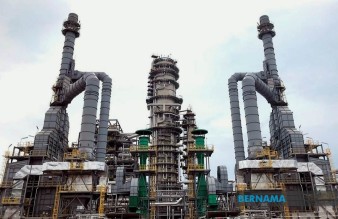
Malaysia's proposed petroleum reserve cannot succeed as an isolated energy policy and must instead be woven into a comprehensive economic security framework that addresses vulnerabilities across multiple strategic sectors, according to a prominent economist. Mohd Sedek Jantan, director of investment strategy and country economist at IPPFA Sdn Bhd, has raised concerns that policymakers risk overlooking interconnected economic risks by focusing narrowly on oil stockpiles. His intervention follows Prime Minister Datuk Seri Anwar Ibrahim's announcement of plans to study the creation of a petroleum reserve to shield Malaysia from global supply disruptions and geopolitical turbulence.
The economist's core argument rests on a straightforward but often overlooked principle: future economic crises may emanate from entirely different sources than those that triggered previous disruptions. While energy security remains undeniably important for a manufacturing-dependent economy like Malaysia, Mohd Sedek emphasises that food supply chains, access to critical minerals for electronics, semiconductor availability and digital infrastructure pose equally formidable risks. The growing complexity of global supply networks means that economic shocks can originate from multiple pressure points simultaneously, rendering single-sector resilience strategies insufficient against modern geoeconomic challenges.
Food security merits particular attention in the Malaysian context, where the nation relies heavily on imports for numerous essential foodstuffs. Unlike petroleum, which affects industrial production and transportation costs, food supply disruptions directly threaten household purchasing power, consumer price inflation and ultimately social stability. Recent global supply chain bottlenecks have demonstrated that food inflation ripples through entire economies far more visibly than energy price fluctuations, particularly affecting lower-income households. Malaysia's geographic and climatic constraints mean that domestic agricultural capacity cannot meet domestic demand, creating a structural dependency that demands strategic attention equivalent to energy security.
Semiconductors and critical minerals present another dimension of vulnerability that Malaysian policymakers must confront. As global supply chains increasingly concentrate production in specific regions—particularly Taiwan for semiconductors and China for rare earth elements—Malaysia's reliance on these inputs for manufacturing and electronics industries creates hidden fragilities. A disruption in semiconductor supplies would devastate Malaysia's electronics sector far more severely than an oil shortage, yet these commodities rarely feature in strategic discussions. Strategic reserves for such items would obviously prove more complex than petroleum storage, yet developing early warning systems and diversification strategies deserves equal priority.
Mohd Sedek's framework for evaluating a petroleum reserve strategy emphasises that measuring success by storage volume misses the fundamental objective entirely. Rather, policymakers should ask whether the reserve genuinely enhances Malaysia's capacity to withstand sudden geoeconomic shocks and whether it integrates logically with other resilience-building measures. A petroleum reserve that functions in isolation from food stockpiling, supply chain diversification, semiconductor sourcing strategies and digital infrastructure security represents incomplete risk management. The true test lies not in the number of barrels accumulated but in whether the initiative strengthens Malaysia's overall economic stability across diverse sectors.
Three operational principles should guide any petroleum reserve proposal, according to the economist's analysis. First, government must articulate a clear purpose that distinguishes between maintaining strategic reserves for genuine supply emergencies versus attempting to manipulate short-term market prices. Strategic reserves should weather genuine crises—such as the kind of regional conflict or shipping blockade that could occur in the Strait of Malacca—rather than serve as instruments for smoothing routine price fluctuations. This distinction matters because reserves maintained for speculative purposes consume resources without generating genuine resilience benefits and may invite costly political pressures to release supplies prematurely during temporary price spikes.
Second, the framework governing the petroleum reserve must remain sufficiently flexible to evolve as global threats shift. Today's energy crisis may well become tomorrow's semiconductor shortage or critical mineral bottleneck. Rather than constructing an inflexible institutional structure optimised solely for oil management, Malaysia should develop adaptable methodologies for identifying emerging vulnerabilities and mobilising appropriate responses. This flexibility requires establishing governance structures capable of pivoting toward different commodity categories as geopolitical and technological circumstances warrant, avoiding the institutional rigidity that characterises many ageing strategic programmes.
Third, and perhaps most pragmatically, the entire initiative must withstand rigorous cost-benefit scrutiny. Reserve size, financing mechanisms, storage facility construction, maintenance costs and governance arrangements should derive from detailed economic analysis demonstrating genuine value for public resources. A petroleum reserve costing billions annually to maintain and manage must demonstrably enhance economic resilience sufficiently to justify those expenditures compared to alternative security investments such as supply chain diversification, technological innovation or partnerships with reliable source countries.
The international experience offers instructive lessons, particularly Japan's integrated approach to strategic reserves. Japan combines petroleum stockpiling with diversified supplier relationships, resilient logistics networks and extensive public-private coordination mechanisms. Rather than relying solely on accumulated inventories, Japan has developed flexible supply arrangements, strategic partnerships and early warning systems that collectively generate far greater resilience than stockpiles alone could provide. Malaysia could adapt this model by combining a petroleum reserve with explicit strategies for supply diversification, supplier relationship management and logistics redundancy across critical sectors.
Integrating petroleum reserves into a broader national risk management framework would require Malaysia to think systematically about interconnected vulnerabilities rather than treating energy, food and technology as separate policy domains. A whole-of-government approach would identify which disruption scenarios pose the greatest threats to Malaysia's economy and society, then calibrate responses proportionate to each risk. Some vulnerabilities might require physical stockpiles; others might benefit more from supply chain partnerships, technological innovation investments or strategic manufacturing capacity preservation. This comprehensive perspective would yield far more robust protection than policies addressing petroleum in isolation.
The economist's fundamental insight should inform Malaysian policy discussions: in an increasingly complex and interconnected global economy, sectoral thinking yields incomplete security strategies. A petroleum reserve proposal should therefore be evaluated not merely on its own merits but as one component of Malaysia's comprehensive economic security architecture. Policymakers must resist the political appeal of tangible stockpiles and instead focus on building systemic resilience across multiple strategic sectors, with flexibility to respond as future threats emerge.

