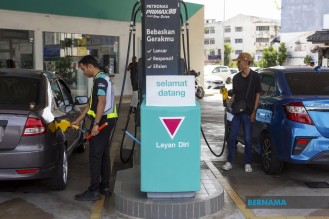
Malaysia's fuel supplies remain on secure footing through August, the government has confirmed, easing concerns about potential shortages across the country's petrol station network. During a weekly meeting of the National Economic Action Council in Kuala Lumpur on June 25, Minister in the Prime Minister's Department (Law and Institutional Reform) Datuk Seri Azalina Othman Said provided assurances based on an official response from Petronas, the state-owned energy corporation that serves as the backbone of the nation's refuelling infrastructure.
Petroas Dagangan Bhd, the publicly listed subsidiary through which Petronas operates its extensive retail network, commands roughly half of all domestic fuel distribution across Malaysia. This commanding market share underscores the critical importance of maintaining uninterrupted supply through the subsidiary's thousands of petrol stations nationwide. The stability confirmation addresses mounting apprehension about potential disruptions, particularly given volatile global energy markets and geopolitical complexities that have threatened fuel supply chains in other regions.
The government's reassurance comes at a time when international energy dynamics remain fluid and unpredictable. To navigate these uncertainties and coordinate a comprehensive national response to the ongoing global energy crisis stemming from conflict in West Asia, authorities have established a dedicated Crisis Management Task Force (PPPK) operating under the auspices of the National Economic Action Council. This institutional apparatus represents a deliberate move to centralise decision-making and strategic planning around the nation's energy security, reflecting the seriousness with which policymakers view potential supply disruptions.
The task force's mandate is expansive and multifaceted. Beyond simply monitoring fuel, petroleum, and energy supply levels, the team is tasked with guaranteeing supply security throughout the coming months while simultaneously managing another pressing concern: fuel prices. This dual responsibility acknowledges that supply stability alone is insufficient; Malaysians must also be protected from price volatility that could ripple through the broader economy. Consumer confidence in energy markets depends on predictability at the pump, and the task force's price management function addresses this concern directly.
Government officials have also outlined contingency strategies designed to reduce dependency on traditional energy exporters concentrated in the volatile West Asian region. Officials are actively pursuing agreements to source crude oil from alternative suppliers in West Africa and the Americas, thereby diversifying the nation's energy portfolio and building resilience against regional disruptions. However, these arrangements cannot be pursued indiscriminately; the government must carefully evaluate crude oil grades to ensure compatibility with Malaysia's refining infrastructure, while also scrutinising commercial terms to protect national economic interests. This balancing act requires sophisticated energy diplomacy and technical expertise.
Beyond supply diversification and price management, the task force is also combating illicit activities that undermine the formal energy sector. Fuel smuggling and other irregular operations drain legitimate supplies and distort market dynamics, creating artificial scarcity that harms ordinary consumers and legitimate businesses. By strengthening enforcement mechanisms and border controls, authorities aim to channel fuel through proper channels and reduce losses to the shadow economy. This dimension of energy security is often overlooked but carries significant implications for price stability and supply predictability.
The government's announcement addresses specific parliamentary concerns raised by Khairil Nizam Khirudin (PN–Jerantut), who questioned whether Petronas' previous statement guaranteeing fuel supplies only until the end of June 2026 reflected deeper systemic vulnerabilities. The minister's response, grounded in Petronas' own assessment, effectively extends the supply horizon by two months, suggesting that current refining capacity, import arrangements, and storage levels are adequate for managing anticipated demand through the northern hemisphere summer season.
For Malaysian businesses and consumers, these assurances carry practical weight. Supply stability enables economic planning and investment with greater confidence, while transparent government communication about energy security reduces speculative hoarding that often exacerbates shortages. Small businesses dependent on fuel for operations—from transport companies to agricultural producers—can proceed with greater certainty about input costs and availability. At the retail level, drivers need not worry about empty pumps in the near term, though global developments remain worth monitoring closely.
The geopolitical context lending urgency to these measures cannot be understated. Conflicts in West Asia have historically transmitted shocks through global energy markets, raising crude prices and disrupting supply chains. Malaysia, as a net energy exporter, enjoys some insulation from these pressures compared to neighbouring countries dependent entirely on imports. Nevertheless, the nation's economy is globally integrated, and prolonged energy disruptions anywhere would eventually impact Malaysian markets and consumer prices.
Looking beyond August, the government has essentially signalled that the current supply situation is manageable but not indefinitely guaranteed. This realistic framing suggests that policymakers are preparing contingency plans should global conditions deteriorate further. The emphasis on diversifying crude sources and strengthening domestic supply security measures indicates a recognition that vulnerability to West Asian disruptions represents a structural risk requiring ongoing mitigation. Malaysia's energy independence goals, long articulated in national development strategies, find reinforcement in these security-focused initiatives.
The establishment of the Crisis Management Task Force also reflects growing sophistication in how Malaysian authorities approach complex interdependencies between energy, economic stability, and geopolitical risk. Rather than reactive crisis management, this institutional structure enables proactive monitoring and coordination across government agencies, private sector partners, and international counterparts. This integrated approach to energy governance may serve as a model for addressing other critical infrastructure vulnerabilities.

