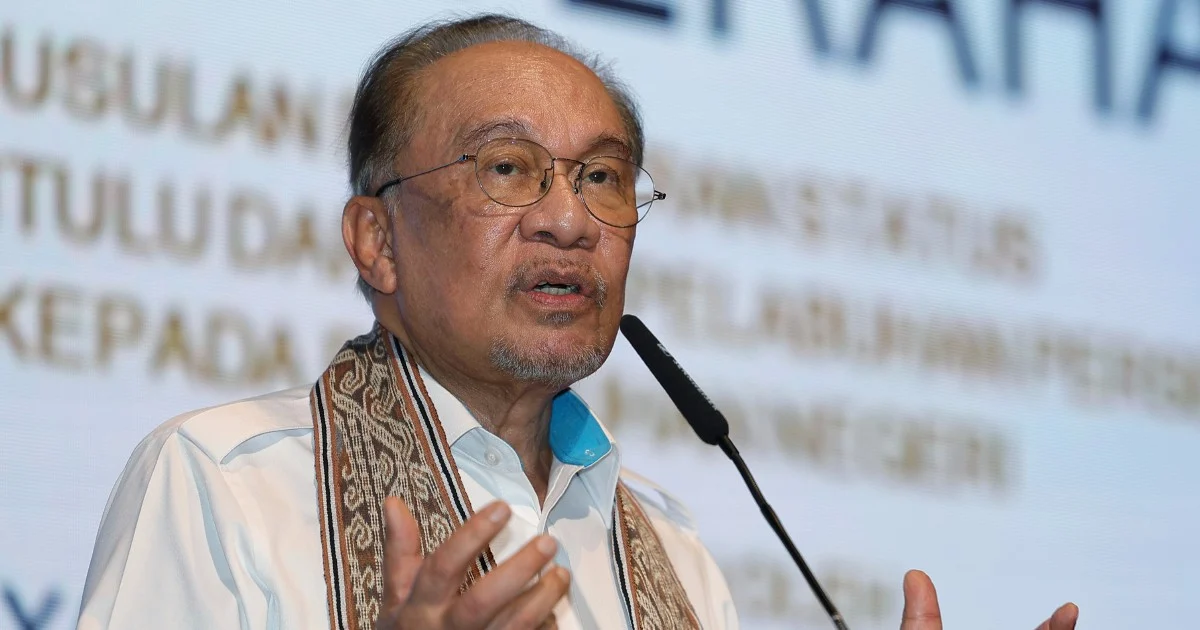
Discussions between Malaysia's national oil giant Petronas and Sarawak's state-owned petroleum company Petros have reached an encouraging stage, according to Prime Minister Datuk Seri Anwar Ibrahim, who made the announcement during an engagement in Kuching. The comments signal forward momentum on what has long been viewed as a critical negotiation for the country's energy governance framework and the distribution of hydrocarbon revenues among stakeholders.
The dialogue between these two major players in Malaysia's oil and gas sector represents more than a commercial transaction. It touches on fundamental questions about resource ownership, revenue sharing, and the balance of power between federal and state authorities in managing the nation's petroleum assets. Sarawak, as the East Malaysian state with substantial offshore oil reserves, has maintained its own petroleum interests through Petros, creating a dual structure that requires careful coordination with Petronas, which operates under federal oversight.
Anwar's characterisation of the talks as demonstrating positive progress comes at a time when Malaysia seeks to maximise returns from its energy sector amid global energy transitions and volatile commodity markets. The successful conclusion of negotiations would potentially streamline operations, clarify revenue distribution mechanisms, and reduce duplication in administrative structures across federal and state levels. Such clarity is essential for attracting investment and ensuring Malaysia remains competitive as a petroleum producer in the region.
The complexity of the Petronas-Petros relationship stems from Malaysia's federal structure, where both oil and gas reserves and their exploitation remain shared matters between the central government and state authorities. Sarawak's establishment of Petros reflects the state's assertion of its own hydrocarbon rights and its desire for greater autonomy in managing petroleum revenues. Petronas, meanwhile, operates as a integrated international corporation with exploration and production operations extending beyond Malaysian waters into numerous countries, creating potential friction points regarding resource allocation and profit distribution.
Historically, resource-sharing arrangements between Petronas and state entities have been sensitive political territory. The energy sector accounts for a meaningful portion of Malaysia's government revenue, making negotiations over revenue splits and operational control matters of national economic significance. Any agreement emerging from these talks would likely include provisions governing exploration rights, production sharing, export arrangements, and how revenues are divided between Petronas shareholders—predominantly the federal government—and the state of Sarawak.
From a regional perspective, Malaysia's ability to streamline its internal oil and gas governance carries implications for Southeast Asia's energy security and competitiveness. The region faces growing energy demands, increasing competition from other producers, and the need to transition toward cleaner energy sources. A well-functioning, unified energy sector allows Malaysia to maintain its standing as a significant hydrocarbon producer while simultaneously investing in renewable energy development and meeting international climate commitments.
The timing of Anwar's remarks also reflects broader Malaysian economic priorities. With inflation pressures and global economic uncertainties, maximising revenues from existing energy assets becomes increasingly important for government budgets. Enhanced clarity regarding Petronas-Petros operations could unlock efficiencies that translate into higher returns for both the federal government and Sarawak, thereby strengthening the fiscal position of Malaysia overall and supporting state development initiatives.
Investors monitoring the Malaysian energy sector have keenly awaited progress on these negotiations, recognising that resolution would reduce structural uncertainties within one of the nation's most important industries. International oil and gas companies operating in Malaysian waters alongside or in partnership with Petronas would benefit from clearer jurisdictional and revenue-sharing frameworks, potentially facilitating future investment decisions and operational planning.
For Sarawak specifically, the negotiations represent an opportunity to solidify control over its petroleum patrimony while maintaining productive cooperation with federal institutions. The state government has consistently emphasised the importance of capturing greater value from its natural resources, viewing petroleum revenues as essential to funding state development programmes. A positive outcome from these talks would strengthen Sarawak's position while demonstrating that federal-state cooperation on resource management can yield mutually beneficial arrangements.
The path forward will likely require continued dialogue, technical discussions, and political will from leadership on both sides. Malaysian policymakers understand that energy sector stability underpins broader economic performance and that resolving long-standing institutional questions between Petronas and Petros carries significance extending well beyond the immediate parties involved. Anwar's public acknowledgment of progress serves as both an update to stakeholders and a signal of commitment to resolving these complex negotiations.
Looking ahead, any agreement emerging from these talks will be scrutinised closely by analysts examining Malaysian fiscal policy, energy sector governance, and federal-state relations. The successful navigation of these sensitive negotiations would demonstrate Malaysia's capacity to manage complex institutional and financial arrangements at a moment when the nation faces multiple economic and geopolitical challenges requiring coordinated national response.
%22%2F%3E%3C%2Fpattern%3E%3C%2Fdefs%3E%3Crect%20width%3D%22100%25%22%20height%3D%22100%25%22%20fill%3D%22url(%23ph44qleg)%22%2F%3E%3Crect%20width%3D%22100%25%22%20height%3D%22100%25%22%20fill%3D%22url(%23ph44qlep)%22%2F%3E%3Ctext%20x%3D%2250%25%22%20y%3D%2250%25%22%20text-anchor%3D%22middle%22%20dominant-baseline%3D%22central%22%20fill%3D%22rgba(255%2C255%2C255%2C0.95)%22%20font-family%3D%22Georgia%2C%20'Times%20New%20Roman'%2C%20serif%22%20font-weight%3D%22700%22%20font-size%3D%22320%22%20letter-spacing%3D%22-0.02em%22%3EMUDA%3C%2Ftext%3E%3C%2Fsvg%3E)