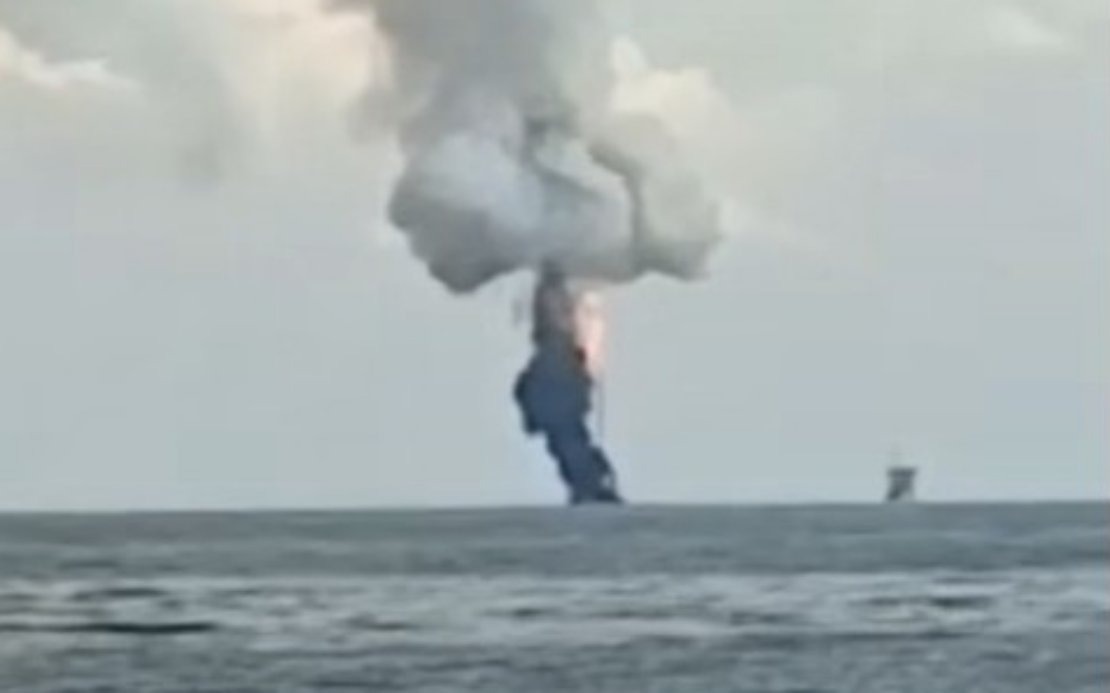
Petronas Carigali subsidiary Vestigo Petroleum Sdn. Bhd. has officially confirmed that a fire broke out at its West Lutong Vent A (WLV-A) offshore facility in Sarawak at approximately 2 pm on June 28. The company released a statement on June 29 confirming the incident and outlining the immediate response measures undertaken by its operations team and management.
According to Vestigo's official statement, the situation at the facility has been brought under control following rapid intervention by trained personnel and emergency response protocols. The company indicated that comprehensive investigations into the root cause of the fire are currently underway, with technical teams examining equipment, operational procedures, and external factors that may have contributed to the incident. The investigation process is being conducted in accordance with standard industry practices and regulatory requirements applicable to offshore petroleum operations in Malaysian waters.
The offshore petroleum sector represents a critical component of Malaysia's energy infrastructure and economic output, particularly in resource-rich Sarawak. Incidents at such facilities, while typically manageable through established safety systems, often draw significant public attention and scrutiny due to the potential consequences for both operations and environmental integrity. The rapid confirmation of the incident and transparent communication from Vestigo reflects industry standards for managing operational transparency with stakeholders and regulatory bodies.
Vestigo emphasised that no personnel injuries were sustained during the incident, and all individuals working at or near the facility remained unaffected by the fire. The company further stated that the situation posed no immediate threat to surrounding communities or the broader marine environment in the area. This assessment carries particular weight given heightened environmental consciousness among Malaysian and Southeast Asian publics regarding offshore operations and their potential ecological impacts.
The company has activated coordination mechanisms with relevant authorities overseeing offshore petroleum operations and marine safety in Sarawak. These coordinated efforts include regular briefings with regulatory bodies, compliance with mandatory incident reporting procedures, and implementation of additional precautionary measures designed to mitigate risk exposure across all operational aspects. Such coordination between private operators and government agencies has become standard practice in managing incidents within Malaysia's exclusive economic zone.
Vestigo's public commitment to operational safety and environmental stewardship appears central to their response messaging. The company reiterated its dedication to maintaining the highest standards of personnel safety, environmental protection, and operational integrity across all facilities. This emphasis reflects broader industry evolution toward sustainability practices and stakeholder accountability, particularly as energy companies face increasing demands for responsible resource extraction in Southeast Asia.
The incident gained rapid traction on social media platforms, with video documentation of the fire circulating widely among Malaysian and international audiences. This digital amplification of industrial incidents has become a defining characteristic of modern crisis communication for energy companies. The rapid social media spread underscores the importance of swift, credible official communication to prevent misinformation and manage public perception during operational emergencies.
Offshore petroleum facilities in Sarawak represent substantial capital investments and ongoing operational commitments that contribute significantly to Malaysia's hydrocarbon production and government revenues. The West Lutong complex has been a longstanding production asset supporting Malaysia's oil and gas sector. Ensuring rapid recovery and maintaining operational confidence across the supply chain remains essential for stakeholders ranging from government energy policymakers to downstream industries reliant on petroleum feedstocks.
The investigation into the incident's underlying causes will likely provide valuable insights for the broader offshore petroleum industry operating in the South China Sea region. Malaysia's regulatory framework, administered through the Petroleum Development Act and supervised by the Petroleum Commission, requires comprehensive incident analysis and remediation strategies. Findings from Vestigo's investigation may contribute to industry-wide understanding of equipment vulnerabilities or operational procedures requiring enhancement across comparable facilities.
Such incidents, though typically contained through modern safety engineering, serve as important reminders of the inherent risks associated with offshore resource extraction in tropical marine environments. The fire at West Lutong Vent A occurred within a jurisdiction where climate considerations, environmental activism, and energy transition discussions increasingly shape public discourse around fossil fuel operations. Vestigo's handling of the incident and subsequent transparency will influence stakeholder confidence in the company's operational management and environmental stewardship.
The incident underscores ongoing industry reliance on robust emergency response capabilities and well-trained personnel capable of managing crisis situations in remote offshore locations. Sarawak's offshore facilities operate in challenging maritime conditions where rapid response coordination requires sophisticated communication infrastructure and experienced technical teams. Vestigo's apparent effective containment of the situation demonstrates the maturity of crisis management systems developed across Malaysia's petroleum sector over decades of operations.

