Pakatan Harapan is treading carefully as it prepares for the Johor state election, mindful of an unusual political dynamic created by Perikatan Nasional's decision to abstain from contesting 23 of the state's constituencies. The opposition coalition's caution reflects genuine uncertainty about how PN's supporters will cast their ballots in seats where their preferred coalition presents no candidate—a phenomenon that could shift outcomes in tightly margined races across the southern state.
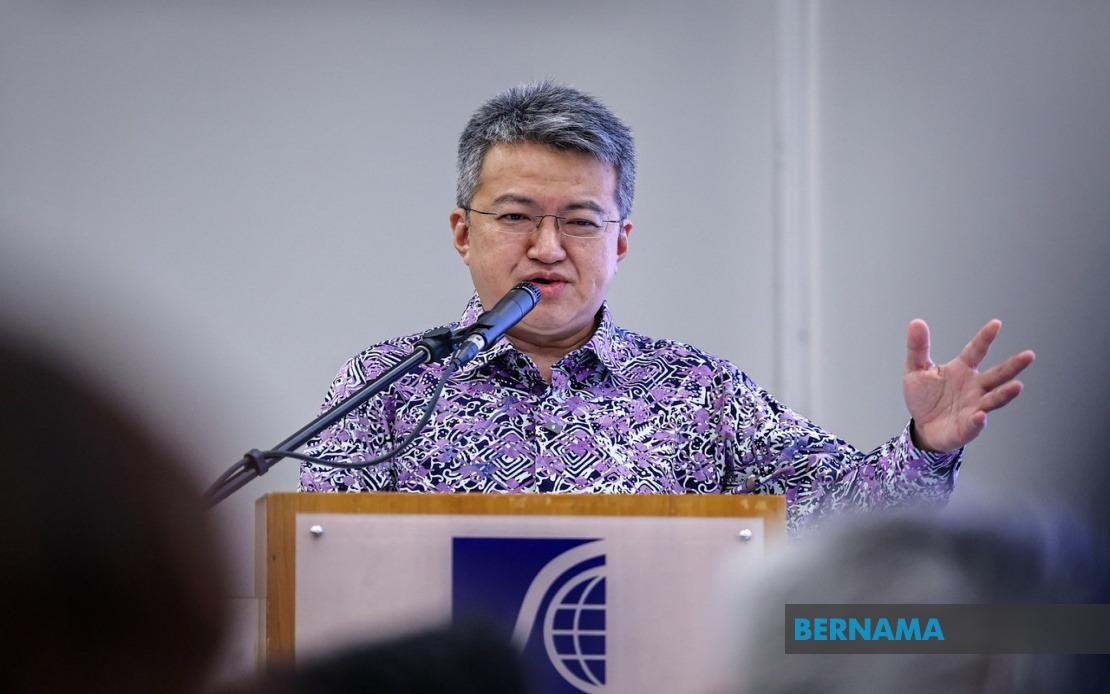
Liew Chin Tong, the DAP strategic director and deputy finance minister, articulated PH's core concern during a media engagement in Johor Bahru on June 29. The party recognises that in electoral systems where voter loyalty to coalitions is strong, orphaned supporters often behave unpredictably. Some may abstain entirely, others may drift to rival coalitions, and a fraction might support independent candidates or smaller parties. What makes this scenario particularly vexing for PH is that the 23 constituencies represent a significant portion of the state assembly, and many are expected to be fiercely competitive between PH and Barisan Nasional.
Liew emphasised that this electoral uncertainty demands heightened vigilance from PH machinery. Rather than assuming that PN's absence translates into automatic advantages, the coalition recognises it must earn voter confidence through substantive campaigning and fresh policy offerings. His comments underscore a mature understanding that Malaysian voters, especially in a state as politically significant as Johor, make nuanced decisions that cannot always be predicted through traditional bloc analysis.
The challenge is particularly acute for DAP candidates within the PH coalition. As a primarily Chinese-majority party, DAP has historically struggled in constituencies with mixed or Malay-majority demographics. In seats where PN—which commands considerable Malay-Muslim support—has opted not to contest, the fragmentation of that voter base could work against DAP's chances if some PN supporters migrate to Barisan Nasional's Malay-centric messaging. This dynamic could leave PH-fielded candidates squeezed between multiple opposing forces in their pursuit of victory.
Beyond this immediate tactical concern, PH's strategy for the July 11 election reflects a deliberate generational shift. The coalition has consciously selected younger and what it considers more credible candidates tailored to individual constituencies. This approach signals an attempt to refresh its image and appeal to younger voters who may harbour frustrations with entrenched political structures. Whether this rejuvenation translates into actual electoral gains remains to be seen, but the intent is to present voters with fresher alternatives to both BN's established machinery and PN's populist messaging.
Liew's own decision not to defend the Perling state seat illustrates this principle in practice. Despite winning the constituency in 2022, the Deputy Finance Minister chose to step aside, aligning with DAP's stated policy of discouraging dual mandates at parliamentary and state assembly levels simultaneously. This self-imposed constraint, while admirable in principle, also reflects a broader party effort to create space for younger talent. Liew's decision to hand Perling to former Senai assemblyman Alan Tee Boon Tsong represents exactly the kind of managed succession that seeks to maintain party continuity while promoting new voices.
The Perling constituency itself exemplifies the three-way battles likely to define this election. With 109,992 registered voters, Perling will see contestants from PH's DAP (represented by Tee), Barisan Nasional (P. Pannir Selvam), and the smaller Parti Bersama Malaysia (Boo Wei Han). Such configurations are common across Johor, where coalition fragmentation has created space for competitive contests that cannot be resolved by traditional BN-PN calculations alone. The presence of Bersama, a relatively newer political vehicle, further complicates vote distribution patterns.
Johor's political significance extends beyond state boundaries. As Malaysia's third-largest state by population and a crucial component of any federal coalition-building exercise, Johor's voting patterns carry implications for national politics. A strong PH performance could bolster the coalition's standing ahead of future federal calculations, while a disappointing result would weaken its negotiating position. Conversely, BN's performance will signal whether the federal ruling coalition retains resilience in key states, particularly given mounting dissatisfaction with various governance issues.
The timing of the election adds another layer of complexity. Held midway through the typical state assembly cycle, the July 11 poll allows neither incumbent nor opposition to claim a conclusive electoral mandate for the remaining years ahead. This creates incentives for both PH and BN to campaign intensively, knowing that state-level victories carry weight in inter-coalition politics even if federal control remains elsewhere. The early voting period on July 7 will also test organisational capacity and voter enthusiasm across all participating parties.
PH's public positioning emphasises vigilance rather than confidence, a significant departure from the triumphalism that sometimes characterised opposition campaigns in the past decade. This measured tone reflects hard-won lessons from previous electoral disappointments and suggests the coalition has moved toward more realistic assessments of its electoral prospects. Whether this cautious approach ultimately yields better results than overconfidence remains an open question, but it certainly positions PH to manage expectations and respond flexibly to emerging dynamics as polling day approaches.
The Johor election ultimately represents a test of whether Malaysian voters are prepared to embrace coalition-level calculations or whether they increasingly view each election as an opportunity to punish incumbents and reward challengers based on immediate grievances and personalities. The 23 constituencies where PN has withdrawn may provide particularly revealing data on how voter behaviour has shifted since the last general election.

