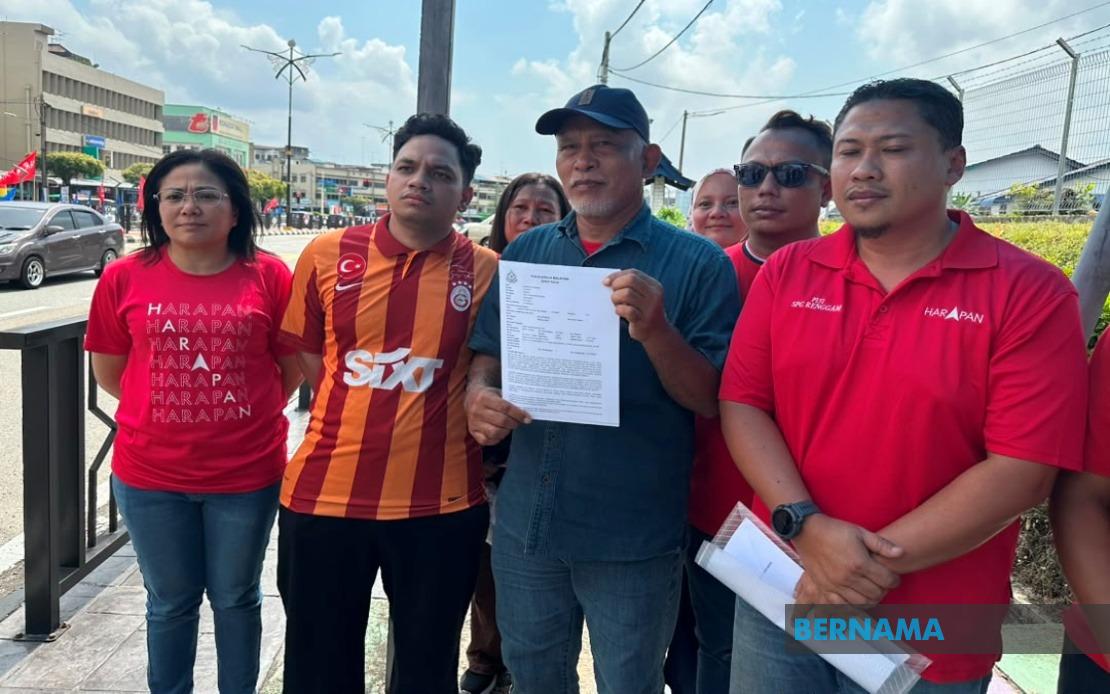
A representative supporting the Pakatan Harapan candidate for the Machap state seat has filed a formal police complaint against Johor Menteri Besar Datuk Onn Hafiz Ghazi, accusing him of inappropriately enlisting Technical and Vocational Education and Training students to bolster Barisan Nasional campaign efforts during the ongoing state election race. The allegation centres on what the complainant characterises as orchestrated participation by TVET-enrolled individuals in political events designed to mobilise support for ruling coalition candidates.
Khiru Nasir Rohani, who submitted the report at Simpang Renggam district police headquarters, contends that a systematic campaign has been conducted to persuade students from technical and vocational institutions across the state to join what he describes as politically charged gatherings. These programmes, he argues, were ostensibly educational or developmental in nature but functioned primarily as platforms for campaigning. The allegation suggests coordination between government officials and educational authorities to leverage student participation for partisan advantage.
The specific incident underpinning the complaint involves a gathering held in Kluang on July 4, which TVET students were allegedly required or strongly encouraged to attend. According to Khiru Nasir's account, the event subsequently became a venue for open political campaigning supporting candidates contesting the Johor state election. This accusation highlights concerns about the intersection of educational institutions and electoral activities, raising questions about the appropriate boundaries between institutional functions and political engagement.
Khiru Nasir, who serves as deputy chief of the Simpang Renggam Amanah division, argues that such conduct potentially violates the Election Offences Act 1954, specifically sections addressing undue influence and misuse of official authority for political advantage. He emphasises that educational institutions ought to remain neutral spaces insulated from partisan campaign activity. The complaint suggests that students may have faced implicit or explicit pressure to attend, compromising their voluntary participation in the electoral process.
The complainant has urged three enforcement bodies to investigate thoroughly: the police, the Malaysian Anti-Corruption Commission, and the Election Commission. This multi-agency call reflects the seriousness attributed to the allegation and the various regulatory dimensions involved. The involvement of educational institutions in campaign activities touches on election integrity, potential corruption in public administration, and the misuse of government resources for party-political purposes. A comprehensive investigation would assess whether proper procedures were followed and whether legal thresholds for misconduct were crossed.
The timing of the complaint is significant, arriving just days before voters across Johor cast ballots in the state election. With 172 candidates competing for 56 state assembly seats, the race remains closely watched as a barometer of political sentiment in Malaysia's second-most populous state. The allegation, if substantiated, could influence how voters assess the conduct of competing political coalitions and their respective approaches to campaign ethics.
Educational institutions in Malaysia occupy a legally protected space within the electoral framework. Students and staff are expected to be shielded from pressure to participate in partisan activities during working hours or on institutional premises. The use of TVET facilities or the channelling of students into campaign events raises constitutional and statutory concerns about the proper use of public resources and the neutrality that educational institutions must maintain.
The complaint reflects broader anxieties within the opposition coalition about how state machinery and resources are deployed during election campaigns. Allegations of this nature underscore the tension between the governing party's access to institutional apparatus and the opposition's reliance on public compliance with electoral norms. Previous Malaysian elections have witnessed similar complaints regarding the politicisation of government agencies and the mobilisation of public sector employees for campaign purposes.
The Election Commission, as the body responsible for administering elections and ensuring their fairness, faces scrutiny over whether it has adequate mechanisms to investigate and address allegations of institutional misuse during campaign periods. The complaint to the police suggests that conventional law enforcement channels are being pursued, though the specialised nature of election law may necessitate parallel examination by the EC itself.
For voters and observers in the Machap and surrounding constituencies, the allegation introduces an additional consideration into their assessment of how power has been exercised and whether campaign conduct has adhered to established norms. The weekend polling will ultimately determine the electoral consequences, if any, of these allegations and the broader campaign environment they reflect. The investigation outcomes, should they materialise before or after voting concludes, will shape the narrative around the legitimacy of the election result and the integrity of institutional conduct during the campaign phase.

