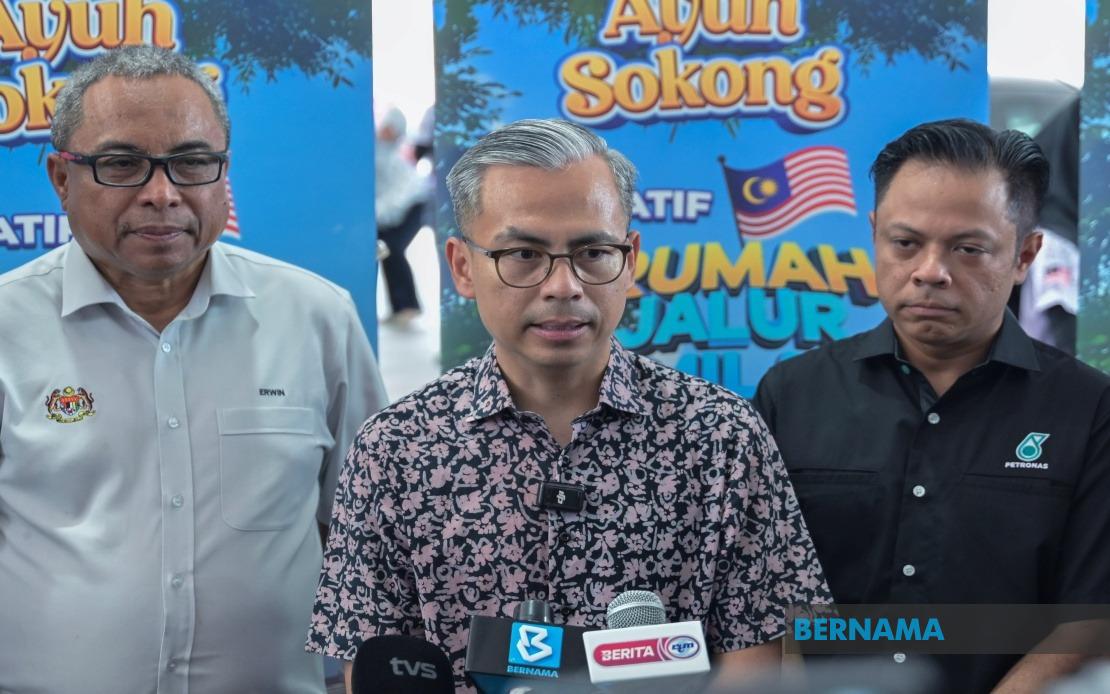
Pakatan Harapan has responded positively to indications from Barisan Nasional that it is prepared to discuss seat-sharing arrangements ahead of the Melaka state election. Communications Minister Datuk Seri Fahmi Fadzil characterised the willingness to negotiate as a constructive development that warrants serious consideration by both political blocs, emphasising that such dialogue carries implications extending beyond the state contest itself.
Fahmi's comments reflect a pragmatic approach from PH leadership, which currently holds five seats in the Melaka State Legislative Assembly against BN's substantially larger 21-seat majority. Rather than dismissing BN's overture outright, PH has signalled readiness to engage in substantive discussions about how the distribution of candidates across contested constituencies might be arranged for the election. The Communications Minister noted that this kind of flexibility between rival coalitions could contribute meaningfully to political stability in the state and, by extension, to national governance considerations.
The decision to explore negotiations appears to have received backing from PH's state-level structures. Yang Berhormat Adam Adli, chairman of Keadilan Melaka and a key figure in the party's state operations, has reportedly engaged in direct discussions with Melaka Chief Minister Datuk Seri Ab Rauf Yusof on the question of seat allocation. These parallel conversations at different levels of party hierarchy suggest that PH's interest in the BN proposal is not merely rhetorical but reflects a coordinated approach involving both federal and state party machinery.
The scale of BN's current dominance in Melaka state politics cannot be overlooked. With 21 seats out of the total allocation, BN possesses the kind of commanding position that leaves room for negotiated adjustments without fundamentally threatening its hold on power. This numerical reality shapes the contours of any potential negotiation, as Fahmi implicitly acknowledged when he described the disparity as a matter requiring realistic assessment. The arithmetic of Melaka politics thus becomes central to understanding why PH might view negotiations as worthwhile despite its minority position.
BN's chairman Datuk Seri Dr Ahmad Zahid Hamidi outlined the framework within which his coalition views potential seat negotiations in remarks made the day before Fahmi's comments. Ahmad Zahid indicated that BN would consider not only the distribution of seats but potentially even swapping constituencies between allied parties, provided such arrangements were conducted with transparency and mutual goodwill. Critically, he articulated a foundational principle that parties would not be expected to relinquish seats they had won in previous elections without proper justification, establishing ethical boundaries for the negotiation process.
The distinction between seat distribution and seat exchange carries practical importance for electoral strategy. Distribution discussions might involve deciding which party contests which constituencies in the first place, thereby determining which party has the opportunity to win that seat. Exchange discussions, by contrast, would involve parties swapping constituencies they currently control, a more complex arrangement that requires agreement on candidate viability and demographic composition of constituencies. BN's openness to both mechanisms suggests flexibility in approach, though Ahmad Zahid's emphasis on not arbitrarily surrendering won seats establishes guardrails against one party being pressured into an obviously disadvantageous bargain.
The emergence of these negotiations between two major coalitions that typically oppose each other at the national level reflects the peculiar dynamics of Malaysian subnational politics. In Melaka specifically, territorial considerations and state-level governance issues sometimes create space for arrangements that would be politically impossible at the federal level. This flexibility at the state level, while sometimes derided as opportunistic, can facilitate the kind of consensus-building that prevents zero-sum electoral contests from becoming destabilising forces in specific jurisdictions.
For ordinary Melaka voters, the prospect of PH-BN negotiations raises questions about democratic competition and voter choice. When major coalitions negotiate seat distributions, the practical effect is often to render many constituencies uncompetitive before voting even occurs, as the winning party in any given seat is effectively predetermined by inter-party agreement. Whether this serves broader interests in political stability or instead undermines the vitality of electoral competition remains a matter of legitimate debate among observers of Malaysian democracy.
The timing of these discussions is significant, as such negotiations typically intensify as an election date approaches. By signalling openness to dialogue at this relatively early stage, both PH and BN appear to be calculating that accommodation on seat distribution may yield better outcomes than all-out contests across every constituency. This calculus reflects broader trends in Malaysian politics, where coalition partners increasingly view elections as opportunities for negotiated settlement rather than zero-sum battles for maximum seat capture.
Regional observers watching Malaysian politics note that state-level negotiations such as those potentially unfolding in Melaka often serve as proving grounds for federal-level cooperation that might emerge later. The willingness of PH and BN to explore seat-sharing in Melaka, even while maintaining broader antagonism at the national level, could establish precedents and working relationships that prove useful in future federal negotiations. Such state-level experiments in political cooperation, assuming they function smoothly, may gradually reshape perceptions about the feasibility of inter-coalition cooperation in Malaysian politics more broadly.
The role of Communications Minister Fahmi in publicly welcoming BN's negotiating position deserves note, as it signals that PH's federal leadership has endorsed the state-level discussions rather than viewing them as local decisions beyond its purview. This coordination between federal and state leadership indicates that any seat-sharing arrangement emerging from negotiations would likely reflect decisions made at PH's national level, not merely state-level improvisation. The apparent alignment of leadership at different organisational levels suggests that negotiations, if they proceed, would carry weight and legitimacy within PH's organisational structure.

