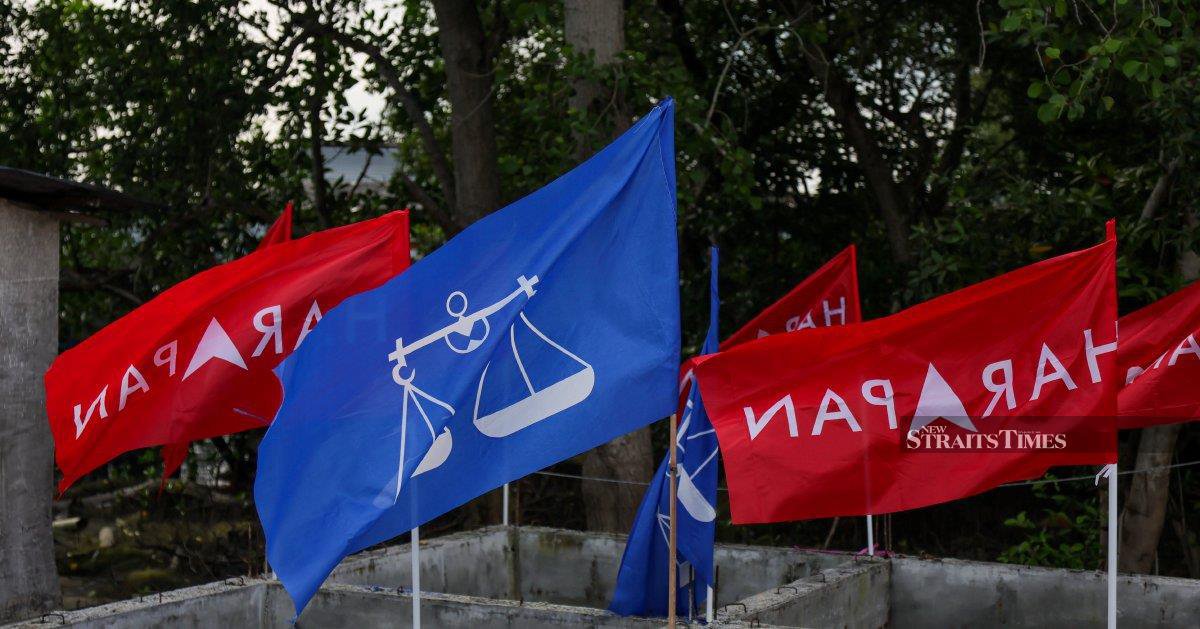
Malaysia's political landscape faces fresh turbulence as the Pakatan Harapan youth wing escalates pressure on coalition partners, calling for the wholesale resignation of all Barisan Nasional ministers and deputy ministers serving in the federal cabinet. The youth movement has levelled serious allegations that BN has fundamentally violated the foundational principles underpinning the unity government by pursuing open cooperation with Perikatan Nasional during elections in Johor and Negri Sembilan.
The dispute stems from a fundamental clash of political strategies within the ruling coalition. While the unity government was established on the premise of maintaining a unified political front against common opponents, BN's decision to engage with PN in selected electoral contests has reignited tensions that were temporarily shelved when the grand coalition came to power. The youth wing's intervention signals that younger party activists view these electoral collaborations as a betrayal of the explicit commitments made when the unity government was formed.
This controversy illuminates the fragile balancing act required to maintain Malaysia's governing coalition. The unity government represents a delicate compromise between ideologically diverse parties that previously stood as fierce political adversaries. Any deviation from the agreed framework, particularly when seen as strategic positioning for advantage, threatens to unravel the consensual foundation upon which the entire arrangement rests. The youth wing's aggressive stance reflects grassroots frustration that party leadership may be compromising core principles for electoral calculations.
For Barisan Nasional, the ultimatum presents a significant political dilemma. BN's participation in the unity government was partly an exercise in rehabilitation, allowing the coalition to maintain a presence in federal governance after suffering electoral defeats in recent years. However, the coalition has simultaneously sought to preserve its autonomy and strategic flexibility by exploring partnerships that could enhance its electoral prospects at the state level. This dual approach now appears untenable, at least in the eyes of PH's youth movement.
The timing of this confrontation is particularly significant given Malaysia's cyclical electoral calendar. With state elections occurring periodically across different regions, questions about coalition discipline and electoral partnerships will become increasingly contentious. The Johor and Negri Sembilan contests have served as flashpoints, but similar situations will inevitably arise in other states, forcing the unity government to repeatedly confront these underlying tensions.
From a Malaysian perspective, the episode reveals the structural challenges inherent in consensus-based governance models. When multiple parties with distinct identities must operate under a single administration, establishing mutually acceptable boundaries for individual party action becomes extraordinarily complex. The unity government lacks the homogeneity that typically characterises single-party dominance, yet its survival depends on a degree of cohesion that pure coalition logic does not naturally produce.
The youth wing's intervention is also significant because it demonstrates that pressure on the unity government is not exclusively top-down. Younger party members who did not negotiate the initial coalition agreements feel entitled to question leadership decisions they perceive as inconsistent with foundational principles. This generational assertiveness could either strengthen internal party processes through democratic contestation or destabilise the coalition through persistent internal conflict.
For regional observers monitoring Malaysian politics, this dispute underscores the ongoing volatility of the political settlement reached after the 2022 general election. Despite the unity government's rhetorical emphasis on stability and cooperation, the underlying structural tensions remain unresolved. Each electoral cycle potentially provides opportunities for parties to recalibrate their strategic positioning, which inevitably creates friction with coalition partners.
The question of whether BN ministers will accede to the youth wing's demands remains uncertain. Compliance would effectively signal a subordination of BN interests to PH-led coalition preferences, while defiance would validate concerns about BN's commitment to the unity government framework. Either outcome carries political consequences that extend beyond the immediate dispute.
Beyond the personalities and immediate political calculations, this confrontation illuminates deeper questions about how Malaysia sustains multi-party governance in a system that historically gravitated toward single-party dominance. The unity government represents an experimental approach to Malaysian politics, one that requires continuous negotiation and mutual restraint from participants accustomed to winner-takes-all competitions.
The controversy also reflects broader Southeast Asian patterns, where post-electoral coalitions frequently encounter difficulties reconciling the autonomy demands of constituent parties with the coherence requirements of collective governance. Malaysia's experience will likely provide cautionary lessons for other regional democracies navigating similar terrain.
Moving forward, the unity government will need to establish clearer protocols regarding permissible electoral cooperation between coalition partners at state level. Without such frameworks, periodic eruptions of this nature seem inevitable, each one eroding confidence in the coalition's sustainability. The youth wing's intervention, while disruptive in the short term, has forced a conversation that coalition leadership may have preferred to postpone but cannot indefinitely avoid.

