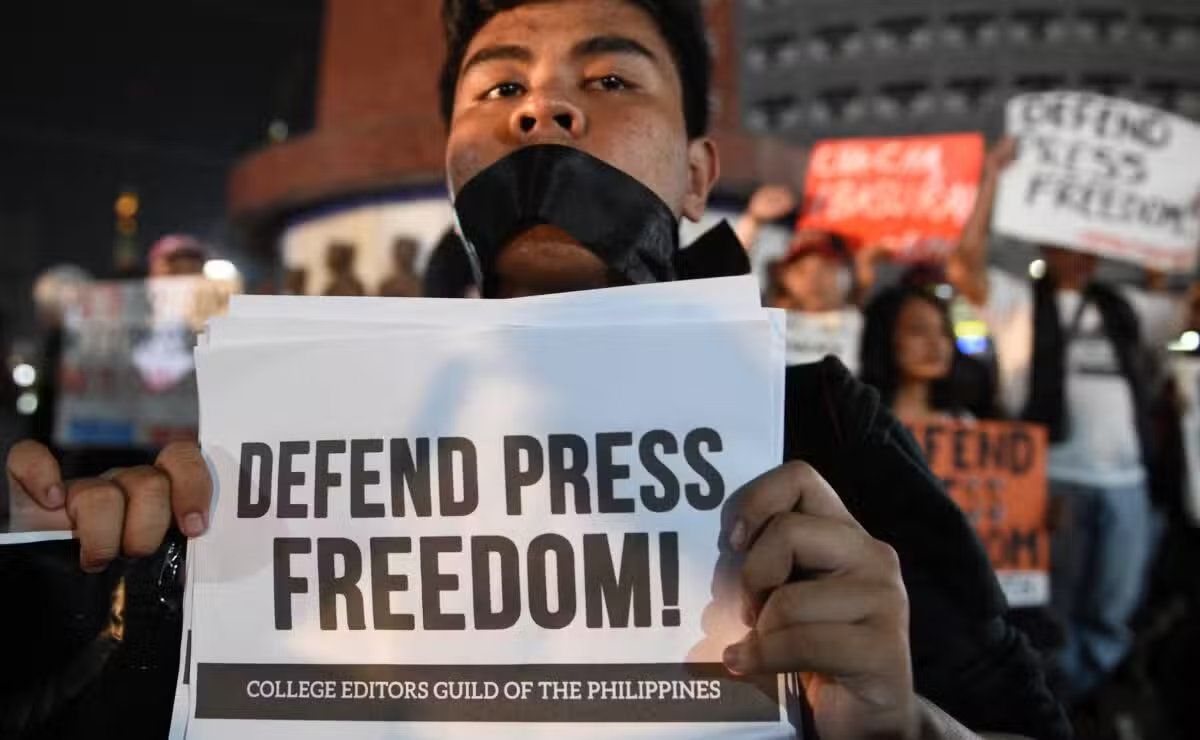
More than four years into President Ferdinand Marcos Jr.'s administration, the Philippine press landscape has grown increasingly hostile. The National Union of Journalists of the Philippines has documented approximately 260 attacks on media workers during this period, painting a picture of deteriorating conditions for those tasked with holding power accountable.
Yet beneath these headline figures lies a more granular and troubling reality: the violence and intimidation are not randomly distributed across the media sector. Instead, they fall disproportionately on those least equipped to withstand them. According to NUJP records, more than 180 of the documented cases involved journalists employed by local newspapers, community radio stations, alternative media platforms, and campus-based publications. This concentration reveals a deliberate or structural targeting of smaller, independent news operations—outlets that typically operate on shoestring budgets, offer lower salaries, and maintain minimal institutional protections for their staff.
The implications are stark for journalists working outside Manila's major newsrooms. These community-based reporters often operate in environments where institutional safeguards are virtually non-existent and where local political and business elites wield considerable influence over public discourse. The combination of scarce resources and proximity to entrenched power creates a environment where intimidation, legal harassment, and violence become tools to silence inconvenient reporting. Yet despite these obstacles, provincial journalists persist in covering stories that metropolitan media outlets overlook—stories that matter most to ordinary citizens in their communities.
Jay Lavapiez, a 48-year-old broadcast journalist and station manager at Baskog Radyo in Roxas City, Capiz, exemplifies both the commitment and the peril inherent in community journalism. Last June, Lavapiez survived an assassination attempt when two men on a motorcycle blocked his vehicle and fired four bullets from a 9 mm pistol. The attack was not random but rather a culmination of escalating harassment linked to his reporting. Beginning in the previous year, Lavapiez and his wife India had reported on a cemetery operated by a local official and documented allegations of abuse and corruption in their community. What they presented as journalism in the public interest triggered a legal counteroffensive: multiple cyberlibel cases filed against the couple and their staff across jurisdictions including Manila, Muntinlupa, and Capiz.
Lavapiez articulates a reality that distinguishes provincial journalism from its metropolitan counterpart: provincial journalists cannot simply resign and move to safer employment or different locations. For Lavapiez, journalism is not merely a profession but an integral part of community life. He broadcasts from the same streets where he lives, covers officials and citizens he knows personally, and must continue his work the following morning despite the risks. This embeddedness creates both moral commitment and acute vulnerability. When journalists question those in power at the local level, the consequences are immediate and personal: cyberlibel suits, online harassment, intimidation campaigns, threats, character assassination, and armed violence become not theoretical risks but lived experience.
The economic dimension compounds the danger. Journalists working in provincial outlets receive salaries significantly below those of their counterparts in major news organizations, yet they face comparable or even greater risks. This compensation gap is particularly acute given that provincial media workers often lack access to legal support, security assistance, or institutional advocacy that larger newsrooms can provide. The disparity between modest provincial salaries and substantial personal danger creates a situation where only those motivated by genuine commitment to community service remain in the profession—a reality that Lavapiez acknowledges explicitly.
The human cost of this structural vulnerability became tragically apparent in April when community journalist RJ Ledesma was killed in Toboso, Negros Occidental. Ledesma had been engaged in community work and reporting on renewable energy projects and their impact on agricultural communities when he was caught in a military operation that a fact-finding mission later condemned for serious violations, including alleged indiscriminate firing despite reportedly clear visibility of the scene. Ledesma's death represents the extreme end of the spectrum of threats facing community journalists, but it does not stand in isolation. Rather, it represents the culmination of systemic pressures and vulnerabilities that characterize provincial journalism throughout the Philippines.
Lavapiez emphasizes that community journalism operates according to different motivations than metropolitan journalism. It is not primarily driven by financial incentive or career advancement through major media outlets. Instead, community journalists are motivated by a recognition that someone must ask difficult questions when public money is involved and when ordinary citizens feel unheard by larger institutions. This motivation—rooted in civic responsibility rather than professional ambition—sustains journalism in communities where institutional support is minimal and personal risk is substantial.
The irony that Lavapiez identifies is both profound and troubling: proximity to one's community, which should theoretically provide protection through social connection and accountability to neighbors, instead generates vulnerability. When journalists live and work in communities where their identities, residences, and professional locations are known to all, including those with reasons to silence inconvenient reporting, proximity becomes a liability. Everyone knows where community journalists work, where they live, and who they are. This transparency, which is essential for community journalism, simultaneously makes journalists targets for those seeking to suppress reporting.
Despite these realities, Lavapiez and other community journalists do not demand special privileges or exceptional treatment. Their request is fundamentally modest: the freedom to conduct journalism without threat of violence, harassment, legal persecution, or physical harm. This basic request—that journalists be permitted to ask questions without facing existential risk—should be non-controversial in any democracy. Yet in the contemporary Philippine context, it represents an increasingly difficult demand to satisfy.
For Southeast Asia more broadly, the Philippine situation offers cautionary lessons about the concentration of press attacks on community media. As governments across the region consolidate power and seek to control public discourse, smaller and more independent outlets become particular targets precisely because they lack the institutional resources to mount robust legal defenses or coordinate public campaigns against persecution. The experience of Philippine community journalists demonstrates that press freedom cannot be measured solely by high-profile cases affecting major metropolitan outlets. Instead, genuine press freedom must extend to the journalists working closest to communities and furthest from institutional protection—those whose reporting, though often unrecognized by national audiences, forms the foundation upon which democratic accountability rests.
The challenge facing the Philippine government and society is whether community journalism will survive ongoing pressure. If provincial outlets continue to face disproportionate attacks while lacking commensurate resources for self-defense, an entire category of accountability journalism risks extinction. The consequence would be communities left without independent information sources about local governance, development projects, corruption, and abuse of power. Allowing community journalism to be silenced through violence and legal harassment would represent a fundamental failure of democratic governance—one with implications extending far beyond the journalists themselves.

