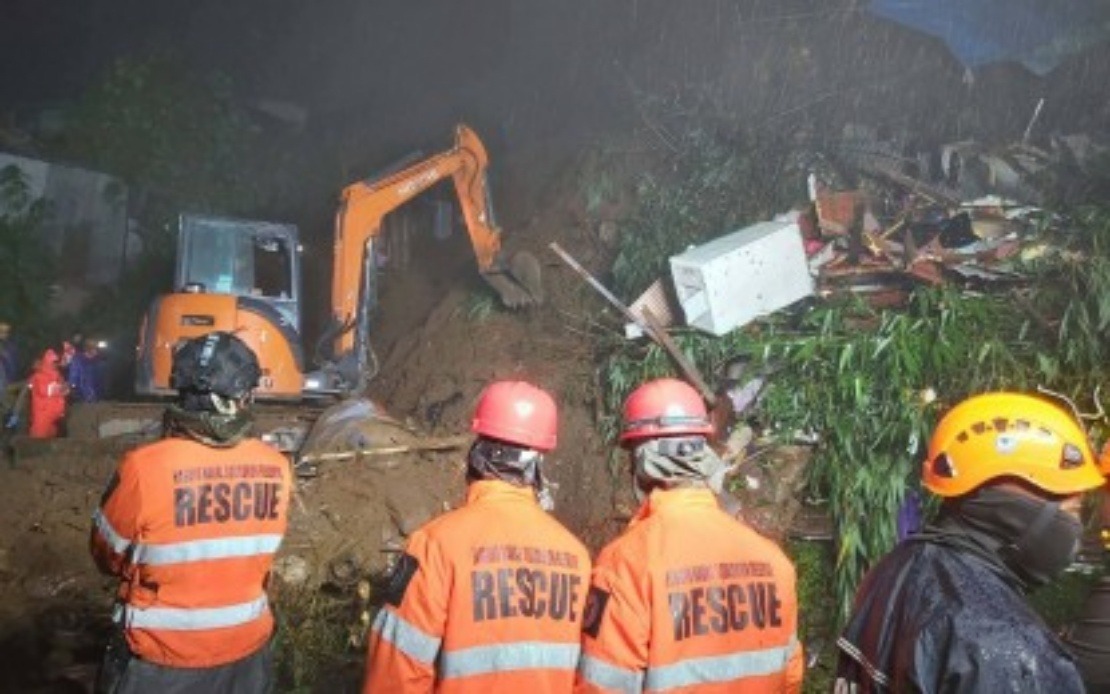
Consecutive tropical weather systems have wreaked havoc across the Philippines, leaving a trail of destruction that has touched millions of households and claimed at least 19 lives, according to verified reports from the country's Office of Civil Defence released this week. The casualty toll reflects the mounting toll from Tropical Depressions Luis and Maymay combined with the seasonal southwest monsoon, which have battered the archipelago with torrential rainfall and widespread flooding over recent days.
The confirmed deaths represent a significant humanitarian crisis, with the bulk of fatalities concentrated in the northern island of Luzon. The Office of Civil Defence verified that twelve deaths occurred in the mountainous Benguet province, four in the eastern province of Rizal, and three in the southern province of Batangas. In addition to the fatalities, the disaster has left fifteen people injured across several provinces including Benguet, Ilocos Sur, Rizal and Cavite, underscoring the severe physical toll of the weather disturbances. Four persons remain unaccounted for, with three missing in Benguet and another in Batangas.
The scale of displacement represents one of the crisis's most acute dimensions. Nearly 650,000 families totalling approximately 2.27 million individuals have been displaced or affected by the combined impact of the two tropical depressions and monsoon conditions. The affected regions span a vast swathe of the country, encompassing the northern Ilocos Region and Cagayan Valley, the populous Central Luzon belt that includes Manila's surrounding provinces, the agricultural Bicol Region, the island regions of Western Visayas and Mimaropa, the Mindanao-based Zamboanga Peninsula, the Cordillera highlands, and the National Capital Region itself. This geographic spread reveals how the weather systems transcended regional boundaries to create a nationwide emergency.
Emergency response infrastructure has been strained by the scale of displacement. The Philippine government has activated an estimated 919 evacuation centres across affected areas, which currently shelter approximately 26,174 families comprising roughly 95,000 individuals. These centres, often schools, community halls, and other public buildings repurposed for emergency shelter, represent a critical lifeline for those whose homes have become uninhabitable due to flooding, landslides, or structural damage.
Physical infrastructure damage has been substantial and geographically dispersed. A total of 639 residential structures sustained damage from the storms, while 45 houses were completely destroyed, displacing residents who face the dual challenges of finding shelter and rebuilding their lives. Beyond residential impacts, broader infrastructure networks have suffered considerable harm, with preliminary damage assessments estimating losses at 1.46 million Philippine pesos, roughly equivalent to RM97,000. However, the most devastating economic blow has fallen upon the agricultural sector, which forms the backbone of rural Philippine livelihoods and food security.
Agricultural devastation compounds the immediate humanitarian emergency into a longer-term economic crisis. The Office of Civil Defence estimates agricultural damage at 135.33 million Philippine pesos, representing significant crop losses and livestock mortality across farming communities. For a nation where agriculture employs millions in rural areas, particularly in regions like Bicol, Central Luzon, and Cagayan Valley that were directly impacted, these losses threaten rural incomes for months or years to come. Crop destruction during growing seasons can disrupt supply chains, increase food prices, and deepen poverty in agricultural communities already vulnerable to seasonal hazards.
For Malaysian observers and policymakers, the Philippine disaster carries important regional implications. Southeast Asian nations share similar exposure to tropical weather systems during the monsoon season, and the Philippines' experience demonstrates the vulnerability of densely populated archipelagos to compound weather disasters. The simultaneous occurrence of two tropical depressions coupled with seasonal monsoon activity illustrates how climate variability can amplify humanitarian impacts when multiple weather phenomena overlap geographically and temporally. Malaysia, with its own tropical geography and monsoon exposure, faces analogous risks that warrant continued investment in early warning systems, evacuation infrastructure, and disaster response capacity.
The crisis also highlights disparities in disaster resilience across and within developing nations. The concentration of deaths and displacement in specific provinces such as Benguet and Rizal suggests that geographic isolation, terrain vulnerability to flooding and landslides, and potentially lower infrastructure standards in certain areas amplify disaster impacts. Rural and upland communities, often with fewer resources and less robust infrastructure, typically bear disproportionate burdens when severe weather strikes. This pattern repeats across Southeast Asia, where development unevenness creates unequal vulnerability to natural hazards.
The Philippine government's rapid verification and reporting of casualty figures and displacement estimates, while incomplete pending final assessments, demonstrates the scale of information management required during such crises. Coordinating response across ten regions involving nearly 2.3 million affected persons requires sophisticated logistics, inter-agency cooperation, and resource allocation decisions that will shape recovery prospects for affected communities. The activation of nearly 900 evacuation centres reflects mobilisation of government and community resources, though the sustainability of such operations depends on stable funding and supply chains.
Looking forward, the Philippines faces a multifaceted recovery challenge extending well beyond the immediate emergency phase. Housing reconstruction, agricultural rehabilitation, infrastructure repair, and livelihood restoration will consume government attention and resources for months. The displaced populations sheltering in evacuation centres require not only immediate humanitarian assistance but also transitional support as they navigate the path back to normalcy. For regional observers, the unfolding situation serves as a reminder of how tropical weather systems pose recurring threats to Southeast Asian populations and economies, and how preparedness investments, though costly, remain essential insurance against predictable natural hazards in one of the world's most hazard-prone regions.

