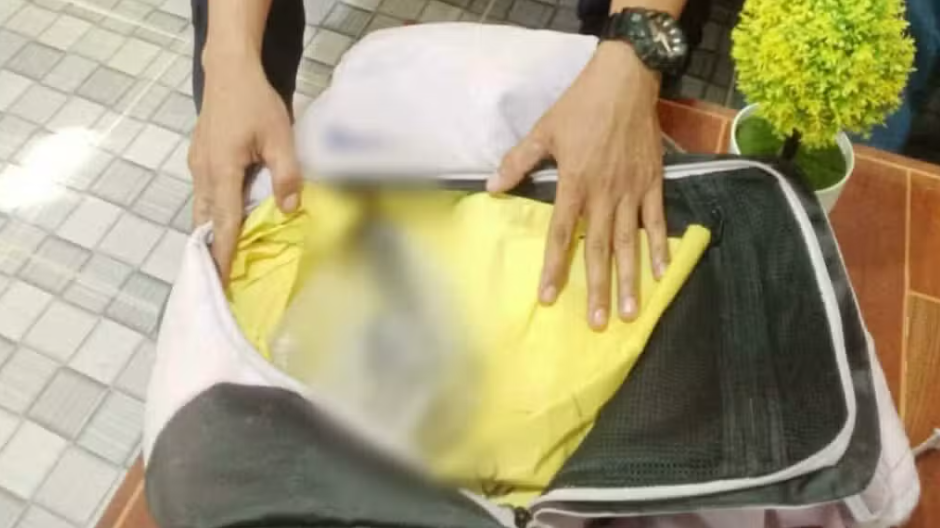
A .357-calibre revolver was uncovered in the school bag of a 14-year-old student during a surprise bag inspection at a school in Pinamungajan, Cebu on Thursday afternoon. The discovery occurred at approximately 3.50pm when a teacher, implementing precautionary safety protocols, found the weapon concealed among the student's belongings. The school wasted no time in notifying police, and officers who arrived at the campus quickly verified the report and secured the firearm, which was identified as a .357 Smith & Wesson Magnum revolver. The weapon contained no ammunition.
Investigations revealed that the revolver had belonged to the student's grandfather, who kept it secured in a cabinet at their residence. The teenager removed the firearm without authorisation and transported it to school on the day of discovery. Police noted that the student's parents were employed outside the municipality and that the minor was being supervised by his grandparents at the time of the incident. Following standard procedures for cases involving minors, authorities transferred the student to the custody of the Municipal Social Welfare and Development Office pending the arrival of his parents or legal guardian.
The incident unfolded against a backdrop of escalating safety anxieties that have gripped educational institutions throughout Cebu. Just days prior, a shooting at a senior high school in Zamboanga had resulted in two fatalities, prompting regional officials to reassess security frameworks across the province. Governor Pamela Baricuatro responded by instructing the provincial police director and municipal police chiefs to strengthen protective measures in both public and private educational facilities, emphasising the need for increased police visibility, systematic security inspections, and improved communication channels between law enforcement and school management.
Executing the governor's directive, Cebu Police Provincial Office Provincial Director Police Colonel Abubakar Udang Mangelen Jr announced the deployment of additional officers to schools through an expanded one-police-to-school programme, implemented in cooperation with local government units and institutional leaders. This initiative represents a significant shift in the province's approach to campus safety, moving beyond occasional checks to sustained police presence designed to deter unauthorised weapons and identify potential threats before they materialise.
The discovery underscores a critical vulnerability in Philippine households: inadequate firearm storage practices in environments where children have access. Police took the opportunity to issue renewed warnings to registered firearm owners, emphasising the legal and moral obligation to store weapons in locked, secure locations that are impossible for minors to reach. The message carries particular weight in the Philippines, where an estimated three million firearms remain in civilian hands, many kept in conditions that lack basic security protocols.
For Malaysian observers, the incident offers instructive parallels and contrasts. While Malaysia maintains stricter civilian firearm regulations through its Arms Act, cases of unauthorised weapon possession in educational settings do occasionally surface, typically involving armed forces families or unlicensed firearms. The Philippine situation highlights how inadequate storage, combined with a youthful population living in multigenerational households, creates unique risks that require comprehensive family-level intervention rather than enforcement measures alone.
The teenager's case also illuminates the complex challenge facing school administrators and law enforcement in the region. Random bag inspections, while potentially effective for deterrence, must be weighed against privacy considerations and implementation capacity. Many Southeast Asian schools lack the resources to conduct thorough security checks routinely, making targeted interventions and intelligence-sharing with law enforcement more practical alternatives.
Authorities continue to investigate the circumstances surrounding how the minor gained knowledge of the firearm's location and what motivated him to bring it to school. Preliminary findings suggest no premeditated intent to cause harm, but investigators are examining whether peer pressure, curiosity, or other psychological factors played a role. Coordination between the MSWD Office, school counsellors, and the student's family will determine what rehabilitative and preventive measures are appropriate.
The firearm's recovery marked a second consecutive week of weapons discoveries at Philippine educational institutions, signalling either heightened vigilance following the Zamboanga incident or an emerging pattern that demands urgent attention. Provincial officials have pledged continued monitoring and are evaluating whether the one-police-to-school deployment should be expanded beyond Cebu City to more remote municipalities where oversight may be weaker.
This incident serves as a reminder for households throughout the Philippines and the broader Southeast Asian region that firearm security extends beyond adult responsibility into the realm of family education and environmental awareness. Parents and guardians must engage children in conversations about weapon safety and the dangers of unauthorized possession, while also ensuring that storage practices render firearms physically inaccessible regardless of a minor's knowledge or curiosity.

