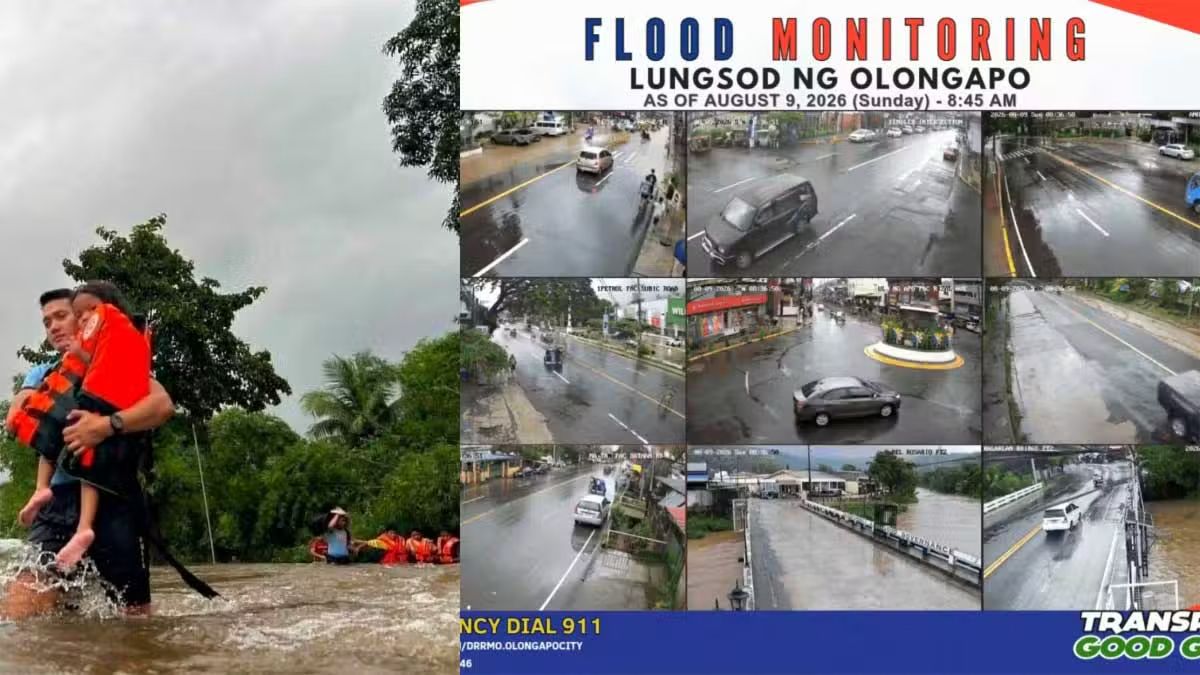
The Philippines is mobilising substantial rescue and relief operations across multiple regions as the southwest monsoon, locally known as the habagat, intensified by two tropical cyclones, continues to devastate communities. Authorities deployed additional personnel and resources on Sunday to address the worsening crisis in flood-hit areas, with vulnerable populations being ordered to evacuate as torrential downpours show no signs of abating. The scale of the unfolding emergency underscores the vulnerability of large swathes of the archipelago to seasonal weather systems and raises fresh questions about the nation's disaster preparedness infrastructure.
The National Disaster Risk Reduction and Management Council reported that at least 382,000 people spanning approximately 110,000 families have been affected by the disaster, with the heaviest concentrations of displacement occurring across eight regions in Luzon and Mindanao. This figure represents a significant humanitarian challenge, with entire communities facing displacement and the prospect of prolonged recovery periods. The breadth of the impact—spanning multiple island groups and diverse geographical zones—reflects how monsoon systems can create cascading crises across an enormous territory. Most concerning is the concentration of affected populations in areas already characterised by limited infrastructure and economic vulnerability, where recovery prospects remain uncertain.
At least nine fatalities have been documented in connection with the disaster, illustrating the lethal nature of the meteorological event. Among those who perished was a Philippine National Police officer in Negros Occidental who died while attempting to rescue two of his colleagues from a raging river, an act of sacrifice that underscores the personal risks faced by first responders. Another victim was a 28-year-old resident of Cuenca, Batangas, who reportedly suffered fatal electrocution while navigating a flooded section of J.P. Laurel Highway in Lipa City. The remaining seven deaths involved multiple drowning incidents and landslide-related fatalities distributed across provinces including La Union, Pangasinan, Benguet, and Rizal, with a minor among those who drowned in Ilocos Sur. These deaths represent merely the confirmed toll, with authorities remaining alert to potential additional casualties as search and recovery operations continue.
The Philippine Atmospheric, Geophysical and Astronomical Services Administration issued an advisory on Sunday at 5 p.m. warning that intense rainfall would persist through Wednesday, with particularly severe precipitation expected in mountainous and elevated terrain. The meteorological agency cautioned that the impacts could intensify in localities that have already accumulated substantial rainfall, creating compounding hazards as water-saturated soil and waterways reach critical saturation points. The advisory referenced converging weather disturbances, specifically Tropical Depression Luis and Tropical Storm Maymay (known internationally as Kujira), as factors driving the exceptionally heavy precipitation. The forecast represents a significant challenge for affected communities, as they face additional days of inundation when water management infrastructure is already overwhelmed.
The Philippine National Police acknowledged that widespread flooding and severe congestion have paralysed major transportation routes throughout Luzon, prompting local administrative divisions to initiate emergency evacuation protocols. Police chief General Jose Melencio Nartatez Jr emphasised that officers had been allocated extensively across affected zones to facilitate evacuations and deliver disaster response services. He urged the public to remain composed while remaining attentive to official directives and safety guidance issued by authorities. The police leadership also warned against the dissemination of unverified information through online platforms, cautioning that such activity could generate unnecessary public alarm and potentially hinder coordinated response efforts. This appeal reflects growing concerns about misinformation during crisis periods and the challenge authorities face in maintaining public trust and orderly behaviour during emergencies.
Critical water infrastructure has been severely stressed by the incessant rainfall. The Angat Dam in Norzagaray, Bulacan experienced a dramatic rise of nearly 15 metres over a ten-day period, reaching 164.80 metres above sea level by Sunday afternoon. This represents a climb from its earlier reading of 161.30 metres above sea level measured at 6 a.m., and constitutes a recovery of nearly 14 metres from its record low of 150.61 metres above sea level recorded on July 30. The reservoir's recovery is significant given its role in supplying the greater Manila metropolitan area, though the rapid ascent also presents risks of overflow and potential spillage. Downstream, the Ipo Dam approached its critical spilling threshold of 101 metres above sea level and was releasing water at a rate of 314.91 cubic metres per second, indicating that the hydrological system was being pushed to operational limits.
Flooding across Bulacan province forced approximately 1,000 residents from multiple municipalities and cities to seek refuge in evacuation centres, with floodwaters in some localities reaching approximately four feet in depth. The Bulusan Riverbank in Calumpit became impassable for light vehicles, effectively cutting off ground transportation for communities in the vicinity. Across the broader Luzon region, the monsoon triggered an interconnected chain of hazards including flooding, landslides, bridge closures, and road deterioration. Two bridges in Cagayan became inaccessible as the Chico River swelled beyond safe crossing levels, while Nueva Vizcaya, Abra, and Mountain Province experienced multiple landslides and rockfall incidents that rendered numerous roads unusable. In Benguet, floodwaters in La Trinidad reached depths exceeding two feet, inundating residential neighbourhoods and displacing families from their homes.
In Central Luzon, which encompasses multiple provinces critical to the nation's agricultural and economic output, 98 villages experienced flooding that affected nearly 170,000 individuals. Authorities conducted pre-emptive evacuations of 781 families totalling 2,544 people from Nueva Ecija and Zambales ahead of predicted further deterioration. Zambales faced particularly severe circumstances, with community disconnection resulting from dike breaches in San Marcelino and a bridge washout in Barangay Santa Fe caused by powerful water currents. The municipality of San Antonio suffered structural damage to at least 11 residential properties and a community multipurpose facility due to strong winds accompanying the weather system. These impacts reflect how monsoon events extend beyond flooding to encompass structural damage and infrastructure destruction that can require prolonged reconstruction.
The Calabarzon region, encompassing Cavite, Laguna, Batangas, Rizal, and Quezon, confronted challenges that obliged more than 7,000 families to leave their homes. Of these displaced households, 3,134 families sought shelter in 117 designated evacuation centres distributed across 29 localities. Iloilo City experienced what authorities suspect was a tornado accompanied by intense monsoon winds that damaged a minimum of 52 residential structures, uprooted numerous trees and utility poles, and displaced over 150 residents. The diversity of hazards—from conventional flooding to suspected tornadic activity—illustrates how tropical weather systems can produce multiple, simultaneous threats that compound response challenges and overwhelm local emergency management capacities.
Maritime operations throughout the Philippines have been significantly disrupted by the meteorological emergency. The Philippine Coast Guard reported that 543 individuals comprising passengers, commercial truck drivers, and cargo handlers found themselves stranded at 28 separate ports distributed across four regions. This disruption affects not only personal travel but also supply chain continuity for goods transported via sea routes, a concern of particular significance for an archipelago dependent upon marine transport for inter-island commerce. The scale of maritime disruption underscores how monsoon systems impact economic activity far beyond the immediate affected coastal and inland zones.
The Makabayan political coalition seized upon the disaster to criticise infrastructure and budgetary processes within the administration of President Ferdinand Marcos Jr. The coalition contended that the administration's flood control initiatives and broader infrastructure projects have demonstrated systemic inadequacies exposed by the current emergency. Coalition members called for heightened parliamentary scrutiny of unprogrammed appropriations—discretionary funding allocated outside regular budget cycles—warning that such mechanisms could facilitate resource diversion toward politically motivated pork barrel allocations that potentially enable legislative corruption. As deliberations on the 2027 national budget proceed, the coalition's intervention signals an emerging political dimension to disaster response, with opposition voices arguing that infrastructure underinvestment and budgetary mismanagement have exacerbated vulnerability to natural hazards. This criticism, whether or not substantively grounded, will likely feature prominently in political discourse surrounding disaster preparedness and infrastructure spending.

