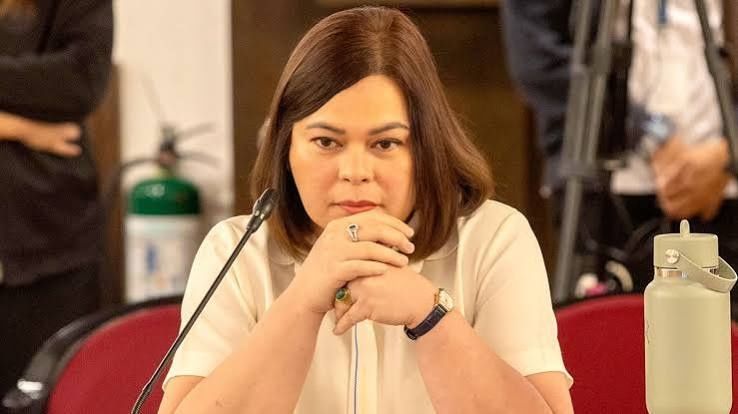
The Philippines is bracing for a politically charged week as Vice President Sara Duterte prepares to stand trial before the Senate impeachment court, with authorities mobilizing significant security resources to maintain order during the sensitive proceedings. The Philippine National Police announced Friday that approximately 6,000 officers will be stationed throughout Manila's Senate district to ensure the trial proceeds without disruption, reflecting the gravity of the constitutional moment facing the nation's second-highest office.
The impeachment trial, set to commence Monday, marks a dramatic escalation in political tensions that have gripped the Philippines since late 2024. Duterte, the daughter of former President Rodrigo Duterte who served from 2016 to 2022, faces unprecedented constitutional scrutiny just months after announcing her intention to contest the 2028 presidential election. The timing of the trial underscores the fractious nature of Philippine politics, where personal rivalries between political dynasties frequently translate into high-stakes institutional confrontations.
Security preparations underscore the potential for unrest during the trial. Beyond the 6,000 police deployment, authorities in Pasay City—where the Senate complex occupies a strategic location within Metro Manila—have announced temporary road closures beginning Monday. These defensive measures suggest government concern that the trial could attract large crowds of supporters and detractors, necessitating careful traffic management and crowd control to prevent congestion and potential clashes. Such precautions have become routine during politically sensitive constitutional proceedings in the Philippines, where public sentiment often runs high.
The Senate impeachment court issued a directive Thursday requiring Duterte to appear in person or through legal representation, establishing the formal framework for her defense. This summons represents the court's assertion of authority over the vice president, regardless of her constitutional rank, signalling that no office holder stands above the impeachment process. Duterte's response to this directive—whether she personally attends or delegates her appearance to counsel—will carry symbolic weight beyond the legal implications, potentially influencing public perception of her political standing.
The impeachment proceeding itself carries potentially catastrophic consequences for Duterte's political ambitions. Should more than two-thirds of the Senate—a supermajority threshold designed to guard against partisan removal—vote to convict, she would immediately lose her vice presidency, face permanent disqualification from all future public office, and see her presidential aspirations for 2028 extinguished. This stringent requirement for conviction reflects the Constitution's intent to prevent impeachment from becoming merely another instrument of political competition, though it simultaneously means that a sitting vice president must face extraordinarily unified opposition to face removal.
Parallel to the impeachment trial, the Office of the Vice President received a clean audit opinion from the Commission on Audit for calendar year 2025, with auditors confirming that the OVP's financial statements were fairly presented and adhered to applicable reporting standards. However, the audit clearance provides only limited political shelter, as impeachment proceedings operate on distinct legal and political grounds that are fundamentally separate from financial compliance. The timing of the positive audit report may represent an attempt by the vice president's office to demonstrate institutional competence, yet financial propriety carries limited bearing on the substantive charges driving the impeachment push.
The constitutional drama unfolding in Manila reflects broader patterns within Philippine democracy, where impeachment has emerged as an increasingly weaponized political tool. The Philippines has witnessed multiple impeachment attempts against various officials in recent decades, creating a troubling precedent whereby legislative majorities routinely weaponize constitutional mechanisms to neutralize political rivals. For regional observers, particularly Malaysian analysts tracking democratic governance in Southeast Asia, the Philippine case demonstrates the vulnerability of presidential systems to majoritarian excess when institutional checks prove insufficient to constrain the power of aligned legislative coalitions.
Duterte's position as vice president adds complexity to the political equation. Unlike a sitting congresswoman or senator whose removal might affect only their individual political prospects, the removal of a vice president creates a constitutional succession question and potentially destabilizes executive functions. This consideration may influence some senators inclined toward constitutional caution, even if they harbour reservations about the vice president's conduct or political direction. The high bar for conviction—the two-thirds supermajority—partially reflects this institutional calculus.
The trial's timing, coinciding with the opposition's consolidation of efforts to prevent Duterte's 2028 presidential run, illustrates how impeachment operates as a preventive political mechanism in the contemporary Philippines. By removing her from office before the 2028 campaign season fully materializes, Duterte's opponents would effectively eliminate a significant electoral contender while maintaining the constitutional facade of judicial impartiality. This instrumentalization of impeachment processes raises important questions about democratic legitimacy, even in contexts where formal constitutional procedures are meticulously observed.
For Malaysia and other ASEAN democracies, the Philippine impeachment trial offers instructive lessons regarding the balance between protecting senior officials from frivolous removal and ensuring genuine accountability. As the proceedings unfold over coming weeks, observers will assess whether the Senate maintains institutional independence or whether political tribalism overwhelms constitutional duty. The 6,000 police officers deployed to secure Manila's Senate complex will serve not merely as peacekeepers but as symbols of democratic governance being tested under strain.

