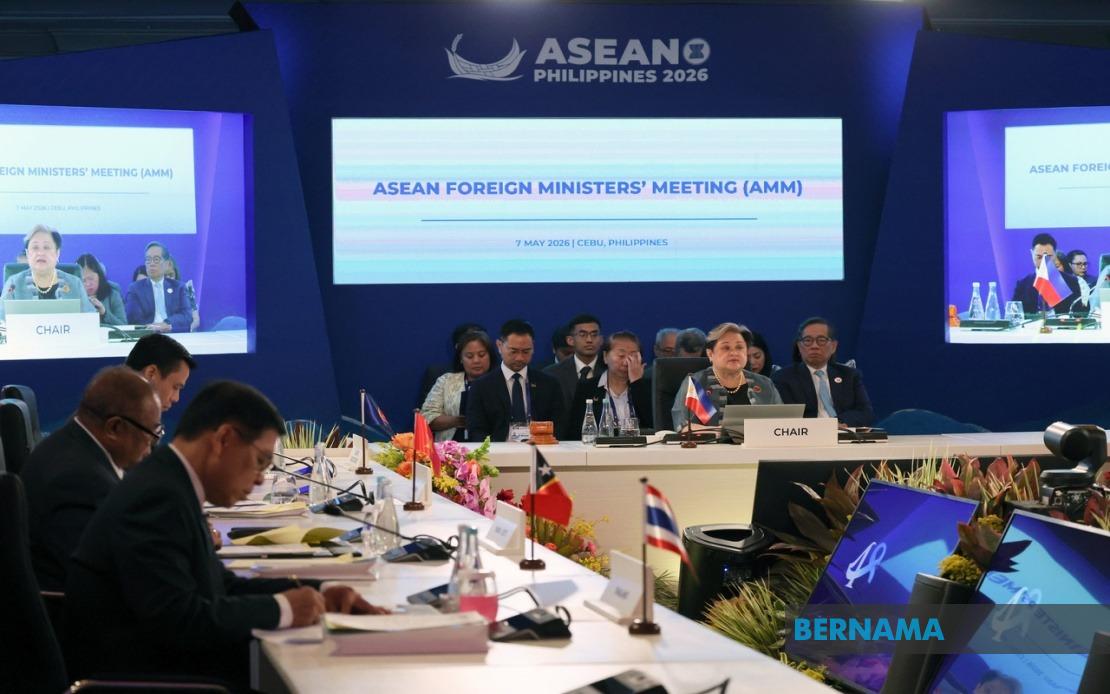
The Philippines has reasserted its commitment to the ASEAN Five-Point Consensus as the cornerstone of regional efforts to resolve Myanmar's political crisis, yet simultaneously champions a more adaptive and grounded approach to how the framework operates in practice. Philippine Foreign Affairs Secretary Ma. Theresa P. Lazaro articulated this position in recent comments, emphasizing that flexibility in implementation does not constitute abandonment of the original consensus but rather a necessary evolution in response to the complex, shifting realities confronting Myanmar and the region.
Lazaro's remarks signal growing recognition within ASEAN that the Five-Point Consensus, while foundational, requires recalibration in its operational methodology. Several ASEAN leadership voices have increasingly called for member states to reconsider implementation strategies to generate more substantive outcomes. The Philippines positions itself as defending the consensus framework itself while supporting colleagues who advocate for tactical adjustments that could prove more effective given Myanmar's deteriorating security environment and the fragmentation of political actors since the February 2021 military coup that ousted civilian leader Aung San Suu Kyi.
Adopted in April 2021, the original Five-Point Consensus established a comprehensive roadmap encompassing five interconnected pillars. These include halting violence immediately, facilitating inclusive talks among all conflict parties, appointing an ASEAN Special Envoy to broker mediation, ensuring humanitarian aid reaches affected populations, and maintaining the envoy's active engagement across the full spectrum of Myanmar stakeholders. The framework represented ASEAN's consensus position but has faced practical constraints in implementation as the Myanmar situation has deteriorated and multiple armed actors have fractured from state control.
The question of Myanmar's representation within ASEAN remains contentious and tied directly to demonstrable progress on the consensus framework. Lazaro indicated that restoration of Myanmar's full political participation would hinge on tangible advances in key areas: meaningful de-escalation of violence, genuine advancement in constructive dialogue mechanisms, and successful delivery of humanitarian relief to civilians. This conditionality reflects ASEAN's broader challenge of maintaining pressure on the Myanmar military while preserving its non-interference doctrine and the principle of engagement rather than isolation.
ASEAN's current approach restricts Myanmar's top leadership from attending regional summits, a measure implemented since the coup, while permitting non-political representatives to participate in high-level forums. This compromise arrangement attempts to balance ASEAN's principle of universal membership with its diplomatic response to the coup. The distinction between political and non-political representatives, however, has become increasingly blurred as Myanmar's military governance structure consolidates control over civilian administrative functions.
The Philippines, in its current capacity as ASEAN chair, has articulated an intention to create institutional spaces for sustained dialogue among member states regarding strategic direction in Myanmar engagement. The annual ASEAN Leaders' Review and Decision on Five-Point Consensus implementation provides a formal mechanism for periodic assessment of Myanmar's progress across the specified dimensions. This regular review process theoretically allows ASEAN to adjust its approach based on evolving circumstances while maintaining the framework's integrity.
Malaysia's Foreign Minister Datuk Seri Mohamad Hasan underscored similar themes in late June, noting that ASEAN is actively exploring enhanced approaches to strengthen Five-Point Consensus implementation. Malaysia's statement reaffirmed the framework's primacy while acknowledging that tactical innovations may be necessary. Malaysia additionally emphasized its commitment to sustained engagement with the full range of Myanmar stakeholders, including the military government, the opposition National Unity Government, the armed People's Defence Force, and various ethnic armed organizations that control territory across Myanmar's periphery.
The involvement of multiple armed actors in Myanmar's conflict presents particular complexity for ASEAN's diplomatic framework. Traditional ASEAN mediation assumes a primary interlocutor, but Myanmar's political fragmentation has created a situation where power is distributed among incompatible actors lacking unified command structures or shared negotiating mandates. Ethnic armed organizations controlling border regions have become increasingly autonomous, and the People's Defence Force—the armed resistance movement—operates outside state institutions while commanding substantial popular legitimacy among urban populations.
For Malaysia and other ASEAN states, engagement with this multiplicity of actors reflects pragmatism about who actually wields power on Myanmar's terrain. The National Unity Government, established as a parallel civilian authority, lacks territorial control but maintains significant international diplomatic recognition and popular support. The military junta controls state institutions and territorial resources but faces escalating armed resistance. This fragmented landscape means that meaningful progress toward dialogue and de-escalation requires simultaneous, differentiated engagement across these competing power centers.
The humanitarian dimension of the Five-Point Consensus has acquired heightened urgency as Myanmar's conflict has created severe civilian displacement and disrupted essential services across large regions. Delivery of humanitarian assistance has become simultaneously more critical and more complicated, as aid organizations navigate competing military authorities, armed group checkpoints, and deteriorating security conditions. ASEAN's capacity to facilitate humanitarian access depends partly on maintaining relationships with all parties, lending additional weight to its non-interference posture even as that principle faces criticism from human rights advocates.
The Philippines' emphasis on grounding implementation in observable reality reflects lessons from nearly three years of Five-Point Consensus engagement with minimal tangible progress. Violence has not ceased; dialogue remains fragmented rather than inclusive; the Special Envoy's role has proven limited; humanitarian access remains compromised; and engagement, while sustained, has not shifted political trajectories. Rather than abandoning the framework, Philippine leadership suggests that maintaining it while adjusting tactical approaches may preserve ASEAN unity while permitting more effective intervention.
For Malaysia and Southeast Asian readers, the stakes involve regional stability, refugee flows, drug trafficking prevention, and ASEAN's institutional credibility. Myanmar's conflict threatens to become chronic absent diplomatic breakthroughs, potentially creating permanent armed fragmentation and ungoverned spaces. ASEAN's willingness to adapt implementation while preserving the Five-Point Consensus suggests recognition that rigid adherence to initial frameworks may prove counterproductive, yet wholesale abandonment would undermine the organization's foundational consensus-building mechanisms that depend on continued agreement among all ten members.

