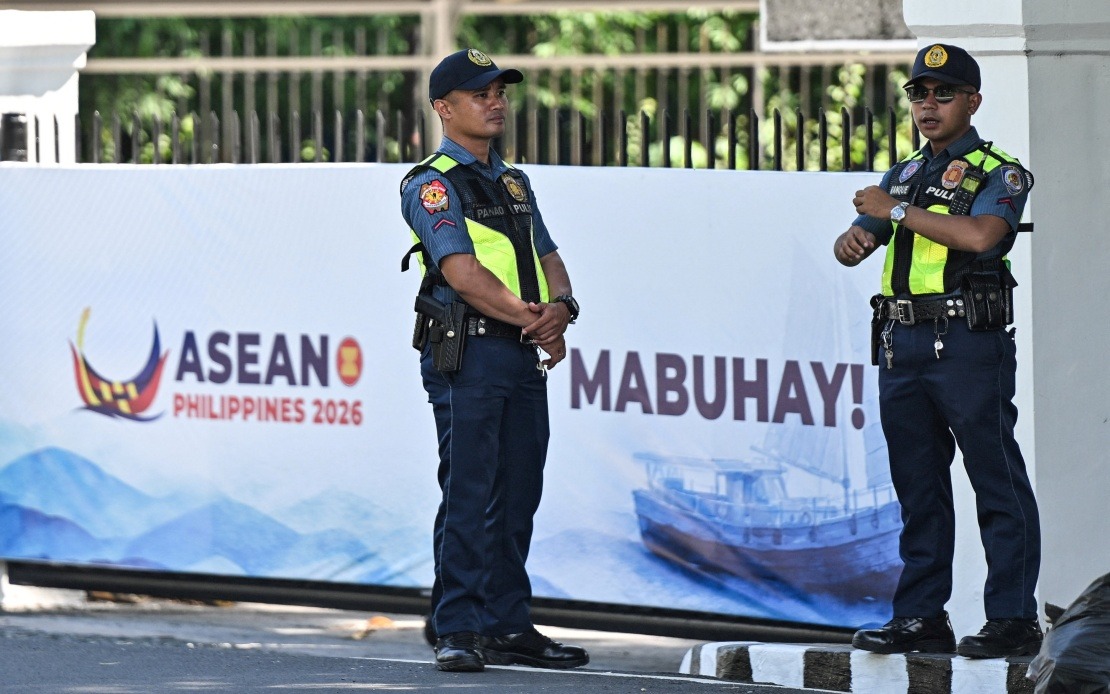
The Philippines took the helm of regional diplomacy this week as it convened the 59th ASEAN Foreign Ministers' Meeting and Related Meetings from July 20 to 24 in Manila, marking a pivotal moment for Southeast Asia's collective response to mounting security challenges and governance questions. According to Foreign Affairs Assistant Secretary Dominic Xavier Imperial, the gathering would concentrate on advancing development priorities while bolstering the regional bloc's sense of cohesion at a time when global tensions continue to reshape the geopolitical landscape. The timing underscores ASEAN's determination to maintain agency and voice influence over issues that directly affect its member nations, even as external powers intensify their engagement with the region.
The diplomatic calendar began with a sixteenth face-to-face encounter between ASEAN's foreign ministers and the ASEAN Intergovernmental Commission on Human Rights, signalling the grouping's renewed emphasis on safeguarding fundamental freedoms across Southeast Asia. Imperial stressed that this interface reflected a commitment to advancing human rights protections for all people in the region, with particular attention to marginalised and vulnerable populations. The session reflected a broader recognition within ASEAN that sustainable stability depends not merely on state-to-state relations but on robust domestic governance frameworks and respect for civil liberties. This focus on human rights remains contentious within ASEAN, given the divergent democratic trajectories and governance models among member states, yet the formal inclusion of such discussions represents incremental progress toward accountability and transparency.
Parallel to these conversations, ASEAN regional ministers convened separately to review implementation of the Southeast Asia Nuclear Weapon-Free Zone's 2023–2027 action plan and to consider applications from prospective states seeking accession to its founding protocol. This nuclear non-proliferation framework has anchored Southeast Asian security architecture for decades, providing a mechanism through which the region can resist great power pressure to allow weapons development or forward deployment of strategic arsenals. The effort to secure international recognition and support for maintaining Southeast Asia as a nuclear-free space remains a cornerstone of ASEAN's strategic autonomy, even as tension between nuclear-armed powers intensifies competition for influence in the region.
The formal opening of the 59th AMM on Tuesday drew foreign ministers, diplomatic representatives, and resident mission heads to the Philippine capital for substantive deliberations on ASEAN's three community pillars—political-security, economic, and socio-cultural. Ministers were tasked with reviewing progress across these pillars, assessing external partnerships, and airing positions on urgent international developments. The breadth of the agenda reflected the complexity of contemporary regional governance, where economic integration, security cooperation, and people-to-people exchange must advance in tandem. The meetings yielded two cornerstone documents: the 59th AMM Joint Communiqué and Guidelines on the Modalities for Engagement of ASEAN with High Contracting Parties to the Treaty of Amity and Cooperation in Southeast Asia.
The guidelines, a key deliverable of the Philippine chairmanship, establish standardised procedures for engagement with states that have not formalised bilateral partnerships with ASEAN under the Treaty of Amity and Cooperation framework. Imperial characterised these guidelines as instruments for deepening cooperation while preserving the TAC as the foundational instrument for regional peace, stability, and confidence-building. The TAC, signed in 1976, enshrines principles of non-interference, peaceful settlement of disputes, and respect for sovereignty—precepts that remain contested in the contemporary era yet remain vital for managing competitions between major powers. By clarifying modalities for engagement with non-signatory states, ASEAN seeks to maintain strategic flexibility while ensuring that external actors operate within agreed boundaries.
During Wednesday's schedule, ASEAN convened Post-Ministerial Conferences with eleven major dialogue partners: India, the United States, Canada, Russia, China, the Republic of Korea, Japan, Australia, New Zealand, the United Kingdom, and the European Union. These sessions provided structured forums through which ASEAN could articulate collective positions and hear the strategic intentions of global powers simultaneously. Such multilateral formats, while occasionally producing bland consensus language, serve a vital function in signalling to external actors that Southeast Asia speaks with collective voice on matters affecting regional stability. Imperial noted that the PMCs offered an invaluable opportunity for dialogue partners to address regional and global developments impacting ASEAN's interests, underscoring how interconnected the region's security is with broader international dynamics.
Thursday's agenda advanced deeper multilateral engagement through the 27th ASEAN Plus Three meeting, the 33rd ASEAN Regional Forum, and the 16th East Asia Summit. The APT mechanism, which brings together ASEAN with China, Japan, and South Korea, remains instrumental for economic and security dialogue within East Asia. The ARF, a broader forum encompassing ASEAN's dialogue partners, functions as the region's primary confidence-building mechanism. The EAS, involving major powers including the United States and India alongside ASEAN, provides a platform for managing strategic competition and promoting inclusive regionalism. These overlapping forums, while sometimes criticised as duplicative, create multiple channels through which differences can be aired and understandings can be deepened.
Central to the week's proceedings was a confirmed bilateral meeting between Philippine Foreign Affairs Secretary Ma. Theresa Lazaro and Chinese Foreign Minister Wang Yi. Imperial characterised this engagement as essential for addressing bilateral matters and examining how global developments reverberate through regional relations. The Philippines and China have endured a complicated relationship marked by maritime disputes, competing claims, and shifting strategic calculations. This high-level engagement provided an opportunity to stabilise bilateral ties and explore areas of mutual interest, even amid underlying tensions. The meeting's prominence on the diplomatic calendar reflected Manila's recognition that managing the Sino-Philippine relationship significantly influences ASEAN's capacity to maintain unity and strategic autonomy.
Two perennial tensions dominated ministerial discussions throughout the week: the ongoing Myanmar crisis and unresolved territorial disputes in the South China Sea. Myanmar's political trajectory following the February 2021 coup remains fractious, with ASEAN's Five-Point Consensus on Myanmar providing a framework for engagement yet proving difficult to implement. Imperial confirmed that ministers would exchange views on enforcement of this consensus while noting that ASEAN continued dialoguing not only with Myanmar's State Administration Council but also with other domestic stakeholders. This nuanced approach acknowledges the complexity of Myanmar's internal situation while signalling ASEAN's commitment to eventual democratic restoration.
Regarding the South China Sea, the Code of Conduct negotiations remain a permanent fixture on ASEAN's agenda. These discussions reflect the region's determination to establish rules-based mechanisms that constrain unilateral actions and reduce the risk of conflict escalation. The COC has advanced incrementally, with negotiations spanning multiple years and multiple rounds. Imperial's acknowledgment that COC discussions would continue underscores ASEAN's patient, albeit sometimes frustratingly slow, approach to managing great power competition through institutional frameworks. The South China Sea remains economically vital and strategically sensitive, making its peaceful management essential for regional prosperity and stability.
The week concluded on Friday with commemorative activities honouring the fiftieth anniversary of the Treaty of Amity and Cooperation, underscoring the enduring relevance of this foundational instrument. Established in 1976 as a mechanism for managing inter-Southeast Asian relations following regional conflicts, the TAC has proven sufficiently flexible to accommodate ASEAN's expansion and evolution while maintaining core principles of sovereignty and peaceful coexistence. The golden jubilee celebration offered opportunity to reflect on the TAC's role in preventing major-power domination and enabling smaller states to maintain strategic autonomy. As ASEAN navigates a multipolar world characterised by great power competition and technological disruption, the TAC's principles remain as pertinent as ever, providing a template for inclusive regionalism and rules-based order.

