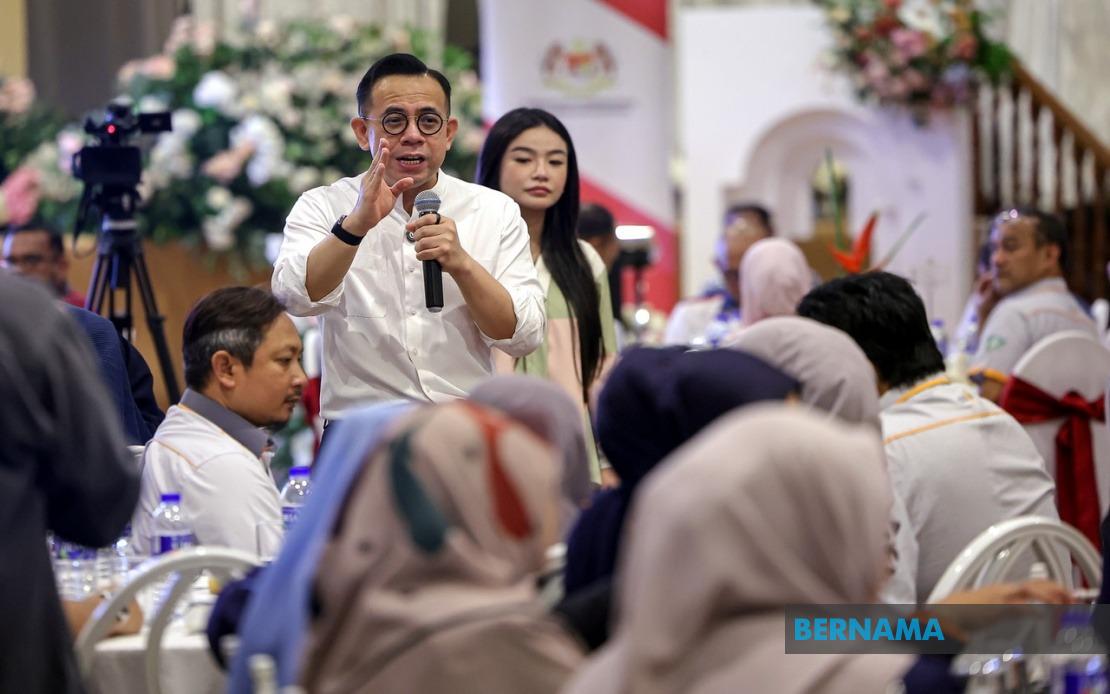
Pakatan Harapan's election manifesto for Negeri Sembilan stakes its claim not on aspirational rhetoric but on the tangible accomplishments of the state government under Menteri Besar Datuk Seri Aminuddin Harun. Speaking in Seremban, Penang DAP chairman Steven Sim positioned the coalition's 10-point pledges as extensions of programmes already demonstrating measurable results in the state, a strategy designed to appeal to voters seeking continuity rather than radical change.
Sim's emphasis on grounding political promises in demonstrated performance reflects a broader electoral calculation for Pakatan Harapan in Negeri Sembilan. Rather than presenting the manifesto as a break from the past, the coalition is framing it as an acceleration of existing momentum. This approach carries particular weight in a state where economic performance has been relatively steady under the current administration, giving Pakatan Harapan the incumbent's advantage of pointing to concrete outcomes.
The manifesto's centrepiece among younger voters is the establishment of a youth entrepreneurs fund, an initiative falling under the purview of the Ministry of Entrepreneur Development and Cooperatives. This represents the federal government's explicit commitment to backing state-level economic initiatives should Pakatan Harapan retain control, signalling that ministerial resources will flow toward supporting Negeri Sembilan's entrepreneurial ecosystem. For Malaysian states watching resource allocation, this demonstrates how federal coalition governments use ministry portfolios to sustain electoral support in key states.
Sim's framing of the manifesto as evidence of "political resolve" carries implicit messaging about stability. In an electoral environment where voters increasingly weigh governance competence against protest voting, positioning a manifesto as evolutionary rather than revolutionary can appeal to middle-class and business communities concerned with policy continuity. The emphasis on programmes that are "truly felt by the people" rather than "merely reflected in figures and slogans" suggests acknowledgement that Malaysian voters increasingly scrutinise the gap between announced targets and lived experience.
The timing of the manifesto launch intersects with significant federal-state coordination mechanisms. The Ministry of Entrepreneur Development and Cooperatives signalled it would deepen collaboration with the Negeri Sembilan government on entrepreneurship support, a pledge that carries fiscal implications. Federal ministries in coalition governments often use such commitments to boost state incumbents, creating networks of patronage and resource-sharing that reinforce electoral coalitions. Voters evaluating manifestos must consider whether such commitments reflect genuine structural support or tactical campaign positioning.
Negeri Sembilan's economic trajectory forms the backdrop to this election. The state has maintained relatively stable growth metrics compared to some Malaysian peers, and Aminuddin's administration has pursued infrastructure and industrial development initiatives that have gained measurable traction. By anchoring its manifesto in these achievements, Pakatan Harapan is essentially arguing that the risk calculus favours continuity—that voter trust earned through demonstrated delivery outweighs appeals from opposition candidates lacking executive track records in the state.
The manifesto structure also reflects lessons learned from previous electoral cycles. Rather than presenting an exhaustive list of new initiatives, Pakatan Harapan has concentrated on ten commitments, facilitating messaging discipline and allowing the coalition to focus campaigning resources. This focused approach differs from the sprawling manifestos of past elections, suggesting political maturation in how coalition governments present themselves to electorates increasingly fatigued by undelivered promises.
Youth entrepreneurship emerges as a thematic priority across multiple levels of government. The fund represents a response to demographic pressures—Malaysia's youth bulge requires economic pathways, and entrepreneurship has become a politically expedient alternative to conventional public sector employment. By embedding this commitment within broader economic development strategy, Pakatan Harapan positions itself as responsive to generational anxieties about employment and wealth creation.
The electoral calendar—early voting on July 28 and polling on August 1—compresses the campaign window, limiting opposition capacity to mount sustained counter-narratives. In compressed campaigns, incumbents holding manifesto advantages often consolidate support more effectively, as voter attention fragments across fewer media cycles. Pakatan Harapan's strategy of leading with proven achievements rather than unveiling dramatic new programmes suits this compressed timeline, as defending the status quo requires less persuasive effort than convincing voters to embrace untested alternatives.
For Southeast Asian observers, Negeri Sembilan's election reflects broader trends in coalition governance. Malaysian states have become laboratories for testing federal-state coordination mechanisms, patronage distribution models, and incumbent consolidation strategies. How effectively Pakatan Harapan translates manifesto commitments into electoral support will inform calculations about coalition durability in other Malaysian states and potentially across Southeast Asia, where coalition governments face similar pressures to demonstrate governing competence while maintaining internal unity.
The implicit message underlying Sim's statements is that Pakatan Harapan's viability as a governing coalition depends on translating administrative continuity into electoral renewal. Negeri Sembilan represents neither a coalition stronghold nor opposition territory, making it a bellwether for whether voters reward proven governance or punish governments for perceived stagnation. The manifesto's grounding in track record reflects confidence that the former calculation will dominate voter decision-making.

