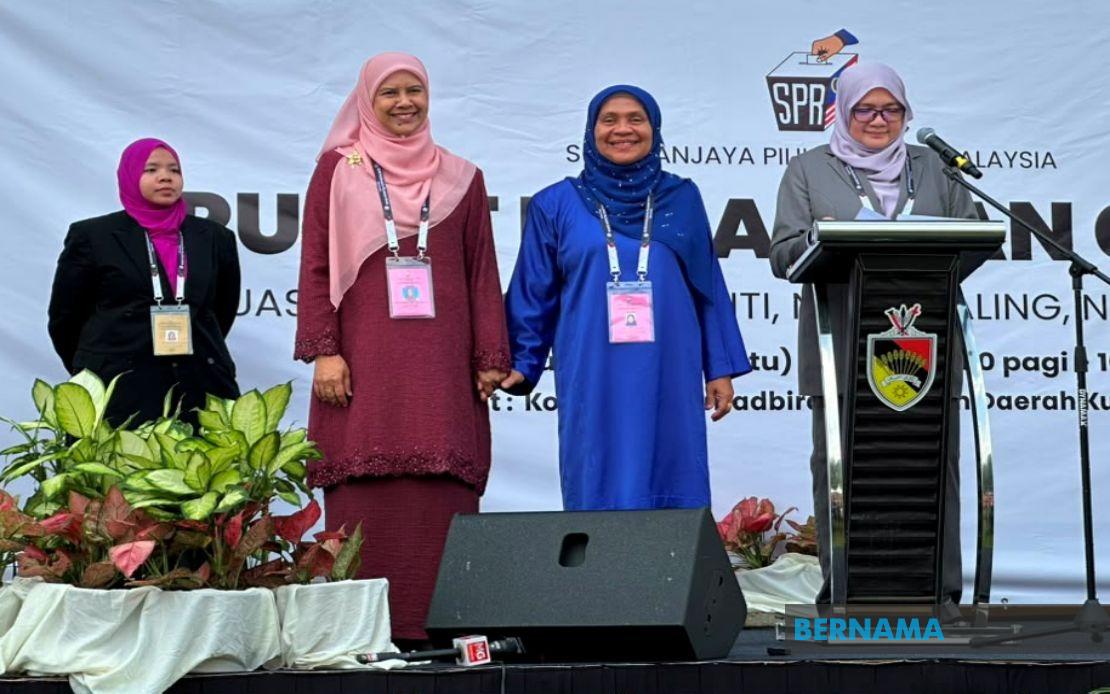
The Pilah state seat in Negeri Sembilan will witness a direct contest between two female candidates in the forthcoming 16th state election, marking a significant milestone in the state's electoral landscape. Incumbent Datuk Noorzunita Begum Mohd Ibrahim, representing Pakatan Harapan, will be challenged by Barisan Nasional's S. Leza Md Yasin following the conclusion of the nomination process. The all-female matchup in Pilah presents a notable shift in the composition of candidates competing for high-profile state positions, reflecting broader demographic changes in Malaysian electoral politics.
The nomination process concluded on July 18 with Kuala Pilah returning officer Nawal Mohammed Amin overseeing proceedings at the District and Land Office. Noorzunita Begum submitted her nomination papers at 9:03 am, with S. Leza following six minutes later at 9:09 am. The rapid succession of submissions underscored the efficiency of the administrative machinery managing state-level elections in the region. Both candidates had secured their respective party endorsements ahead of the nomination deadline, indicating organised campaign preparations from both coalitions.
Noorzunita Begum's bid for re-election carries the momentum of the incumbent advantage, though maintaining a seat in Malaysia's competitive electoral environment remains challenging regardless of positioning. As the sitting representative, she brings familiarity with local constituency concerns and established networks within Pilah's communities. Her representation of Pakatan Harapan reflects the coalition's continued competitive presence in Negeri Sembilan, a state where electoral fortunes have fluctuated between major political blocs. The challenge posed by S. Leza, however, signals that Barisan Nasional remains a formidable force in contested constituencies, particularly where fresh candidacies are presented.
Beyond the headline matchup in Pilah, the broader Negeri Sembilan state election reveals a fragmented electoral landscape with multiple three-cornered contests emerging alongside straight fights. Juasseh, Seri Menanti, and Senaling will all see three-way battles, while Johol will remain a two-candidate affair. This pattern reflects the increasing political complexity across Malaysian constituencies, where the traditional two-coalition binary has given way to multi-party competition. The presence of Bersatu contesting in three constituencies indicates the political reorganisation that has occurred since recent shifts in national politics, where splinter parties continue testing electoral viability at state levels.
In Juasseh, Pakatan Harapan's Mohd Aidil Abdullah faces an incumbent challenge from Barisan Nasional's Datuk Ismail Lasim alongside Bersatu's Mohd Zuhami Md Yusof. The Seri Menanti seat features another three-way contest involving PH's Mohd Kamarul Arifin Mohd Wafa, BN incumbent Muhammad Sufian Maradzi, and notably, Bersatu's Datuk Seri Megat D. Shahriman Zaharuddin, whose entry suggests the party is leveraging higher-profile figures in targeted constituencies. Senaling's three-cornered battle brings together PH's Mohd Hanis Mohd Alimin, BN's Mohamad Qayyum Abd Jalil, and Bersatu's Mohd Izzafi Khan, creating competitive dynamics that could significantly influence overall state results.
The Johol constituency will see a straight fight between PH's Mohd Zailan Mohd Munawar and BN incumbent Datuk Saiful Yazan Sulaiman. This binary contest contrasts with the fractured competition elsewhere and may indicate either PH's strategic positioning in constituencies where they perceive stronger support or Bersatu's tactical decision to concentrate resources elsewhere. Straight fights in Malaysian state elections often attract heightened attention and resource deployment from central party machinery, as the absence of third candidates eliminates vote-splitting dynamics that sometimes determine outcomes in three-way contests.
The nomination process was marked by visible high-level party participation from both coalitions. Pakatan Harapan's contingent included PKR Wanita chief Fadhlina Sidek, who also serves as Education Minister, signalling the coalition's commitment to the state election despite other national priorities. The presence of Angkatan Muda Keadilan vice-chief Dr Mohammed Taufiq Johari, Youth and Sports Minister, alongside Bayan Baru MP Sim Tze Tzin and Deputy Investment, Trade and Industry Minister, demonstrated coordinated senior leadership engagement in the nomination process. Such high-profile accompaniment underscores the electoral significance assigned to Negeri Sembilan within PH's broader political strategy.
Barisan Nasional's nomination contingent featured Deputy Home Minister and UMNO Supreme Working Council member Datuk Seri Dr Shamsul Anuar Nasarah alongside Perak Menteri Besar Datuk Seri Saarani Mohamad in his capacity as Perak UMNO chairman. The involvement of leadership from neighbouring Perak reflects the regional dynamics of state politics in the peninsula, where bordering states often coordinate electoral efforts and share campaign resources. Saarani's participation was particularly notable given his position as a prominent state chief, suggesting that outcomes in Negeri Sembilan carried implications for broader peninsula political alignments.
The election calendar established by the Election Commission allocates July 28 for early voting, providing voters with advance opportunities to cast ballots before the official polling day on August 1. Early voting mechanisms have become increasingly utilised in Malaysian elections, enabling frontline workers, security personnel, and geographically dispersed voters to participate without timing conflicts. The two-week nomination-to-polling period is relatively compressed compared to federal election timelines, reflecting the accelerated schedule typically associated with state-level contests where campaign periods are shortened to contain election-related disruptions to state administrative functions.
The Negeri Sembilan state election emerges against a backdrop of intensifying political competition where established coalitions confront challenges from reconstituted parties and shifting voter allegiances. The prevalence of three-cornered contests reflects this fragmentation, with Bersatu's participation across multiple constituencies indicating the party's efforts to establish credibility at sub-national levels despite mixed performances in previous elections. For Pakatan Harapan, the contest represents an opportunity to consolidate support in a state where it has demonstrated electoral competitiveness, while Barisan Nasional seeks to reclaim or retain ground in constituencies where demographic and socioeconomic shifts may be reshaping voter preferences.
The all-female contest in Pilah carries symbolic significance within the broader context of women's participation in Malaysian electoral politics, particularly in state-level contests that have historically been male-dominated. The emergence of two female candidates from major coalitions competing directly for a prominent constituency seat reflects gradual advancement in gender representation, though aggregate statistics across all contested seats in Negeri Sembilan will provide a more comprehensive picture of progress in this dimension. The election outcome in Pilah will contribute to broader narrative assessments regarding women's electoral viability and voter receptiveness to female candidacies in Malaysian state politics.

