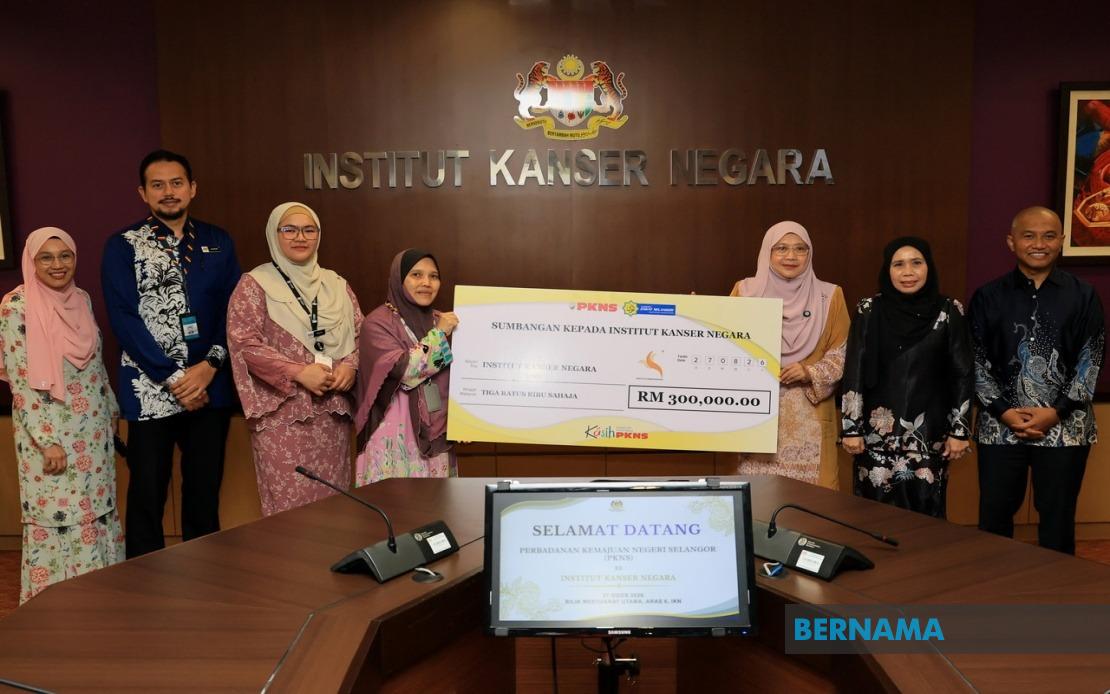
The Selangor State Development Corporation (PKNS) has directed RM300,000 towards alleviating the financial hardship experienced by cancer patients receiving care at the National Cancer Institute (IKN), a substantial commitment that demonstrates how state development agencies can play a meaningful role in healthcare support systems. The funding, presented in Putrajaya on August 27, is designed to reach between 50 and 100 individuals currently undergoing oncological treatment, addressing one of the most pressing concerns that hospital administrators and social workers consistently encounter: the intersection of medical need and economic vulnerability.
According to Sapna Turmidi, senior general manager of PKNS Corporate Services, the contribution reflects a philosophy extending far beyond simple monetary transfers. She articulated that meaningful corporate engagement with healthcare challenges encompasses emotional resilience, community presence, and demonstrated solidarity with those navigating terminal or life-threatening conditions. The initiative carries particular symbolic weight in Malaysia's governance context, where state-linked corporations increasingly recognise their responsibilities to complement public health provision through targeted philanthropic initiatives. Turmidi's remarks emphasised that PKNS aspires not merely to inject funds into the medical system, but to transmit messages of collective support and reassurance to patients and their extended families struggling through frightening and uncertain circumstances.
The personal catalyst behind this decision reveals how institutional decisions often flow from individual tragedy. A PKNS employee diagnosed with glioma in February succumbed to the disease just four months later after receiving treatment at IKN. This loss catalysed organisational reflection within PKNS about the vulnerability that accompanies cancer diagnosis and the multifaceted challenges families confront. The bereaved staff member's journey illuminated, for leadership, the stark realities that statistics cannot fully convey: the compressed timeframes, the cascade of complications, and the emotional toll extending across households. Such incidents, while heartbreaking at the individual level, sometimes generate institutional change and heightened commitment to populations facing similar circumstances.
The RM300,000 commitment operates through a structured mechanism combining corporate social responsibility with Islamic charitable principles. PKNS channelled the funds via wakalah zakat arrangements coordinated with the Selangor Zakat Board (LZS), directing support specifically toward eligible Muslim cancer patients classified under the asnaf al-Gharimin category, which encompasses individuals burdened by debt incurred through legitimate essential needs. This approach integrates religious framework with corporate capability, creating a hybrid model increasingly common among Malaysian institutions seeking to align social responsibility with faith-based values. The timing coincided with PKNS's 62nd anniversary commemoration on August 1, positioning the contribution as part of institutional milestone celebrations while maintaining focus on tangible community outcomes.
Dr Nur Aslina Bahakodin, IKN director, provided critical context regarding the institute's actual financial requirements. She indicated that the national cancer treatment facility requires between RM1 million and RM2 million annually merely to provide basic assistance to economically disadvantaged patients navigating their medical courses. This figure encompasses not merely pharmaceutical expenses or equipment procurement, but the constellation of costs that accompany extended cancer treatment: transportation to repeated appointments, sometimes across state lines; specialised nutritional products to support compromised immune systems; accommodation expenses for accompanying family members; and welfare provisions sustaining household stability during periods when primary earners cannot work. The gap between institutional need and available public resources remains substantial, meaning contributions like PKNS's allocation address symptoms while underscoring systemic resource constraints within Malaysia's health sector.
Financial stress directly correlates with treatment discontinuity, a pattern Dr Aslina specifically highlighted. When patients lack resources for transportation or essential supportive care, appointment attendance declines, treatment courses extend beyond optimal windows, and clinical outcomes deteriorate. In oncology, timing proves critical; delays of weeks can compromise cure potential or survival duration. This dynamic transforms funding for patient support from philanthropic gesture to clinical necessity, embedding welfare provision within the fundamental architecture of effective disease management. For Malaysian policy-makers, such observations underscore why health financing must account not merely for direct medical costs but for the broader ecosystem supporting treatment adherence and completion.
The Medical Social Work Unit at IKN will administer the RM300,000 through rigorous socio-economic assessments, ensuring that resources reach those facing genuine hardship rather than distributing support indiscriminately. This selective approach reflects international best practice in healthcare philanthropy, acknowledging that unlimited resources would generate dependency while targeted assistance addresses genuine need. Social workers conduct household investigations evaluating income, family structure, obligations, and existing support systems, directing assistance toward those lacking alternatives. For Malaysian readers familiar with state health systems, this mechanism echoes methodologies employed across government hospitals, though corporate-provided supplementary funding significantly expands programme capacity.
Dr Aslina's observations about escalating cancer detection rates provide important epidemiological context. Rising case numbers partly reflect expanded screening programmes and heightened public awareness rather than exclusively increased disease incidence. Breast cancer remains most prevalent among Malaysian women, while colorectal cancer predominates among men. Early detection programmes dramatically improve treatment outcomes and survival prospects, yet simultaneously generate larger patient populations requiring extended support systems. This expansion of detectable cases, while clinically positive, simultaneously stresses institutional resources and intensifies demand for supplementary support mechanisms like PKNS's contribution.
The broader significance of PKNS's initiative extends beyond the immediate RM300,000 allocation to illustrate emerging patterns within Malaysian corporate governance. State development corporations, positioned at the intersection of government objectives and commercial operations, increasingly leverage their institutional capacity toward healthcare complementation. Unlike purely private corporations answerable exclusively to shareholders, entities like PKNS balance profitability with developmental mandates encompassing healthcare, education, and social welfare. This positioning creates space for systematic institutional engagement with public health challenges, though reliance on corporate discretion rather than statutory obligation introduces vulnerability regarding consistency and scale. For Malaysian policymakers, such patterns raise questions about whether healthcare financing gaps should be permanently bridged through voluntary corporate contributions or whether systematic solutions require legislative action and dedicated public funding.
The collaboration between PKNS, the Selangor Zakat Board, and IKN exemplifies inter-institutional coordination increasingly visible across Malaysian governance. Rather than siloed operations, this three-way arrangement combines corporate financial capacity, Islamic charitable machinery, and medical expertise toward unified objectives. Religious and secular institutions work in tandem without contradiction, reflecting Malaysia's particular societal model. Such partnerships offer efficiency gains and amplified impact compared to isolated efforts, though they require considerable coordination and shared commitment to patient welfare outcomes rather than institutional visibility or bureaucratic convenience.
For Southeast Asian observers, PKNS's commitment reflects broader regional trends regarding corporate healthcare engagement. Across developing Asia, institutional gaps between medical need and public provision create space where corporations increasingly position themselves as supplementary providers. Whether this represents an appropriate allocation of responsibilities or signals inadequate public investment remains contested. Malaysia's experience, where state-linked corporations supplement public healthcare through structured philanthropy, offers one model that other nations observe and potentially emulate. The RM300,000 directed toward IKN patients thus carries significance extending beyond Selangor's boundaries, exemplifying institutional approaches that shape healthcare provision patterns across the region.

