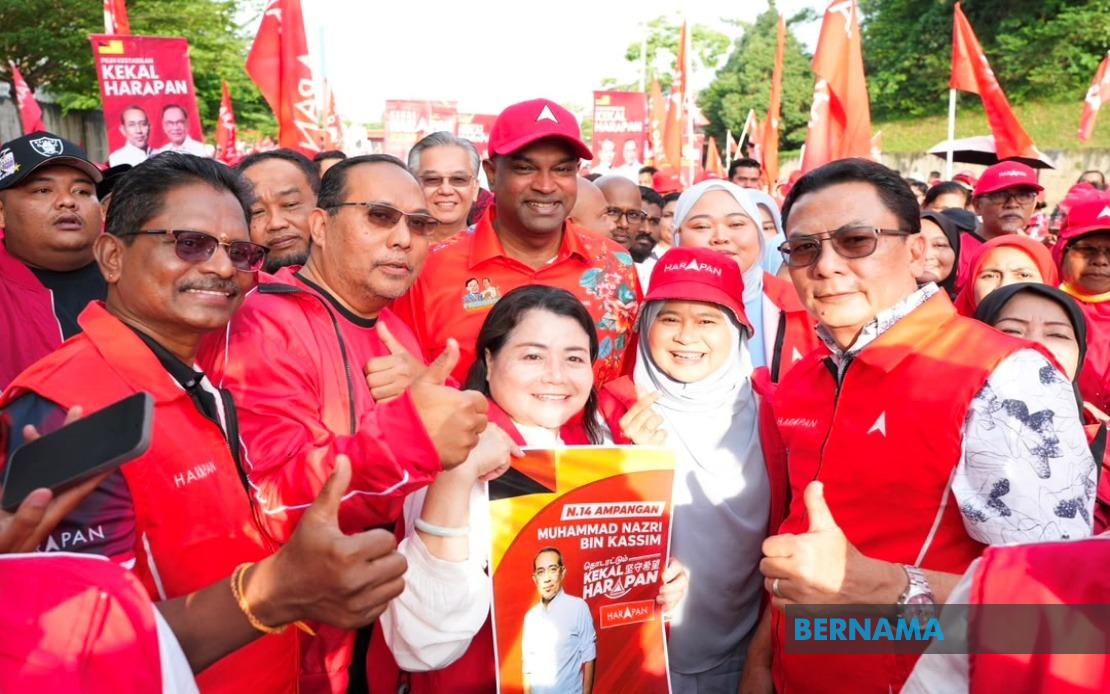
Senior Pakatan Harapan leaders mounted a visible show of strength on nomination day in Negeri Sembilan, gathering at the state capital to publicly endorse six coalition candidates contesting in the 16th state election. The demonstration of top-level support underscores the opposition pact's determination to maintain its foothold in a state that has been crucial to its political fortunes. Datuk Seri R. Ramanan, the PKR vice-president and Sungai Buloh Member of Parliament, joined forces with DAP deputy secretary-general Steven Sim and other coalition figures at the Seremban City Council Building to back candidates Nor Azman Mohamad, Datuk Muhammad Nazri Kassim, Zarinna Abu Zarin, Chew Seh Yong, J. Arul Kumar and Ho Weng Wah across constituencies including Sikamat, Ampangan, Lenggeng, Lobak, Nilai and Temiang.
The coordinated appearance by multiple party leaders at the nomination centre signalled far more than procedural support for individual candidates. For Pakatan Harapan, the visibility of senior figures like Ramanan and Sim suggests an effort to energise party machinery and demonstrate organisational coherence as the coalition navigates a critical electoral battle. The presence of cross-party leadership—bringing together PKR and DAP—reflects a deliberate strategy to project unity ahead of intensive campaigning, particularly important given internal tensions that have occasionally surfaced within the broader opposition movement.
Ramanan's remarks about the strong turnout of supporters and party workers at the nomination centre reveal how both PH leadership and internal party dynamics read electoral engagement. He characterised the visible support as evidence of grassroots commitment, framing it as an indicator of the coalition's readiness for sustained campaign work. The messaging emphasised continuity and stability, suggesting PH's campaign will centre on development outcomes and governmental competence rather than purely oppositional positioning.
Negeri Sembilan holds particular significance within Malaysia's political map. As a state where Pakatan Harapan has held sway, maintaining control becomes essential for the coalition's broader narrative of electoral viability and ability to govern. The state's 36 seats represent meaningful electoral weight, and the demographic and socioeconomic diversity across constituencies like Nilai and Ampangan means that victories here carry implications beyond local politics. A strong PH showing strengthens the coalition's hand in discussions about coalition-building at federal level and future electoral prospects.
The nomination process completion marked the formal entry into the campaign phase, with voting not scheduled until August 1. This three-week window provides substantial time for candidates to build momentum, though it also extends the period during which support can shift and competing narratives gain traction. The early voting date of July 28 suggests organisers anticipate potentially significant early participation, which could influence campaign strategies and resource allocation during the final week.
The timing of Ramanan and Sim's appearance also carries tactical weight. Nomination day typically generates media attention and provides candidates with platform moments to establish campaign narratives. By deploying senior national leadership, PH ensured that coverage extended beyond individual constituency races to encompass broader coalition messaging about governance and economic management. This approach transforms what could be routine nomination procedures into coordinated communications opportunities.
For PKR specifically, the visibility of Ramanan—a deputy president figure—demonstrates continued central party engagement with state-level contests, countering any perception of focus being diverted purely toward federal concerns. The party has navigated complex terrain in recent years, and strong state-level performance becomes validation of its political management and mobilisation capacity. Similarly, Steven Sim's presence represents DAP's ongoing commitment to multi-state operations even as party focus has been distributed across various electoral theatres.
The coalition's campaign messaging around development and stability speaks to voter expectations in Negeri Sembilan, a state with moderate urbanisation across several constituencies alongside rural constituencies where traditional concerns about agricultural support and rural infrastructure remain relevant. The explicit framing by Ramanan about machinery effectiveness in constituencies suggests PH recognises that votes are ultimately won through effective local organisation rather than top-level visibility alone, even as central leadership deploys its political capital.
The campaign period extending to July 31 provides sufficient time for policy differentiation to emerge between competing coalitions, though the speed at which news cycles move in modern campaigning means that early momentum often proves decisive. PH's early deployment of senior figures indicates confidence in its candidates while also serving to energise volunteer networks that will carry out ground-level campaign work. In Malaysian electoral contexts, the discipline and effectiveness of party machinery frequently determines outcomes as much as messaging or candidate quality.
Electoral observers will monitor whether this visible PH unity persists throughout the campaign or whether internal dynamics create tensions that become publicly visible. The presence of both PKR and DAP figures suggests coordination, but state elections often involve nuanced positioning around particular local issues that can complicate coalition messaging. The six constituencies receiving central leadership attention likely represent either marginal seats where PH sought to consolidate uncertain voters or flagship constituencies where maintaining control becomes symbolically important.
For Malaysian political analysts, the Negeri Sembilan contest represents a meaningful test of whether Pakatan Harapan has stabilised sufficiently to perform competitively after the internal strains of recent years. Success here would reinforce narratives about opposition recovery, while setbacks would invite scrutiny about whether coalition cooperation remains robust or merely procedural. The leaders gathering at Wisma MBS understood these stakes, which explains why the nomination day event warranted such high-level participation and why messaging emphasised unity, competence and continuity rather than divisive political attacks.

