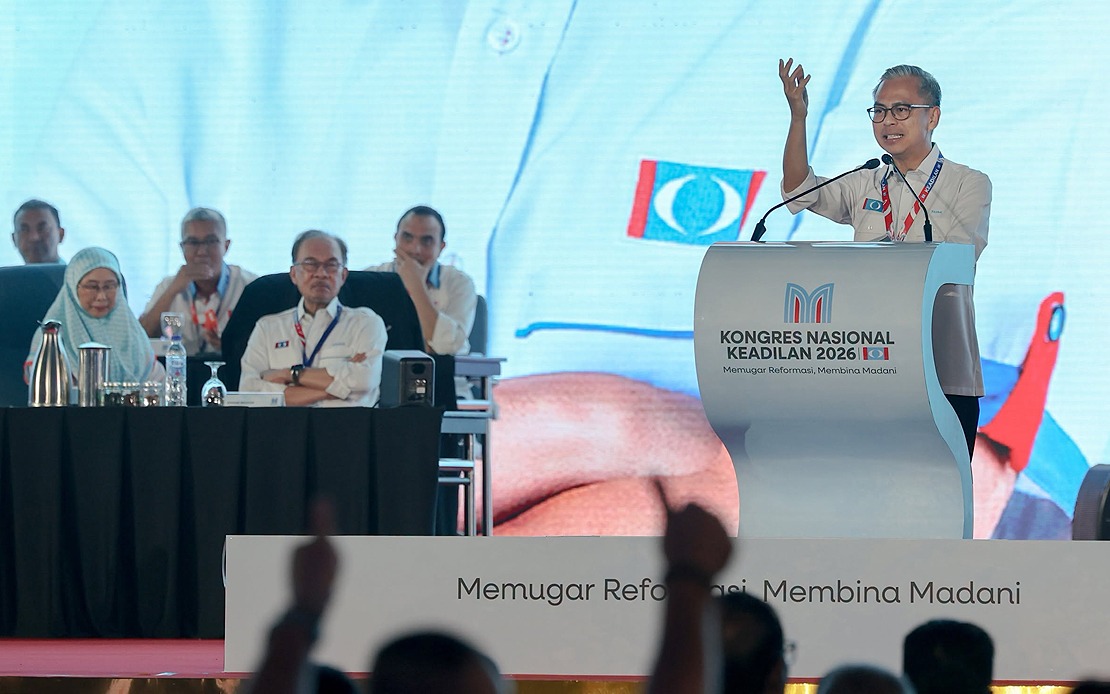
The Parti Keadilan Rakyat's two-day National Congress, which wrapped up in Kuala Lumpur on August 16, has been positioned as a critical juncture for the party to reaffirm its foundational commitment to reform whilst simultaneously fortifying its organizational capacity. Rather than serving as merely another gathering of political speeches and procedural debates, the 2026 congress functioned as a deliberate space for introspection and strategic recalibration, according to party officials.
Datuk Seri Fahmi Fadzil, PKR's Information Chief, emphasized that the congress extended beyond conventional political theatre to encompass genuine reflection on the party's trajectory. The event provided an opportunity for party machinery to assess both organisational strengths and identified weaknesses, whilst reaffirming the foundational values that distinguish PKR within Malaysia's political landscape. This inward-looking dimension reflects a broader acknowledgment within the party that sustained political relevance requires periodic renewal of purpose and renewed connection with the grassroots base that ultimately sustains electoral fortunes.
Central to the congress messaging was PKR President Datuk Seri Anwar Ibrahim's address, which underscored that the reformasi struggle—the foundational cause that gave birth to the party itself—must remain an active and guiding force rather than a historical reference point. This emphasis carries particular resonance given Malaysia's evolving political dynamics and the competing pressures facing coalition partners within the government structure. The reiteration of reform as an ongoing mission rather than a completed objective signals PKR's attempt to distinguish itself from other ruling coalition partners and maintain ideological clarity amid governance complexities.
Fahmi articulated a vision of post-congress engagement that privileges substantive grassroots reconnection over ceremonial party activity. Party members are being tasked with returning to their respective constituencies equipped not with new slogans but with a renewed commitment to listening, understanding community concerns, and translating those concerns into tangible policy responses. This emphasis on constituency-level work suggests PKR leadership recognizes that political legitimacy in Malaysia's decentralized electoral system ultimately derives from localized trust and demonstrated responsiveness to community needs rather than from federal-level announcements alone.
The call for strengthened organizational discipline and coordinated team action indicates recognition of structural challenges that may have emerged during PKR's tenure in government. The party has faced various internal pressures and external criticisms regarding implementation capacity and internal coherence. By emphasizing the need to operate as "an organized and disciplined team," PKR leadership appears to be acknowledging that reform aspirations require corresponding improvements in execution and inter-party coordination at all levels.
Fahmi's assertion that "political challenges will continue to come" represents a candid acknowledgment of the competitive environment in which PKR operates. The broader political landscape—encompassing opposition resurgence, shifting electoral demographics, and intra-coalition tensions—presents formidable headwinds. The congress message effectively prepares party faithful for sustained struggle rather than promising imminent victory, a positioning that reflects more realistic political assessment than triumphalism.
The emphasis on anchoring party strength "in the interests of the people" attempts to reorient PKR's identity toward a people-centric framework, potentially distinguishing the party from perceptions of being captured by elite factional interests. This framing matters particularly in Malaysian politics, where voter sentiment increasingly reflects skepticism toward traditional power-brokers and demand for demonstrable commitment to ordinary Malaysians' economic and social concerns. PKR's congress messaging appears calibrated to counter perceptions of becoming institutionalized within government structures.
The assertion that congress responsibility extends beyond the formal gathering itself—that party machinery must intensify post-congress efforts—reflects understanding that political sustainability requires continuous engagement rather than episodic mobilization. This perspective aligns with evolving global patterns in party politics, where sustained organizational presence and community-level activism increasingly determine electoral outcomes more than traditional mass rallies or media campaigns.
Fahmi's emphasis on ensuring that "the struggle continuously brings tangible benefits" establishes an implicit performance standard against which PKR can be measured. This language choice—emphasizing demonstrable benefits rather than ideological purity or procedural correctness—reflects apparent recognition that Malaysian voters increasingly evaluate political parties through a utilitarian lens focused on whether governance translates into improved living standards, accessible services, and economic opportunity. For PKR, which has occupied government positions, this performance standard presents both opportunity and vulnerability depending on perceived policy outcomes.
The broader context for PKR's congress messaging involves positioning the party within coalition dynamics whilst maintaining distinctive identity. As one component of the ruling coalition, PKR must simultaneously defend government record, advance reform agenda, and manage relationships with coalition partners possessing divergent priorities. The congress appears designed to signal that PKR will not be subsumed into undifferentiated government machinery but will maintain reform commitment as distinctive party mission.
Looking forward, the success of PKR's post-congress execution will likely determine whether the gathering represents genuine strategic realignment or standard political ritual. The party's capacity to translate grassroots listening into policy responsiveness, strengthen organizational coherence, and deliver tangible improvements in constituencies will ultimately validate or undermine the congress messaging. For Malaysian voters—particularly those in PKR-represented constituencies—the test of the congress's significance will manifest through observable improvements in service delivery, responsiveness to community concerns, and equitable resource allocation.

