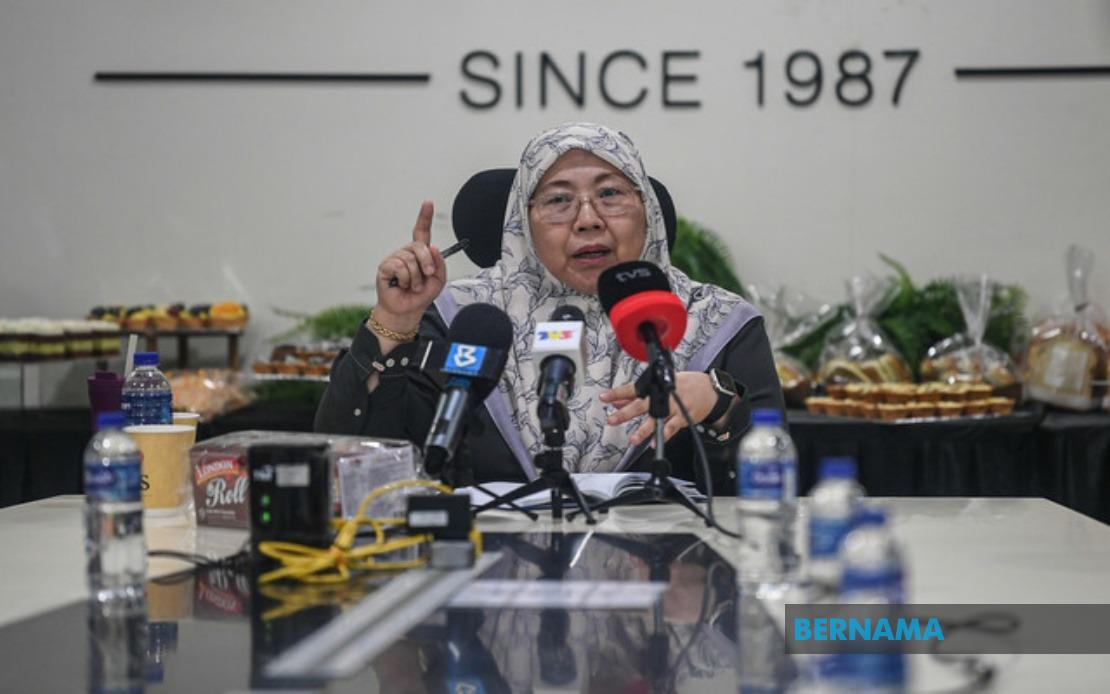
The departure of a significant group from People's Justice Party (PKR) to join the Malaysian Indian Congress (MIC) reflects deeper frustrations within the coalition partner, according to PKR secretary-general Datuk Dr Fuziah Salleh. Speaking in Johor Bahru on June 30, Fuziah characterised the exodus as "rather strange," suggesting that the party's internal analysis points to disappointed expectations rather than principled political disagreement. The defectors, numbering around 200, were led by M. Murugan, formerly the vice-chairman of the Johor PKR State Leadership Council, who announced the move on June 28 before formally registering with MIC's Iskandar Puteri division.
The timing of these defections carries significance in the context of Malaysia's fractious opposition politics. For a Pakatan Harapan (PH) coalition partner to lose members to a component of the Malaysian Indian Congress—traditionally aligned with Barisan Nasional (BN)—signals potential vulnerabilities in the opposition alliance as it prepares for electoral contests. Fuziah's acknowledgement that position-seeking rather than policy disputes motivated the exodus reveals the transactional nature of Malaysian party politics, where membership often correlates with expectations of administrative posts, business opportunities, and community influence. Such departures, while individually significant, reflect a broader pattern of floating political loyalties that characterises Malaysia's multi-party system.
The PKR secretary-general's measured response—wishing the departing members well in their search for "significant positions" with MIC—belies a potential concern about PKR's organisational capacity. If party members are departing because the party lacks sufficient positions to distribute, this raises questions about PKR's capacity to retain talented individuals and maintain grassroots momentum. The party's internal findings suggesting dissatisfaction over appointment decisions indicate that leadership has grappled with balancing the ambitions of a diverse membership base. In a party operating across multiple states and competing within a broader coalition structure, such pressures are inevitable, but their visibility through defections suggests potential management challenges.
Fuziah's comments on the broader political landscape, particularly regarding PAS president Tan Sri Abdul Hadi Awang's call for voters to abandon Pakatan Harapan, introduced a more complex electoral narrative. Hadi's statement, issued amid discussions of potential BN-PAS cooperation, suggests maneuvering within the Islamic opposition that transcends the formal coalition structures. For Johor voters preparing for the July 11 state election—in which 172 candidates will contest 56 seats—such signals from coalition partners create uncertainty and complicate the messaging that opposition parties wish to project. Fuziah's counsel that Johor voters "carefully assess the situation" acknowledges this complexity while attempting to reframe the narrative in PH's favour.
The secretary-general articulated a specific interpretation of Perikatan Nasional's (PN) electoral strategy, arguing that PN's apparent efforts to attract Barisan Nasional supporters could ultimately undermine the larger coalition. This analysis rests on the premise that visible poaching of supporters exposes underlying tensions within PN itself, particularly between PAS and its partners. According to Fuziah's reasoning, PAS's public criticism of PH—rather than strengthening PN—reveals fractures that might alienate undecided voters seeking stable governance. This interpretation reflects PH's strategic calculation that electoral success depends less on defeating opponents directly than on allowing opposition rivals to fragment publicly.
The Johor state election represents a critical test for Pakatan Harapan's viability as a governing coalition. With early voting scheduled for July 7 and polling day on July 11, the campaign period encompasses a fluid period where defections and political messaging shift rapidly. PKR's loss of members to MIC, while explained away as position-seeking, nonetheless represents a concrete loss of organisational strength during this crucial period. The party must simultaneously manage internal disappointments, project unity with coalition partners, and persuade voters that PH offers better governance than either Barisan Nasional or Perikatan Nasional alternatives.
Fuziah's confidence that the defections ultimately benefit Pakatan Harapan requires careful scrutiny. The logic—that PN's internal contradictions and BN's vulnerability to PN's recruitment efforts create space for PH—assumes that Malaysian voters prioritise coalition stability over other factors. Regional economic concerns, local governance records, and community-specific grievances may weigh more heavily in voters' calculations than coalition-level positioning. For Johor specifically, where economic diversification remains contested and demographic shifts continue, the election reflects broader questions about Malaysia's political economy and the extent to which opposition coalition partners can offer distinct developmental visions.
The broader implications of PKR's membership losses extend beyond the immediate electoral context. If significant party members depart because advancement opportunities prove limited, this creates a vicious cycle where reduced party capability makes advancement less likely for remaining members, potentially triggering further departures. Conversely, if incoming MIC recruits find their position-seeking thwarted within that party, they may become disaffected voters rather than committed party activists, creating longer-term political atomisation. The Malaysian Indian Congress, historically stronger in Peninsular contexts and particularly in Selangor and Perak, may face its own challenges absorbing and retaining these former PKR members.
For Malaysian and Southeast Asian observers, the defection pattern underscores how opposition coalitions in developing democracies struggle with the fundamental tension between ideological coherence and organisational pragmatism. Pakatan Harapan remains ideologically diverse, encompassing social democrats, Islamists, and centrists, making it inherently vulnerable to members prioritising career advancement over coalition loyalty. The July 11 Johor election will demonstrate whether such defections meaningfully affect electoral outcomes or whether they reflect primarily internal party management rather than electoral significance.

