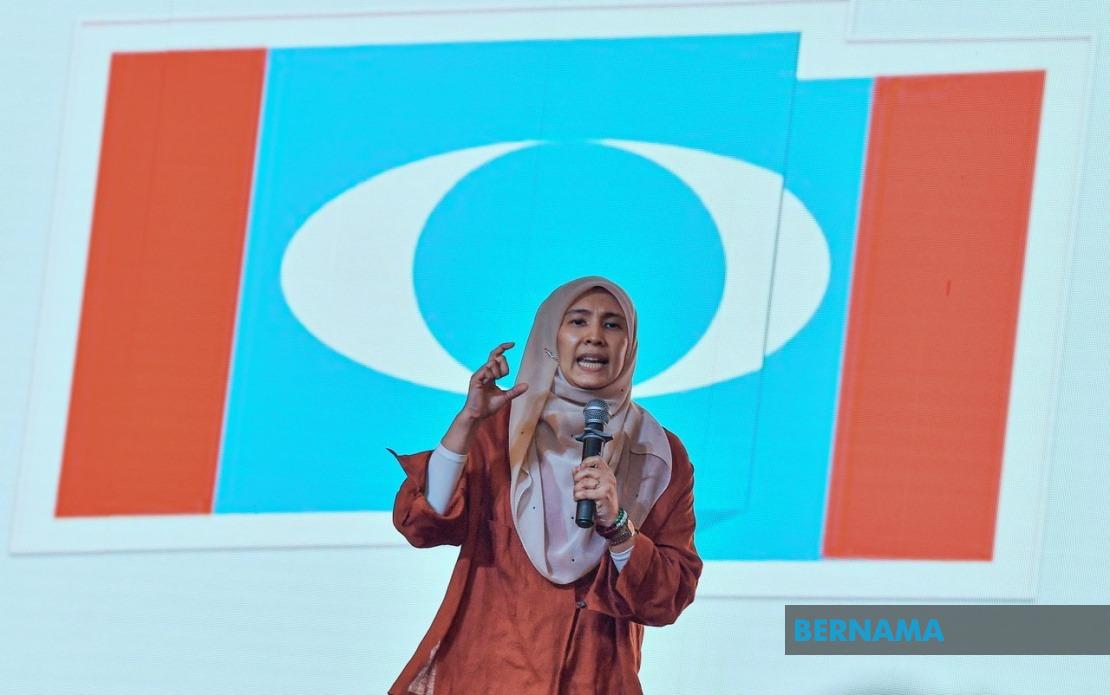
The People's Justice Party (PKR) has formalized a leadership transition at its upper echelons, with its Central Leadership Council (MPP) approving a temporary leave of absence for Deputy President Nurul Izzah Anwar. The decision, announced by PKR Information Chief Datuk Seri Fahmi Fadzil on August 6, will take effect following the 2026 PKR National Congress scheduled for August 15-16 in Melaka, with a specific end date to be determined at a later stage. This move follows Nurul Izzah's formal request to step down from the role, marking a notable shift in the party's top management structure as it approaches crucial electoral preparations.
The interim arrangement places Vice-President Datuk Seri Saifuddin Nasution Ismail in charge of deputy presidential responsibilities during the hiatus. This succession mechanism allows the party to maintain continuity in operations whilst accommodating Nurul Izzah's request without forcing a permanent resignation. Notably, Nurul Izzah remains engaged with party activities in the short term, as she is scheduled to officiate the women's and youth wing congresses on August 14, immediately preceding the main party congress. This phased approach suggests the leadership seeks to manage the transition carefully, preserving institutional stability during a period that typically demands cohesive party machinery.
Fahmi, who serves concurrently as Minister of Communications, indicated that the MPP deliberated extensively before reaching consensus on the arrangement. The council heard representations from Nurul Izzah herself and other party elders before arriving at the temporary leave decision. This consultative process reflects PKR's internal governance protocols, where major personnel decisions at the apex undergo collective scrutiny rather than unilateral determination. The emphasis on democratic process within the party structure, particularly when involving prominent figures like Nurul Izzah—who carries significant symbolic weight within progressive Malaysian politics—underscores the party's commitment to maintaining internal legitimacy.
Beyond Nurul Izzah's transition, the MPP approved additional restructuring of party roles. Datuk Seri Amirudin Shari, another vice-president, will now fully assume the position of PKR Election Director, consolidating electoral responsibilities under a single coordinating authority. This consolidation suggests the party is streamlining its organizational hierarchy ahead of the 2026 PKR National Congress and positioning itself more efficiently for upcoming electoral cycles. The concentration of election management responsibilities within Amirudin's purview indicates PKR's recognition that unified command over electoral strategy and operations will be essential as the country moves closer to general elections.
The timing of these leadership adjustments coincides with mixed electoral outcomes for PKR in recent state contests. The MPP formally acknowledged the results of the Johor and Negeri Sembilan state elections, whilst extending gratitude to former Negeri Sembilan Menteri Besar Datuk Seri Aminuddin Harun for his two-term tenure. This diplomatic acknowledgment of electoral setbacks, coupled with recognition of outgoing state leadership, reflects how Malaysian political parties balance accountability with organizational morale maintenance. For PKR specifically, these state-level results provide both cautionary lessons and motivation to strengthen party machinery ahead of larger electoral contests.
PKR's appreciation extended to all party members and workers who participated in the Johor and Negeri Sembilan campaigns, signalling an effort to maintain grassroots engagement despite electoral disappointments. In Malaysian political culture, where state election results frequently foreshadow national electoral fortunes, PKR's acknowledgment of these outcomes—rather than deflecting responsibility—demonstrates institutional maturity. However, the convergence of leadership restructuring with electoral setbacks raises questions about whether Nurul Izzah's leave decision reflects broader strategic recalibration or represents a voluntary step-down driven by personal considerations.
The expanded membership base also featured in the MPP's deliberations. The council approved admission of 3,533 newly registered members who joined through PKR's online registration system between July 12 and August. This membership expansion, whilst seemingly modest against the party's total base, indicates ongoing recruitment efforts and suggests organisational vitality at the grassroots level. For a party navigating electoral challenges, growing membership numbers provide both electoral manpower and financial sustenance through membership dues, making this expansion strategically significant for PKR's operational capacity.
For Malaysian observers, these PKR leadership changes warrant careful attention given the party's pivotal position within the ruling coalition. As a component of the government, PKR's internal stability directly affects coalition governance and parliamentary mathematics. Nurul Izzah's temporary leave raises unspoken questions about whether other senior figures face similar pressures or whether her departure stems from unique circumstances. The lack of explicit detail regarding her reasons—characterised only as a request to which the party acceded—leaves room for speculation about underlying tensions within PKR's leadership circle.
The interim arrangement for the deputy presidency also carries implications for succession planning and party democracy. Temporary arrangements can evolve into permanent fixtures, or they can serve as genuine bridges to fresh elections within party structures. PKR's decision to designate a specific end date as "to be announced later" suggests flexibility, potentially allowing the party to conduct proper electoral processes for the position rather than imposing a successor. This approach contrasts with some Malaysian party practices where interim arrangements calcify into permanent dominance by particular figures or factions.
Looking toward the August 15-16 National Congress, PKR faces a significant moment for internal renewal and strategic recalibration. The congress provides opportunity for grassroots delegates to assess party direction, debate policies, and possibly influence leadership selections. For a party that has experienced electoral volatility and coalition complexities, this congress represents both a chance to rebuild member confidence and an occasion to address internal dynamics candidly. The party's concurrent approval of new membership and restructuring of senior roles suggests leadership recognition that organisational renewal remains essential for electoral competitiveness.

