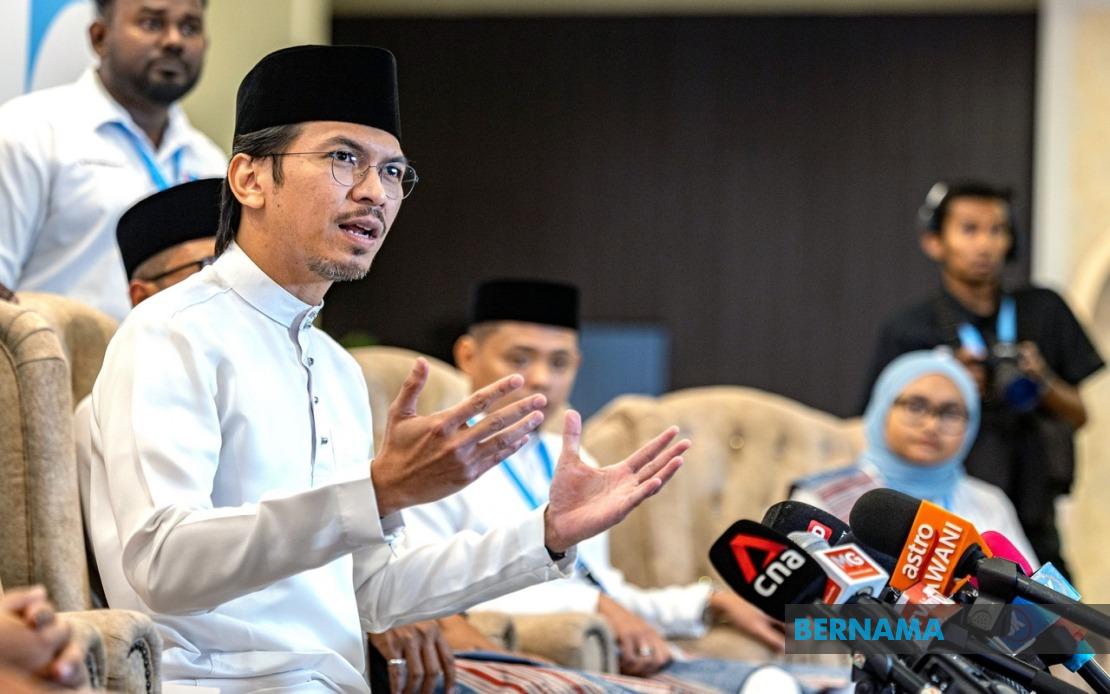
The leadership of Parti Keadilan Rakyat (PKR) has sought to reassure party members and supporters that recent departures to rival political movements pose no threat to the coalition partner's institutional strength or operational effectiveness. Speaking at the Melaka International Trade Centre during the 2026 Angkatan Muda Keadilan (AMK) National Congress on August 14, Muhammad Kamil Ahmad Munim, chief of the party's youth wing, characterised the scale of member attrition as negligible and insufficient to disrupt the party's consolidation efforts.
The statement represents a measured response to escalating speculation about PKR's internal cohesion, prompted partly by assertions from Parti Bersama Malaysia co-founder Datuk Seri Rafizi Ramli that approximately 25 per cent of his newly launched party's membership base comprises individuals who previously held PKR affiliation. While Muhammad Kamil acknowledged that some members had indeed exercised their prerogative to exit the party, citing diminished confidence in its trajectory, he framed such departures within the broader context of personal liberty and democratic choice rather than as evidence of systemic weakness.
The AMK chief refrained from specifying the precise magnitude of membership losses, instead invoking aggregated reporting data to support his assertion that the exodus remains statistically marginal and carries minimal bearing on the party's organisational machinery. His comments reflect a deliberate strategic messaging approach designed to project continuity and resilience during a period when PKR faces mounting pressure from rival coalition members and opposition forces seeking to capitalise on any perceived fractures within the government's support structure.
Beyond the defection narrative, Muhammad Kamil drew attention to robust delegate participation at the congress itself, interpreting the turnout as a tangible manifestation of grassroots commitment and steadfast resolve to sustain PKR's organisational trajectory. This rhetorical emphasis on visible expressions of member loyalty serves a dual purpose: it provides empirical counter-evidence to allegations of declining party morale whilst simultaneously reinforcing messaging discipline within party ranks ahead of critical electoral cycles.
The question of PKR's operational continuity has acquired additional salience given the current leave of absence undertaken by Nurul Izzah Anwar, the party's deputy president. Rather than treating this development as a governance impediment, Muhammad Kamil portrayed the internal arrangement as reflecting mature institutional design and transparent role distribution within the party's apex decision-making structure. He highlighted how Vice-President Datuk Seri Saifuddin Nasution Abdullah and PKR election director Datuk Seri Amirudin Shari have assumed expanded responsibilities to ensure uninterrupted policy implementation and strategic planning activities.
This delineation of duties represents an important departure from conventional party leadership paradigms in Malaysia, where concentrated authority among top office-holders frequently generates bottlenecks and operational friction during periods of partial leadership absence. Muhammad Kamil's characterisation of the current arrangement as transparent, well-defined, and comprehensively communicated to the grassroots suggests that PKR has invested considerable effort in normalising the transition and insulating party activities from disruption.
The communication strategy extends to party cadres at state and branch administrative levels, who have received detailed briefings regarding the structural adjustments necessitated by Nurul Izzah Anwar's leave. According to Muhammad Kamil, this cascading information flow has generated widespread acceptance among the party rank-and-file, indicating that potential concerns about leadership discontinuity have been substantially mitigated through proactive and transparent engagement with membership constituencies.
Looking ahead, PKR's strategic orientation remains anchored to preparation for upcoming state-level elections and the next general election cycle. Muhammad Kamil's assertion that the party continues strengthening its organisational capacity suggests a deliberate refocusing of energy toward electoral competitiveness rather than allowing internal management questions to dominate the institutional agenda. This forward-looking posture reflects recognition that sustained political relevance depends fundamentally on electoral performance rather than internal perceptions regarding organisational stability.
The broader context for these developments encompasses the evolving political landscape within Malaysia's ruling coalition, where competition between constituent parties for influence, resources, and electoral positioning generates persistent centrifugal pressures. PKR's ability to retain membership and project institutional vitality becomes particularly consequential given its pivotal positioning within the Pakatan Harapan alliance and its historical significance as a reformist force within Malaysian politics. Member departures to entities such as Parti Bersama Malaysia, despite official characterisations as marginal, potentially signal underlying shifts in voter and activist sentiment that warrant closer monitoring.
The defection question also intersects with broader questions regarding PKR's ideological positioning and policy coherence within the coalition framework. Members departing to alternative platforms may reflect substantive disagreements regarding party strategy, coalition dynamics, or policy priorities rather than ephemeral expressions of discontent. Whether characterised as marginal or substantial, such departures merit serious internal reflection regarding the party's capacity to mobilise and retain constituencies that have historically provided its electoral base and activist cadre.

