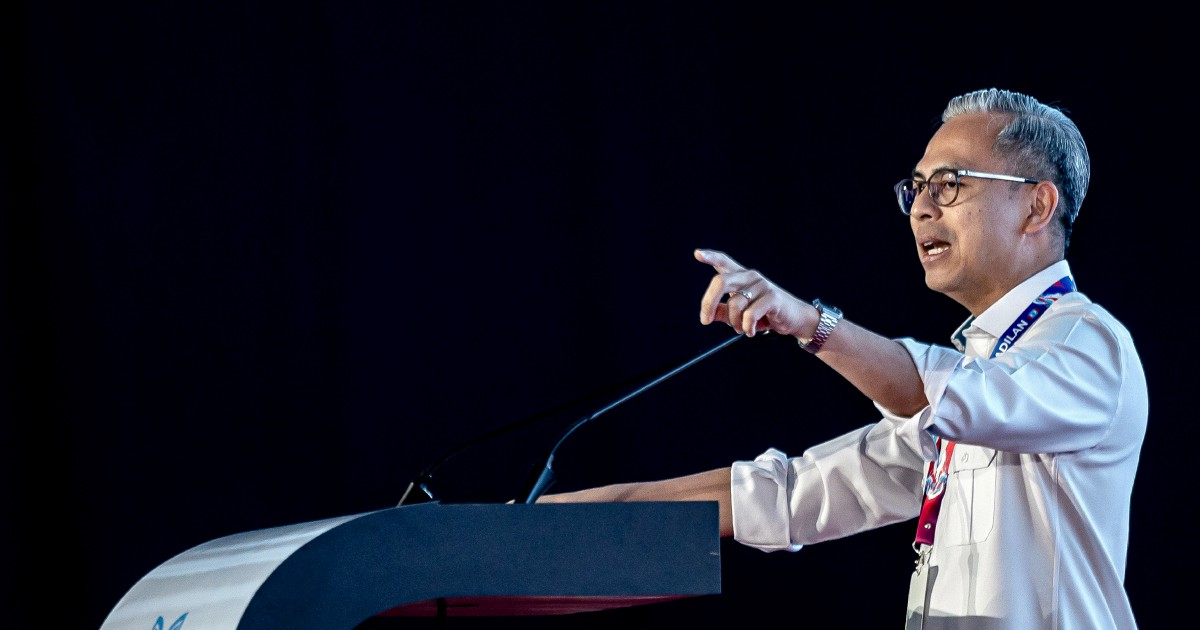
Speaking in Ayer Keroh, PKR information chief Datuk Seri Fahmi Fadzil delivered a pointed message to his party leadership: macroeconomic statistics and national-level growth figures, however positive, cannot substitute for genuine solutions to the everyday financial hardships Malaysians experience. The remarks underscore a widening perception gap between official economic performance and the lived reality of ordinary households, a disconnect that political parties ignore at their peril in an environment of heightened economic anxiety.
The tension between headline economic indicators and grassroots sentiment has become increasingly difficult for ruling administrations to navigate. Malaysia's economy has posted respectable growth rates and maintained relative stability compared to global and regional peers, yet consumer confidence surveys consistently reveal deep public concern about affordability, employment security, and wage stagnation. This paradox reflects how national statistics can mask uneven prosperity and how household purchasing power has eroded even as GDP expands.
Fahmi's intervention at the Ayer Keroh gathering signals recognition within PKR that messaging alone cannot bridge this credibility gap. The party faces a practical challenge: translating broad economic management into tangible relief for voters struggling with higher food prices, education costs, healthcare expenses, and housing affordability. The 2022 cost-of-living crisis fundamentally altered Malaysian voter priorities, and this shift appears durable. Previous assumptions that strong macroeconomic stewardship would automatically translate into electoral support have been tested and found wanting in multiple democracies across Asia.
The emphasis on bread-and-butter concerns also reflects PKR's positioning within Malaysia's broader coalition politics. As the leading component of the ruling Pakatan Harapan alliance, the party carries responsibility for government performance while managing internal coalition dynamics. The pressure intensifies ahead of potential elections, where messaging discipline and strategic focus become critical. Voters have demonstrated they reward governments perceived as addressing their immediate concerns—healthcare accessibility, affordable housing, food price controls, and stable employment—over abstract notions of economic soundness.
Malaysian household economics have undergone structural changes that statistics alone cannot capture. Inflation in essential goods has outpaced wage growth for many workers, forcing families to make difficult choices between competing needs. Younger voters, particularly those in urban centres, face unprecedented barriers to home ownership and family formation due to property prices that have decoupled from earning capacity. These granular realities shape voting behaviour more powerfully than quarterly GDP reports or unemployment figures.
PKR's leadership appears to be recalibrating its political strategy to reflect this understanding. Rather than resting on the government's economic management record, the party must articulate specific policy responses to identifiable sources of household financial stress. This might involve renewed focus on targeted subsidies, wage policy interventions, housing affordability measures, or targeted tax relief. The party must demonstrate that it comprehends which economic pressures matter most to different demographic groups and geographic constituencies.
The broader context involves regional economic headwinds and global uncertainties that limit what any single government can control. Nevertheless, PKR's challenge involves reframing the government's economic stewardship narrative to emphasize which policy actions directly improve household circumstances rather than relying on aggregate data. This requires translating macroeconomic competence into microeconomic benefits that voters can perceive in their weekly shopping bills and monthly mortgage payments.
Fahmi's comments also reveal internal party discussions about electoral strategy and messaging discipline. Political movements that fail to calibrate their public communication to match voter preoccupations risk losing relevance, regardless of their policy achievements or economic record. The Malaysian political landscape has demonstrated this pattern repeatedly—governments that appear disconnected from public concerns face voter backlash even when economic fundamentals remain sound.
Looking forward, PKR must bridge the gap between national economic management and household financial security in its political communications and policy priorities. This involves acknowledging that while Malaysia's economy may perform credibly on technical measures, meaningful prosperity requires that ordinary families experience tangible improvements in affordability, opportunity, and financial security. The party's electoral prospects depend substantially on convincing voters that its leadership understands their struggles and possesses credible solutions. Fahmi's message suggests the party recognises this imperative and is attempting to realign its focus accordingly.

