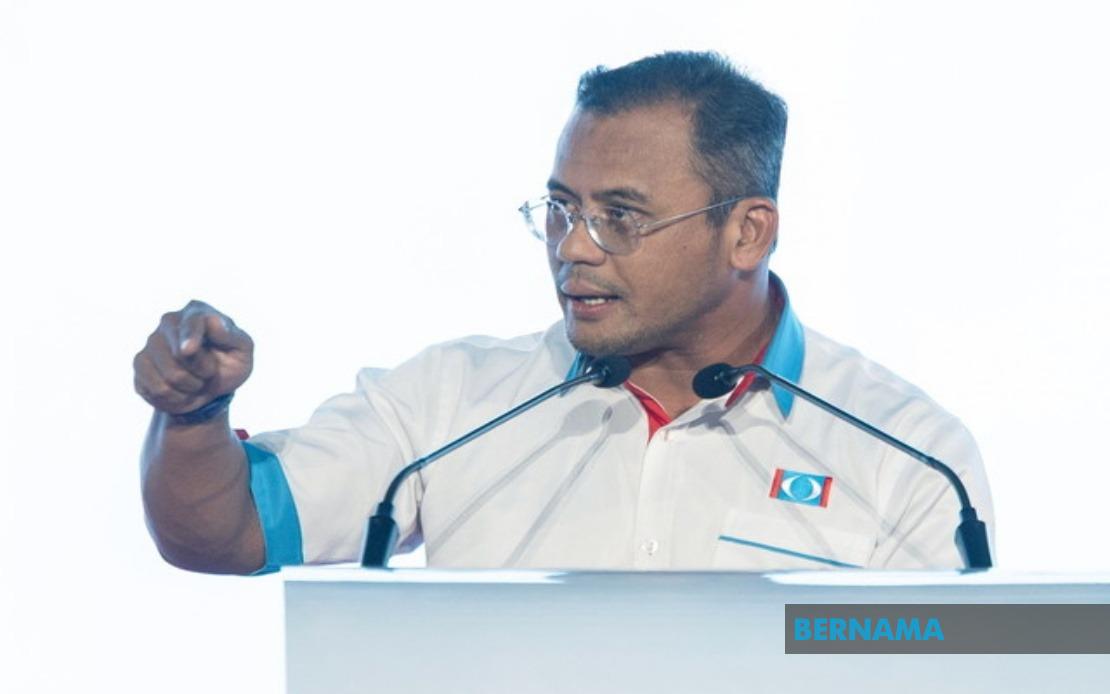
Keadilan Rakyat must sustain its commitment to equitable governance that serves all communities while honouring the constitutional status of Islam and the Malays, senior party leaders declared at the PKR National Congress in Melaka. The message underscores a fundamental tension in Malaysian politics: how multiethnic coalitions can acknowledge constitutional protections for specific groups while building genuinely pluralistic political movements that transcend identity-based divisions.
Amirudin Shari, the party's vice president and Selangor Menteri Besar, framed this dual commitment as non-negotiable. The Federal Constitution's recognition of Islam's position and Malay-Muslim rights represents bedrock constitutional architecture that all political entities must respect, he contended. However, this constitutional reality need not prevent PKR from extending genuine fairness to citizens of all backgrounds—Malays, Chinese, Indians, adherents of Christianity, Buddhism, and Hinduism alike. The articulation reflects PKR's ongoing effort to position itself as a multiethnic party that neither abandons constitutional protections nor reduces politics to communal grievances.
Amirudin traced this approach to the reform agenda initiated by party president Anwar Ibrahim nearly three decades ago. Since 1998, that struggle has catalysed substantive shifts in Malaysian political discourse and institutional practice. Democratic norms have been enriched, fundamental liberties have gained stronger advocacy, economic distribution has come under scrutiny regarding equity concerns, and the concept of integrity-driven governance has moved closer to the centre of political conversation. These developments suggest that PKR sees its founding principles as producing tangible outcomes beyond rhetorical positioning.
Ramanan, the Human Resources Minister and second vice president, articulated the stakes of refusing racial polarisation with particular sharpness. He identified a deliberate pattern among certain political competitors who weaponise identity issues to accumulate votes and fracture national cohesion for narrow organisational benefit. This electoral strategy represents precisely the kind of zero-sum thinking that PKR explicitly rejects. Instead, the party frames diversity defence as instrumental to preserving social stability—racial harmony becomes a public good that organised political actors can either protect or undermine through their choices.
Ramanan's emphasis on internal party discipline carried implications that extended beyond the immediate context of the congress. When upper-tier leadership engages in factional disputes, the damage cascades downward through organisational structures. Branch officers become demoralised, ordinary members grow confused about party direction, and the party machinery loses cohesion precisely when it faces external political competition. Ramanan called for leadership to subordinate personal ambitions to collective party strength, framing this as essential to preventing internal enemies from defeating the organisation's adversaries.
The minister's intervention also addressed a particular vulnerability facing coalition governments in Malaysia. When ruling parties squabble internally, opposition figures gain political oxygen through media coverage of faction infighting. Electorate confidence deteriorates. Grassroots activists lose motivation. Ramanan explicitly connected internal unity to external electoral competitiveness—a recognition that Malaysian political dynamics punish fragmented coalitions severely.
Changing Lih Kang, the third vice president, offered empirical evidence that voter choice transcends the racial categories that opposition parties attempt to mobilise. He pointed to the Chennah state assembly seat result in Negeri Sembilan during recent elections as particularly instructive. Despite sustained identity-based political propaganda against DAP secretary-general Anthony Loke, Malay voters in that constituency registered measurably stronger support for his candidacy. This electoral outcome suggested that voters operating within specific communities can and do look beyond ethnonationalist messaging when evaluating candidates and parties.
The Chennah example carries significance for Malaysian political analysis more broadly. It demonstrates that identity politics, while potent, does not determine voting behaviour absolutely. Loke's performance among Malay electors, according to Changing's assessment, reflected his track record of constituent service and political effectiveness rather than his party's position on identity questions. This finding challenges the assumption that Malaysian voters mechanically support politicians aligned with their own ethnic or religious identity, suggesting instead that performance-based legitimacy can sometimes override identity-based calculations.
These statements from PKR's leadership tier emerge at a moment when Malaysian politics remains genuinely contested terrain. The ruling coalition faces pressure from Perikatan Nasional, which has attempted to consolidate Malay-Muslim voter bases through sharp identity messaging. By publicly reaffirming commitment to inclusive governance while demonstrating electoral viability among diverse communities, PKR attempts to occupy political space that neither capitulates to polarisation nor abandons attention to constitutional protections that matter to significant constituencies.
The party's insistence on defending diversity while respecting constitutional architecture reflects recognition that durable political coalitions in Malaysia must acknowledge multiple realities simultaneously. Constitutional provisions protecting Islam and Malay-Muslim interests remain legally binding and politically salient. Simultaneously, Malaysia's multiethnic composition and democratic system require governance approaches that extend genuine inclusion to all communities. PKR positions itself as the political vehicle capable of honouring both imperatives without reducing either to empty rhetoric.
The National Congress declarations also carry implications for how Malaysian political discourse might evolve. When established coalition partners explicitly reject racial divisionism and champion inclusive governance, they establish rhetorical and organisational baselines that constrain opportunistic identity politics. Such positioning does not eliminate communal tensions or erase the reality of different groups' constitutional positions. Rather, it establishes that competitive Malaysian politics includes actors committed to transcending identity-based mobilisation, offering voters alternatives to polarisation-based political appeals.

