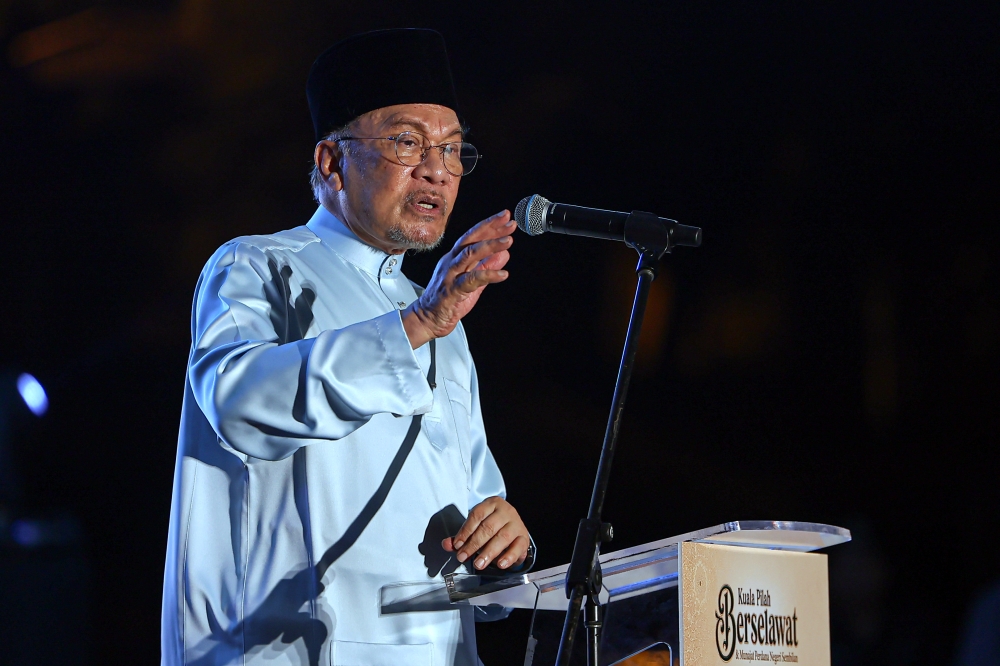
Parti Keadilan Rakyat (PKR) faces a critical juncture in its evolution as a political force in Malaysia, with party president Anwar Ibrahim urging members to view their organisation fundamentally as a movement rooted in the community rather than simply a mechanism for securing electoral victories. Speaking in Kuala Lumpur on August 15, Anwar articulated a vision that extends beyond the conventional two-to-three year electoral cycles that typically dominate Malaysian political strategy, instead positioning PKR as an institution dedicated to sustained engagement with grassroots constituents and the advancement of public interest principles.
Anwar's remarks reflect a broader concern within PKR's leadership about maintaining the party's foundational identity even as it has grown into a major parliamentary force. Since its inception, PKR has marketed itself as a party of reform and social justice, drawing support from diverse constituencies seeking alternatives to established political structures. However, the transition from opposition movement to governing partner—particularly during the Pakatan Harapan administration from 2018 to 2022—created tension between maintaining ideological purity and navigating the pragmatic demands of holding ministerial portfolios and government responsibilities. This tension continues to shape internal party dynamics as PKR consolidates its influence within the current Anwar-led government framework.
The emphasis on integrity represents a deliberate signal regarding party discipline and ethical standards at a time when Malaysian political institutions face persistent questions about accountability and transparency. Anwar's insistence that PKR function as a mass movement carries implications for how the party structures its internal processes, selects candidates, and allocates resources. A mass movement model typically prioritises direct member participation and community consultation, contrasting with hierarchical structures that concentrate decision-making authority among party elites. For PKR, adopting this approach would require sustained investment in member engagement mechanisms, regular dialogue with constituent communities, and transparent governance frameworks that allow ordinary members meaningful influence over party direction.
The context of Anwar's statement emerges against the backdrop of evolving political dynamics within Malaysia's ruling coalition. As prime minister, Anwar leads a government comprising multiple parties with sometimes divergent interests and constituencies. PKR's role within this arrangement requires careful calibration—the party must demonstrate effectiveness in governance and policy delivery while maintaining its distinct identity and base of support. Should PKR be perceived as merely a vehicle for consolidating power or securing individual political advancement, the analysis suggests it risks alienating the reform-minded constituencies that constitute its electoral foundation.
Malaysian political observers recognise that the distinction Anwar draws between mass movements and electoral machines reflects international best practices in sustainable political organisation. Political parties functioning primarily as electoral vehicles tend to experience erosion of member engagement between campaigns, declining institutional memory, and vulnerability to leadership personality cults. Conversely, mass movements that maintain continuous community presence, regular policy forums, and accessible leadership structures demonstrate greater resilience and capacity for adaptive responses to changing political environments. For PKR, which has historically drawn appeal from younger voters and urban professionals skeptical of traditional political establishments, maintaining movement characteristics aligns naturally with member expectations and recruitment strategies.
The sustainability of PKR's internal unity depends significantly on how thoroughly the party institutionalises the principles Anwar articulates. Several mechanisms would reinforce a mass movement identity: regular town halls and constituency forums, transparent candidate selection processes that privilege grassroots input, systematic rotation of leadership positions to prevent entrenchment, and dedicated resources for member education and political literacy programmes. These structural elements would signal genuine commitment to participatory governance rather than rhetorical acknowledgment of grassroots principles.
For Malaysian voters evaluating PKR's trajectory, Anwar's emphasis on institutional integrity carries practical implications. A genuinely mass-based party with robust accountability mechanisms provides voters greater assurance that elected representatives remain responsive to constituent interests rather than captured by special interests or factional elites within the party apparatus. This resonates particularly with younger Malaysian voters and those in urban centres who have demonstrated openness to parties demonstrating transparent operations and inclusive decision-making processes.
The broader Southeast Asian context also informs Anwar's perspective. Across the region, political parties demonstrating sustained grassroots engagement and institutional strength have weathered electoral defeats and leadership transitions more effectively than those dependent on individual personalities or narrow elite networks. Thailand's multi-decade political instability, Indonesia's experiences with party transformation, and Singapore's institutionalised dominance all offer cautionary tales and instructive examples regarding the relationship between party structure and political stability.
Anwar's statement arrives at a moment when PKR must balance several competing demands: consolidating government effectiveness, maintaining coalition discipline with partner parties, preserving internal party morale, and sustaining voter confidence ahead of subsequent electoral cycles. Successfully navigating these demands while genuinely functioning as a mass movement would position PKR as a model for Malaysian political organisation, demonstrating that governing responsibility need not require abandoning foundational principles of grassroots engagement and institutional integrity. Conversely, should PKR drift toward behaving primarily as a governmental apparatus rather than a community-based movement, the warning implicit in Anwar's remarks suggests the party risks losing the distinctive character that has proven electorally successful and ideologically meaningful to its diverse supporters.

