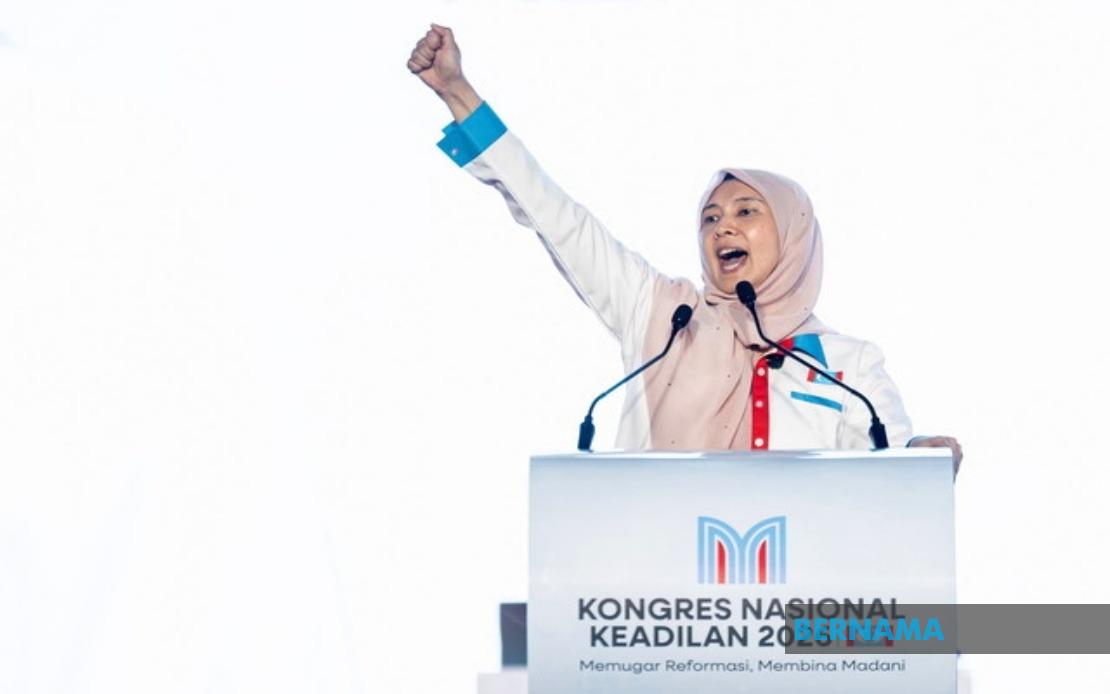
PKR deputy president Nurul Izzah Anwar has made a pointed call for her party to sustain its reformist mission now that it exercises governmental power, arguing that abandoning this commitment would betray the very foundation upon which PKR was established. Speaking at the PKR 2026 National Congress in Melaka on August 16, Nurul Izzah articulated a vision of continuous institutional and administrative evolution that extends beyond the party machinery into the broader machinery of state. Her remarks suggest an awareness that holding office presents both an opportunity and a temptation for parties to abandon their foundational principles in favour of consolidating power.
The context of Nurul Izzah's intervention reveals something of the internal tensions that surface periodically within ruling coalitions. PKR, which emerged from pro-democracy activism and reform movements, faces the classic challenge confronting opposition parties once they transition to government: maintaining ideological commitment while managing the pragmatic demands of administration. By invoking the party's origins in a wave of reform sentiment, Nurul Izzah positioned herself as a custodian of PKR's identity at a moment when that identity might be at risk of dilution through the routines of governance and the compromises inherent in coalition management with other parties and factions.
One concrete example Nurul Izzah cited to illustrate her point was the repeal of the Universities and University Colleges Act (AUKU) 1971, legislation that PKR had actively campaigned against during its time in opposition. The fact that this repeal became possible only once PKR gained access to governmental levers demonstrates, in her view, that continued commitment to reform agenda yields tangible results. This framing served a dual purpose: it vindicated the party's struggle and simultaneously raised expectations among PKR members that similar battles—potentially facing internal resistance or bureaucratic inertia—must continue to be pursued with equivalent vigour.
Yet Nurul Izzah's most substantive argument extended beyond the symbolic realm of legislative achievement. She contended that Malaysia's economic expansion under the MADANI Government administration must translate into concrete improvements in the lived experience of ordinary Malaysians rather than remaining an abstraction in statistical reports. This signals concern that broad-based macroeconomic growth may not be reaching those on lower income rungs or those excluded from formal employment structures, a worry that resonates across Southeast Asia as countries grapple with inclusive development questions.
The deputy president identified several specific dimensions through which this inclusive growth must manifest. Expanded job creation, she argued, remains essential—particularly in a context where demographic shifts and technological displacement create labour market anxieties. Support for small and medium enterprises (SMEs) featured prominently in her prescription, reflecting recognition that this sector remains vital to employment generation and community economic resilience in Malaysian contexts. She further emphasised the importance of creating pathways for women and younger people to participate meaningfully in the formal economy, acknowledging demographic and social realities that demand targeted policy attention.
Structural wage reforms emerged as a third pillar in Nurul Izzah's economic justice agenda. She advocated for salary adjustments that reflect underlying productivity improvements and maintain purchasing power against inflationary pressures. This argument carries particular significance in Malaysia, where real wage stagnation has affected segments of the workforce despite nominal economic growth, a pattern observable across Southeast Asia and increasingly a source of political disquiet among younger, educated voters.
Beyond economic substance, Nurul Izzah also delivered a cautionary message to the PKR leadership cadre regarding the psychological and moral hazards of wielding state power. Her exhortation that office-holders view power as custodial responsibility rather than personal property touched on concerns about patronage networks, factional capture of resources, and the gradual institutional decay that sometimes follows when ruling parties become disconnected from their founding missions. By framing power as a trust to be preserved and transmitted, she attempted to inculcate a stewardship ethos among the leadership.
The philosophical framing in Nurul Izzah's address—that positions and titles are transient while institutional legacies endure—reflects a longer view of political impact than the immediate electoral cycle or individual career trajectory. This perspective aligns her with a strand of Malaysian political thinking that emphasises institutional integrity and long-term democratic development over short-term partisan advantage. Yet such appeals to institutional conscience require consistent reinforcement, particularly as governments mature and face pressure to consolidate power through mechanisms that may compromise the very reforms they initially championed.
For Malaysian readers and observers of Southeast Asian politics, Nurul Izzah's intervention carries implications beyond PKR specifically. The tension between reform ambitions and the routines of power represents a recurring challenge for progressive parties across the region. Whether PKR can sustain its reform orientation while managing coalition governance, addressing diverse factional interests, and delivering material improvements to constituencies remains an open question with significance for Malaysia's democratic trajectory. The speech serves as both a reminder of PKR's reformist identity and an implicit acknowledgment that this identity requires active defense and continuous renewal.
The setting of these remarks—at a major party congress—suggests they were directed both to PKR's grassroots membership and to the broader party leadership. By publicly restating reform commitments and cautioning against the corrupting influence of power, Nurul Izzah positioned herself as an ideological anchor within the party during a period of significant governmental responsibility. Whether such anchoring rhetoric translates into sustained institutional reform, economic redistribution, and democratic deepening will ultimately determine whether PKR's tenure in government substantiates or undermines the reform legacy Nurul Izzah invoked.

