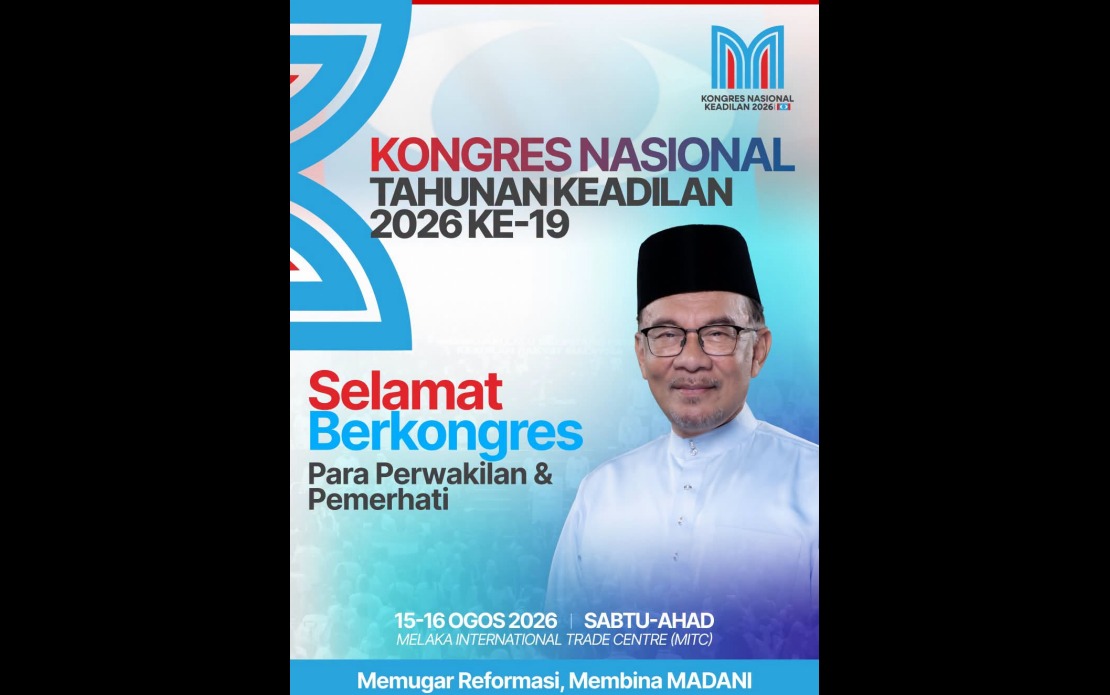
Prime Minister Datuk Seri Anwar Ibrahim has called on Parti Keadilan Rakyat (PKR) to maintain its identity as a grassroots mass movement grounded in principles of integrity, social justice, and unity, warning against allowing the party to become merely a vehicle for winning elections. In a Facebook statement released on August 14, Anwar stressed that these foundational values remain essential to PKR's mission of constructing a Malaysia that is more dignified, prosperous, and equitable for all citizens. His remarks come as the party prepares for a significant moment of institutional reflection and strategic renewal.
The timing of Anwar's exhortation reflects broader concerns within Malaysia's political establishment about the health and direction of ruling coalition parties as they navigate an increasingly competitive electoral environment. By publicly emphasising PKR's original purpose beyond mere electoral triumph, the Prime Minister appears to be addressing internal party dynamics and reasserting the ideological moorings that distinguished PKR from conventional political machinery when it emerged during the reformasi movement of the late 1990s. This intervention suggests awareness of potential drift or complacency within party structures as the organisation matures and accumulates ministerial responsibilities.
PKR's National Congress 2026, scheduled to commence on August 15 at the Melaka International Trade Centre in Ayer Keroh, provides the formal setting for this broader conversation about party identity and purpose. The two-day gathering operates under the thematic banner of "Memugar Reformasi, Membina MADANI"—revitalising the reformasi spirit whilst constructing the broader MADANI vision that has become central to the current government's policy framework. The congress functions as a crucial opportunity for the party to conduct institutional stocktaking, evaluating what has been accomplished whilst recalibrating its strategic direction for the political challenges ahead.
For Malaysian observers and regional analysts, PKR's evolution carries significance beyond the party itself. As the largest component of the ruling Pakatan Harapan coalition and the party leading the Prime Minister's office, PKR's institutional health directly affects the stability and policy coherence of Malaysia's federal government. The party's ability to balance grassroots mobilisation with professional governance, and to retain member commitment to principles rather than merely patronage networks, determines whether the coalition can effectively implement its reform agenda and maintain electoral competitiveness against strengthened opposition forces.
Anwar's emphasis on "integrity" and "social justice" as defining characteristics suggests concerns that rapid institutionalisation and ministerial power might erode the counter-establishment ethos that originally energised PKR supporters. Political movements that transition from opposition to government frequently struggle to maintain the moral clarity and popular resonance that fuelled their rise. PKR, having evolved from its origins in the reformasi struggle against Mahathir-era authoritarianism through years of alternating opposition and brief government, faces the perpetual challenge of remaining authentic to its base whilst operating competently as a ruling party.
The concept of a "mass movement" itself carries specific meaning within Malaysia's political vocabulary. It refers to parties capable of mobilising ordinary citizens beyond their formal membership, generating volunteer activism and grassroots engagement that transcends transactional politics or clientelism. Maintaining such characteristics while governing requires deliberate institutional choices, transparent decision-making, and genuine commitment to social causes beyond electoral calculation. Anwar's invocation of this ideal suggests he recognises that PKR's long-term viability and influence depend on cultivating organic popular support rather than relying solely on state apparatus machinery.
The congress will witness Anwar's official opening and a major policy speech expected to articulate PKR's strategic priorities and governance vision moving forward. Such addresses typically signal the party's intended direction and signal to members, coalition partners, and the broader electorate what PKR leadership believes should constitute the party's contribution to national governance. Given Anwar's preliminary emphasis on principles-based politics, observers anticipate the substantive speech will elaborate how PKR intends to operationalise reform commitments, address persistent governance challenges, and maintain member cohesion around shared ideological foundations.
Southeast Asia's political landscape has increasingly featured contests between governments that maintain genuine popular movements versus those reduced to patronage networks, with corresponding implications for democratic quality and policy effectiveness. Malaysia's trajectory will partly depend on whether major ruling coalition parties, particularly PKR, can sustain the grassroots energy and principled engagement that distinguish movements from mere electoral machinery. This internal PKR conversation therefore resonates beyond party boundaries, touching questions about democratic health, institutional renewal, and how governments can remain responsive to popular needs whilst executing complex policy agendas.
The reformasi agenda that Anwar references carries historical weight in Malaysian politics. Born from protests against judicial independence and democratic accountability, the reformasi movement and PKR itself represented aspirational politics focused on systemic transformation rather than mere administrative adjustment. For contemporary PKR members and sympathisers, this historical anchor provides both inspiration and challenge—inspiration regarding what political change might accomplish, and challenge regarding whether that original vision remains achievable or relevant within Malaysia's current circumstances. Anwar's invocation of reformasi suggests its founding principles remain prescriptive for the party's ongoing mission.
Looking forward, PKR's ability to satisfy simultaneously the demands of electoral competition, governmental responsibility, and principled grassroots activism will determine whether the party becomes a model of democratic renewal or gradually morphs into conventional political machinery. The National Congress 2026 represents an opportunity for serious institutional conversation about these tensions and how PKR might navigate them. Anwar's preliminary statement, whilst necessarily brief as a Facebook posting, establishes the terms for that conversation by prioritising principles and people's trust over narrow electoral calculation.

