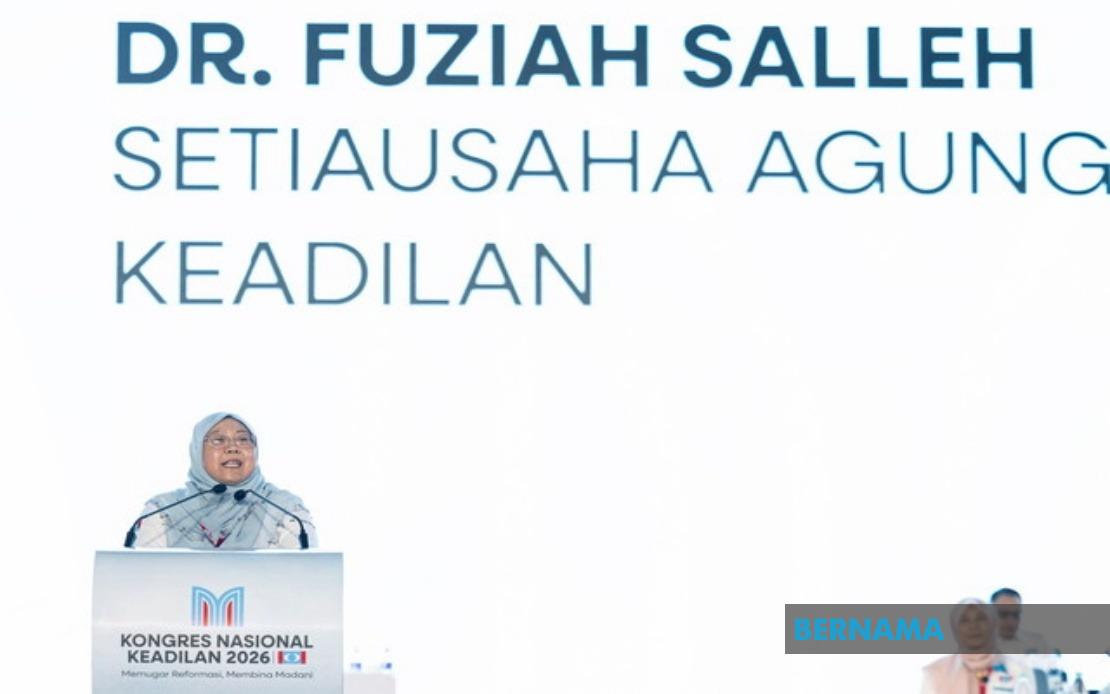
Datuk Dr Fuziah Salleh, secretary-general of Parti Keadilan Rakyat, has stressed the critical importance of strengthening PKR's conceptual approach and public communication strategy centred on the MADANI Economy framework to ensure the party's reform agenda translates into tangible improvements for ordinary Malaysians. Speaking during her closing remarks at the PKR National Congress 2026 in Melaka on August 16, Fuziah underscored that party leaders at every tier must assume greater responsibility in converting the party's political vision into concrete outcomes that demonstrably enhance public welfare.
The MADANI Economy framework has become increasingly central to PKR's identity within Malaysia's coalition government, representing a departure from earlier models and emphasising inclusive growth, social protection, and strategic economic development. However, Fuziah's comments suggest that despite the framework's theoretical adoption, the party may be grappling with inconsistent messaging and implementation gaps. Her call for a recalibration of how PKR conceptualises, discusses, and articulates this framework indicates awareness that delegates and the broader public may not yet perceive a coherent connection between party ideology and government action.
For Malaysian observers, this distinction matters considerably. The MADANI framework was designed to address concerns about inequality, regional disparities, and the vulnerability of ordinary workers and small businesses to economic shocks. If PKR members and the public lack a unified understanding of how this translates into policy, the government risks appearing disconnected from its own stated priorities. Fuziah's emphasis on reshaping internal thinking and external communication suggests recognition that conceptual clarity at the grassroots level remains incomplete.
Fuziah identified institutional reform as a cornerstone of the agenda, but cautioned that success depends entirely on unwavering commitment and disciplinary rigour from both the party apparatus and the government administration. She employed the metaphor of winning a war without sufficient ammunition, acknowledging that aspirations must be paired with adequate resources, political will, and organisational capacity. This candid assessment reflects the considerable challenges facing Malaysia's reform efforts, which frequently encounter bureaucratic resistance, resource constraints, and competing political pressures.
The emphasis on discipline carries particular weight in the Malaysian context, where factional tensions within ruling coalitions have historically derailed reform initiatives. PKR itself has experienced periods of internal discord, and Fuziah's repeated invocation of discipline appears directed at ensuring that personal political ambitions do not undermine collective commitment to institutional change. The party secretary-general's insistence that reform implementation is neither swift nor simple demonstrates mature acknowledgment that transforming governance structures requires sustained effort across multiple electoral cycles.
On the question of inclusivity, Fuziah reaffirmed PKR's foundational commitment to championing all segments of Malaysian society without regard to ethnic or religious identity. She explicitly rejected what she characterised as zero-sum framings that allocate rights along communal lines, instead positioning the party as fundamentally concerned with material hardship and economic vulnerability regardless of demographic background. This stance aligns with PKR's historical identity but also reflects ongoing tensions within Malaysian politics regarding the balance between universal welfare principles and recognition of specific community concerns.
Fuziah's emphasis on the poor rather than ethnically-defined constituencies represents a deliberate ideological positioning that distinguishes PKR from competitors, particularly within Umno and PAS, where communal appeals remain dominant. However, implementation of universalist economic policies in a multiethnic society requires exceptional political sensitivity, as communities may perceive resource allocation as inequitable despite universal principles. The MADANI Economy's focus on broad-based prosperity must therefore be accompanied by transparent articulation of how specific initiatives benefit all communities proportionally.
The timing of these remarks at the national congress is strategically significant, as it signals to party members and the broader electorate that PKR leadership is taking stock of implementation challenges and recommitting to the party's ideological foundations. Congress proceedings typically serve as occasions for recalibrating party direction and rallying members around shared objectives. By positioning the MADANI Economy framework as central rather than peripheral, Fuziah is attempting to elevate abstract economic principles into a mobilising force for party cadres and government officials.
For Malaysian businesses and civil society, Fuziah's speech carries implications regarding policy direction and governance orientation. The explicit commitment to institutional reform, paired with warnings about the magnitude of challenges involved, suggests that PKR anticipates continued slow progress on structural transformation. This realistic assessment may help manage public expectations while simultaneously pressuring the government to demonstrate tangible progress on signature initiatives linked to the MADANI framework.
The secretary-general's call for enhanced strategic communication also suggests recognition that PKR has underinvested in explaining its economic vision to the Malaysian public. In an increasingly competitive information environment, where social media accelerates political messaging but also facilitates spread of counter-narratives, the party recognises it must articulate its position more forcefully and consistently. The gap between announcing frameworks and embedding them in public consciousness represents a persistent challenge for Malaysian governance.
Fuziah's remarks fundamentally reflect a party leadership attempting to navigate the tension between ambitious reform objectives and the grinding realities of implementation within a coalition government with diverse interests. Her emphasis on discipline, commitment, and narrative consistency addresses the core vulnerabilities that threaten reform agendas: internal fragmentation, insufficient resource allocation, and public detachment from government priorities. Whether PKR can successfully strengthen both its internal coherence and external messaging around MADANI Economy principles will significantly influence not only the party's electoral prospects but also the trajectory of Malaysia's broader governance transformation.

