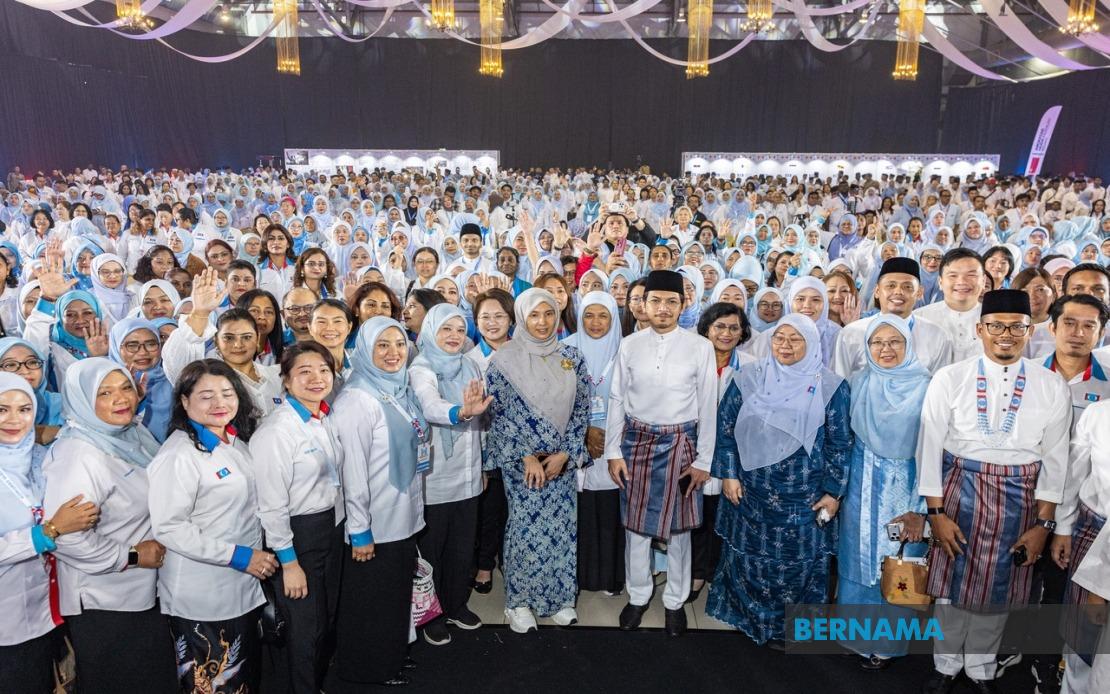
The leadership of Parti Keadilan Rakyat faces mounting pressure to revitalise the party's organisational structure and public messaging, as acknowledged by Angkatan Muda Keadilan chief Muhammad Kamil Abdul Munim at the youth wing's national congress in Melaka. Speaking at the gathering held at the Melaka International Trade Centre in Ayer Keroh, Muhammad Kamil articulated a candid assessment of the party's current standing, emphasising that popularity alone cannot secure electoral victories and that fundamental weaknesses in grassroots mobilisation have become apparent through recent state-level contests.
The remarks underscore growing recognition within PKR that the party's transition from opposition to government has exposed structural vulnerabilities that were previously masked by waves of popular sentiment. Muhammad Kamil referenced the party's recent performances in Sabah, Johor, and Negeri Sembilan state elections as evidence that grassroots infrastructure has not kept pace with the party's national profile. This distinction between public support and effective organisational machinery represents a critical diagnosis of PKR's current predicament—one that resonates across Southeast Asian political movements that have struggled to convert popular backing into durable electoral success.
Historically, PKR has relied since 1998 on cycles of popular mobilisation, with ordinary citizens functioning as informal campaign operatives during periods of heightened political engagement. The party successfully leveraged this momentum through its years in opposition and into government formation. However, the youth wing chief's analysis suggests that this organic enthusiasm has failed to translate into the kind of permanent, structured party apparatus required to maintain electoral competitiveness. The implication is stark: without deliberate organisational investment, PKR risks losing ground to parties with more established grassroots networks.
Muhammad Kamil called for a comprehensive recalibration of PKR's strategic approach, urging the party to develop more sophisticated messaging frameworks and to reconsider how it conducts political activities. His emphasis on making the party's operations more organised, structured, and targeted reflects an understanding that governing presents entirely different challenges from campaigning from opposition. When a party holds state or federal power, voters evaluate it differently—no longer primarily through the lens of reform rhetoric but through delivery, accountability, and administrative competence. This shift in voter expectations demands a corresponding evolution in party strategy and communication.
The congress convened under the presidency of PKR deputy leader Nurul Izzah Anwar, with participation from vice-president Datuk Seri Dr Zaliha Mustafa and Wanita PKR chief Fadhlina Sidek, signalling that this reassessment involves the party's senior echelon. This broad-based acknowledgment of shortcomings suggests internal agreement that PKR cannot proceed along its current trajectory without substantive change. The gathering itself was framed as an opportunity for institutional introspection rather than triumphalism, a deliberate choice that reflects leadership's commitment to confronting uncomfortable truths.
Fadhlina Sidek reinforced these themes in her address, characterising the congress as a platform for genuine self-examination rather than ceremonial affirmation. She exhorted party members and delegates to acknowledge weaknesses with humility and to treat the congress as a mechanism for generating concrete action items. Her emphasis on listening to grassroots voices and translating leadership speeches into operational agendas suggests that PKR recognises a disconnect between high-level strategy and implementation at the party's base. This recognition is particularly important in the Malaysian context, where community-level political organisations remain influential in shaping local electoral outcomes.
Muhammad Kamil's call for the party not to lose heart, despite acknowledging that voters had sent a clear signal through recent elections, reflects an attempt to balance candid assessment with morale maintenance. This rhetorical positioning acknowledges electoral setbacks while framing them as opportunities for renewal rather than indications of terminal decline. For PKR and comparable regional parties, this balance is crucial—excessive pessimism can demoralise activists, while insufficient acknowledgment of problems can perpetuate the very weaknesses that produced disappointing results.
The reference to the party's journey since 1998 provides important historical context. PKR emerged as an expression of reform sentiment during that period of political upheaval, and its subsequent evolution from protest movement to governing party has involved fundamental shifts in organisational culture and operational priorities. The challenge now is to retain the reform momentum and principled identity that gave PKR its initial appeal whilst simultaneously building the kind of professional, efficiently-organised machinery that contemporary electoral competition demands. These are not necessarily compatible objectives, and navigating the tension between them will define PKR's trajectory toward the next general election.
The congress proceedings also highlighted the role of women's wings and youth organisations in party renewal. Fadhlina's emphasis on using delegate debates as grassroots recommendations suggests that PKR is attempting to create structures that channel base-level feedback into strategic decision-making. This inclusive approach may prove valuable in revitalising party engagement, particularly among younger members and women activists who might otherwise feel peripheral to leadership circles. Malaysian political parties increasingly recognise that mobilisation depends on creating meaningful pathways for participation beyond voting.
Looking forward, PKR's success will hinge on whether leadership can translate acknowledged weaknesses into concrete programmatic improvements. The party must develop narratives that resonate with contemporary voter concerns, maintain organisational discipline at grassroots levels, and ensure that its government performance reinforces rather than contradicts its reform messaging. These tasks present substantial challenges, but the willingness of party leadership to confront them candidly at a national congress suggests that PKR is at least attempting to address its structural deficiencies before the next electoral cycle.
For observers of Malaysian politics, PKR's current position reflects broader regional trends. Many Southeast Asian parties have struggled with the transition from opposition advocacy to governing responsibility, and few have successfully maintained the grassroots vitality that initially propelled them to power. PKR's conscious effort to reconstruct its organisational foundations whilst remaining in government positions it to learn lessons that may have broader relevance across the region's political landscape. The outcomes of this renewal effort will provide important indicators of whether populist movements can mature into durable governing institutions.

