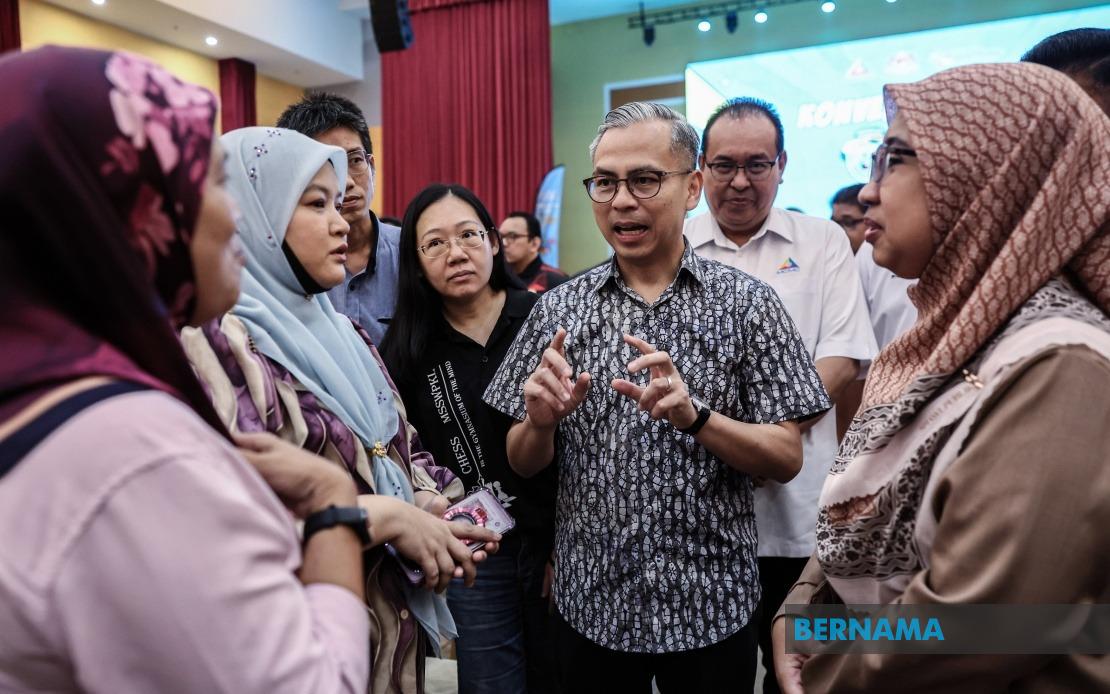
The absence of Nurul Izzah Anwar from her position as deputy president of PKR will pose no operational challenges for Malaysia's second-largest coalition party, according to party information chief Datuk Seri Fahmi Fadzil. Addressing media after launching a digital safety initiative in Kuala Lumpur on August 8, Fahmi provided reassurances that the party's administrative machinery will continue functioning without disruption during her period away from the post.
The PKR Central Leadership Council (MPP) has declined to accept Nurul Izzah's resignation offer, instead greenlit her request for temporary leave on personal grounds. The decision reflects the party's desire to retain the high-profile lawmaker while accommodating her stated need to concentrate on family matters and doctoral studies. This measured approach represents a middle path between losing her services entirely and forcing her to maintain full duties during a demanding period.
Responsibility for overseeing the deputy president's portfolio has been transferred to Vice-President Datuk Seri Saifuddin Nasution Ismail, who will discharge all associated obligations and leadership functions during the interim period. Fahmi's explicit confirmation of this delegation underscores the transition's formality and suggests careful planning to ensure continuity across PKR's various departments and initiatives. The party leadership appears confident that Saifuddin's expanded role will not stretch existing capacities beyond manageable limits.
Fahmi emphasised that Nurul Izzah maintains her standing as a full party member and intends to remain engaged with PKR's broader mission despite her temporary step back from executive duties. This framing suggests the party views her absence as tactical rather than substantive, positioning her involvement as ongoing rather than suspended. Such language also serves to manage perceptions that her departure—even temporarily—might signal deeper institutional problems or discord within PKR's leadership structure.
Separate questions have emerged regarding whether Subang Member of Parliament Wong Chen might vacate his parliamentary seat, but Fahmi stated he possessed no verified information on this matter. He deferred any clarification to Dewan Rakyat Speaker Tan Sri Johari Abdul, whose office would handle formal announcements concerning parliamentary vacancies. This deflection suggests either genuine uncertainty or a deliberate choice to avoid amplifying speculation that could complicate party messaging.
Concerning broader political timelines, Fahmi rejected suggestions that Malaysia might hold its next general election ahead of schedule. He characterised current government planning as focused on maintaining administrative stability and confirmed no accelerated ballot is under consideration. The administration anticipates general elections occurring no later than the final months of next year, providing a clear temporal horizon for political planning across competing coalitions and individual parties seeking re-election.
Fahmi highlighted that the federal government's present priorities centre on sustained, effective governance rather than electoral calculations. He acknowledged the commitment demonstrated by component parties within the Unity Government coalition in supporting Prime Minister Datuk Seri Anwar Ibrahim's continued leadership throughout his current term. This framing positions governance competence as the coalition's primary legitimating narrative rather than partisan advantage or internal manoeuvring.
Within both Pakatan Harapan and the broader Unity Government framework, leadership remains focused on comprehensive reform initiatives and addressing longstanding institutional challenges that affect public welfare. According to Fahmi, ongoing collaborative efforts among coalition members aim to meaningfully improve national conditions while advancing the substantive policy agenda promised to voters. This emphasis on substantive governance reflects an attempt to redirect political discourse away from internal disputes toward tangible deliverables.
Fahmi identified implementation of recommendations from the Royal Commission of Inquiry investigating Lembaga Tabung Haji's operations during the 2014 to 2020 period as a matter requiring continued attention. This complex issue, stemming from the pilgrimage fund's troubled financial stewardship under the previous administration, represents a symbolic test of the current government's capacity to follow through on institutional accountability commitments. Resolution of RCI recommendations carries implications for restoring public confidence in hajj fund governance and broader faith-based financial institutions.
Looking ahead, Fahmi signalled that Prime Minister Anwar Ibrahim would announce several major policy or administrative initiatives in coming weeks. While he provided no specifics, he characterised these forthcoming announcements as broadly beneficial for Malaysian citizens and the nation's development trajectory. Such vague but optimistic framing represents standard political communications practice designed to maintain public anticipation and positive sentiment toward the administration without committing to details that might prove controversial or difficult to execute.
The broader context for these remarks involves Malaysia's complex multiethnic, multireligious political environment where coalition stability frequently depends on managing multiple parties with sometimes competing priorities. PKR's handling of Nurul Izzah's situation reflects careful calibration designed to maintain party cohesion while acknowledging legitimate personal circumstances. As the nation looks toward eventual elections against a backdrop of competing reform agendas and institutional challenges, the Unity Government's demonstrated ability to retain capable leaders while maintaining operational effectiveness will likely become an increasingly important factor in voters' electoral calculations.

