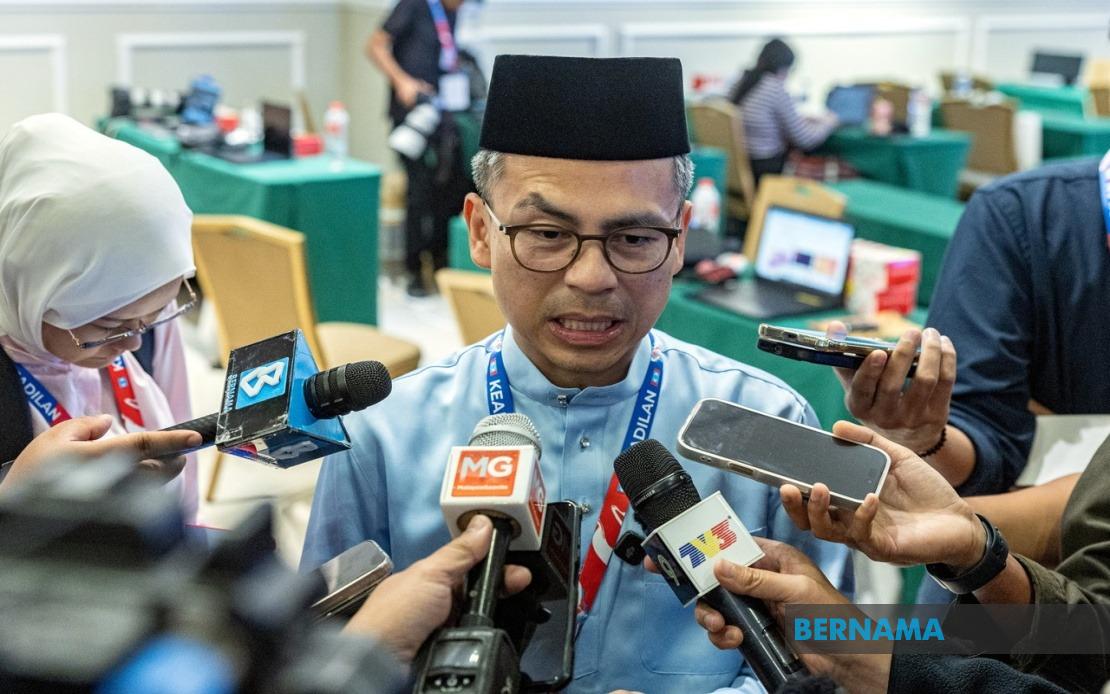
The messaging problem facing Malaysia's ruling coalition has become impossible to ignore. At the Parti Keadilan Rakyat's National Congress 2026 in Melaka this week, party delegates made clear that despite genuine macroeconomic progress, ordinary Malaysians simply do not feel the benefit in their daily lives—and the government has failed to adequately explain why. This disconnect between headline economic figures and household sentiment threatens to erode public confidence in Pakatan Harapan's governance, prompting PKR to announce a comprehensive overhaul of how it communicates with voters.
The initiative, unveiled by Communications Minister Datuk Seri Fahmi Fadzil at the congress held at the Melaka International Trade and Exhibition Centre in Ayer Keroh, amounts to an admission that the current information apparatus is not reaching Malaysians effectively. Fahmi, who serves simultaneously as PKR's Information Chief and communications director for the broader Pakatan Harapan coalition, acknowledged that a widening perception gap has emerged—one that transcends political posturing and reflects a genuine failure in narrative control. The government has pursued numerous initiatives and can point to concrete economic metrics, yet these accomplishments remain abstract to voters struggling with cost-of-living pressures and wage stagnation.
The timing of this announcement carries significance for Malaysia's political trajectory. As the coalition approaches the next general election cycle, the ability to frame achievements and respond to public anxieties becomes critical. PKR's acknowledgement that the communication infrastructure requires substantial strengthening suggests internal tensions within the government about how messages are crafted, approved, and distributed. The party leadership appears to recognize that traditional top-down communication channels—press releases, ministerial statements, controlled media appearances—no longer suffice in an environment where public discourse happens in real time across multiple digital platforms.
Fahmi indicated that multiple proposals emerged from delegate discussions regarding how information dissemination should be restructured. Rather than dismiss these suggestions, the Communications Minister committed to presenting a formal review of proposed changes during the congress's concluding session. This openness reflects pressure from ground-level party workers who, as branch leaders and grassroots activists, encounter citizen frustration directly. They understand that without effective communication, even sound policy becomes politically invisible, leaving space for opposition narratives to flourish unchallenged.
The challenge facing PKR and Pakatan Harapan extends beyond technical communication improvements. Malaysians have grown increasingly skeptical of government messaging, partly due to previous administration scandals that eroded institutional credibility. Rebuilding trust requires not just clearer communication but demonstrable results that justify claims of economic progress. When growth figures exist alongside rising household debt and inflationary pressures on essential goods, voters reasonably conclude that aggregate prosperity masks unequal distribution—a narrative that opposition parties actively exploit.
Fahmi's proposal for a more formalized channel between parliamentary-level representatives and the central administration in Putrajaya suggests that current feedback mechanisms are inadequate. By creating systematic pathways for constituency-level concerns to reach decision-makers, PKR may hope to achieve both better policy responsiveness and a clearer understanding of public sentiment. This arrangement could prevent situations where government announcements of achievements appear tone-deaf to communities experiencing hardship, as happened during various pandemic-related economic disruptions.
The party's Central Leadership Council has signaled receptiveness to these reform proposals and committed to implementing changes beginning with the party's own internal structures. This commitment to internal transformation before attempting to reshape external communication carries symbolic weight—suggesting that leadership recognizes the authenticity problem underlying the broader messaging challenge. If party officials themselves do not believe in or effectively embody the narratives they promote, public skepticism becomes justified.
For Malaysian readers and the broader Southeast Asian region, this moment represents a crucial test of whether democratic institutions can successfully adapt to modern communication realities. PKR's initiative, if executed effectively, could offer a model for how ruling parties reinvigorate public engagement without resorting to authoritarian information control or abandoning democratic principles. Conversely, if the communication overhaul produces only cosmetic changes without addressing underlying policy or delivery challenges, voter disaffection will likely intensify.
The specific focus on translating macroeconomic achievement into household-level improvement reflects sophisticated political analysis. Government officials understand that abstract growth rates mean little to voters unable to afford rent or healthcare. Communicating the connection between fiscal discipline, interest rates, investment climate, and everyday purchasing power requires narratives that current government messaging has failed to construct convincingly. This represents not merely a communications problem but a storytelling challenge—one that demands empathy, clarity, and honesty about both progress and persistent inequalities.
As PKR implements these communication strategy adjustments, several questions remain pertinent. Will formal restructuring actually improve message effectiveness, or do deeper issues around policy design and resource allocation require attention? Can the government successfully argue that current economic trajectories benefit ordinary Malaysians when wage growth consistently lags inflation? And critically, will enhanced communication resonate with skeptical voters, or will they dismiss improved messaging as sophisticated spin disconnected from material reality?
The congress conclusions and subsequent implementation of communication reforms will offer early indication of whether PKR's leadership grasps the depth of the challenge. Superficial improvements to information channels will likely prove insufficient; what voters demand is evidence that government listens, understands their struggles, and pursues policies addressing inequality—with clear communication explaining both the diagnosis and the cure. The next several months will reveal whether PKR's commitment to communication transformation reflects genuine strategic recalibration or merely tactical repositioning ahead of electoral tests.

