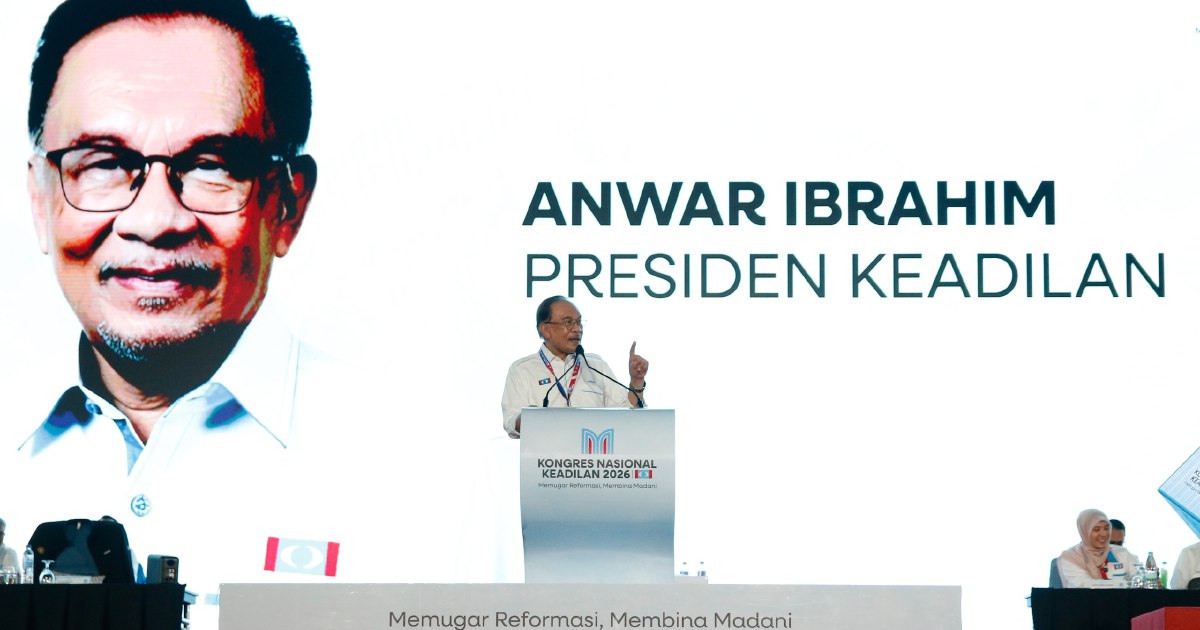
Malaysia's political landscape has evolved into an intricate web of overlapping alliances, and Prime Minister Anwar Ibrahim's statement at Ayer Keroh underscores the delicate balancing act at the heart of current governance. PKR, the People's Justice Party and backbone of Anwar's administration, will sustain its working relationship with Barisan Nasional and Umno while honouring commitments to fellow Pakatan Harapan coalition members DAP and Amanah. This dual-engagement strategy reflects the pragmatic compromise that has become essential to Malaysia's governance since the 2022 general election fragmented parliamentary arithmetic.
The announcement demonstrates PKR's recognition that no single coalition commands overwhelming parliamentary numbers, necessitating careful choreography between competing ideological blocs. By maintaining simultaneous ties with the opposition-turned-partner Umno and the progressive Democratic Action Party, PKR positions itself as an indispensable bridge in Malaysian politics. This approach carries significant implications for the stability of the Anwar administration, which depends upon parliamentary passage of legislation and the maintenance of sufficient numbers to counter confidence votes.
For Pakatan Harapan constituents, particularly DAP whose political future has been turbulent since 2020, Anwar's reaffirmation of loyalty addresses underlying anxieties about marginalisation within government structures. DAP, despite its significant parliamentary representation and role in formulating economic and social policies, has experienced the challenge of operating within a coalition that includes former political adversaries. Amanah, the newer component of the opposition coalition, similarly depends upon robust partnerships to maintain relevance beyond its core base.
The strategic accommodation with Barisan Nasional and Umno reflects historical necessity more than ideological alignment. Umno, Malaysia's dominant party for seven decades before 2018, remains the largest single party in Parliament and controls crucial state governments including in Johor, one of Malaysia's most economically significant states. Without Umno's cooperation or at minimum its abstention on critical votes, PKR's government faces perpetual vulnerability. This mathematical reality has driven pragmatic engagement despite the two parties' competing visions on governance, Islam's constitutional role, and economic policy.
The sustainability of this arrangement depends heavily upon tangible outcomes that benefit all parties. For PKR and Anwar, stability allows implementation of the government's economic transformation agenda and demonstrates effective administration ahead of the next general election. For Umno, cooperation yields ministerial positions, patronage resources, and influence over policy directions that advance party interests and preserve its political base. The tension inherent in such arrangements periodically erupts when either partner perceives unequal benefit or feels constrained by coalition discipline.
Regional political observers watching Malaysia will recognise parallels with coalition governments across Southeast Asia that similarly navigate fractured parliaments. Indonesia's multi-party system, Thailand's recurring coalition crises, and the Philippines' fluid party alignments all demonstrate how post-democracy systems often struggle to maintain stable majorities without sophisticated alliance management. Malaysia's experience offers lessons in how pragmatism, despite compromising ideological purity, can sustain governance where electoral fragmentation prevents single-party dominance.
For businesses and investors evaluating Malaysia's political risk, Anwar's explicit commitment to multi-coalition engagement provides reassurance of governmental continuity. Foreign direct investment decisions increasingly depend upon confidence in policy consistency and governmental stability. The formal acknowledgment of PKR's dual commitments, rather than attempting to obscure inherent contradictions, suggests a mature recognition that Malaysia's governance structure requires managing tension rather than pretending it does not exist. This transparency, paradoxically, may enhance confidence more than misleading claims of seamless coalition harmony.
The statement also carries implications for state-level politics where Pakatan Harapan maintains control of several crucial territories including Selangor, Penang, and Melaka. These state governments operate within the broader Pakatan framework, with DAP and Amanah wielding significant influence at regional level. Anwar's commitment to PH partners reassures these state administrations that the federal government will not subordinate regional interests to accommodate Umno at their expense. Conversely, state-level dynamics continue to influence federal calculations, creating complex feedback loops between different tiers of governance.
The announcement comes at a moment when Anwar's government has stabilised considerably from its precarious beginnings. Early months of the administration witnessed constant speculation about governmental viability, with opposition leaders repeatedly testing parliamentary mathematics. As the administration enters its third year, demonstrated policy achievements and the political costs of destabilising government have reduced constant threats to the executive. This relative stability provides greater confidence for medium-term planning and policy implementation.
Looking forward, the sustainability of PKR's balancing act depends upon whether all coalition partners perceive sufficient benefit from continued cooperation. Should Umno believe that engagement merely constrains its influence without advancing party interests, pressure to withdraw and return to opposition status could intensify. Conversely, if DAP and Amanah feel that their participation yields only subordinate influence while Umno accumulates disproportionate rewards, tensions within Pakatan Harapan could undermine governmental stability from that direction. Anwar's ongoing political challenge involves managing expectations across these competing constituencies while delivering tangible outcomes that validate continued cooperation.
The fundamental reality underlying PKR's strategy reflects Malaysia's contemporary political condition: governance increasingly depends upon sophisticated coalition management rather than the majority-government model that dominated the country for decades. Whether this arrangement proves durable or merely represents a transitional phase remains uncertain. What appears clear is that Malaysian politics has permanently evolved beyond the binary opposition-government dynamic, requiring sustained attention to the complex mathematics of multi-coalition administration.

