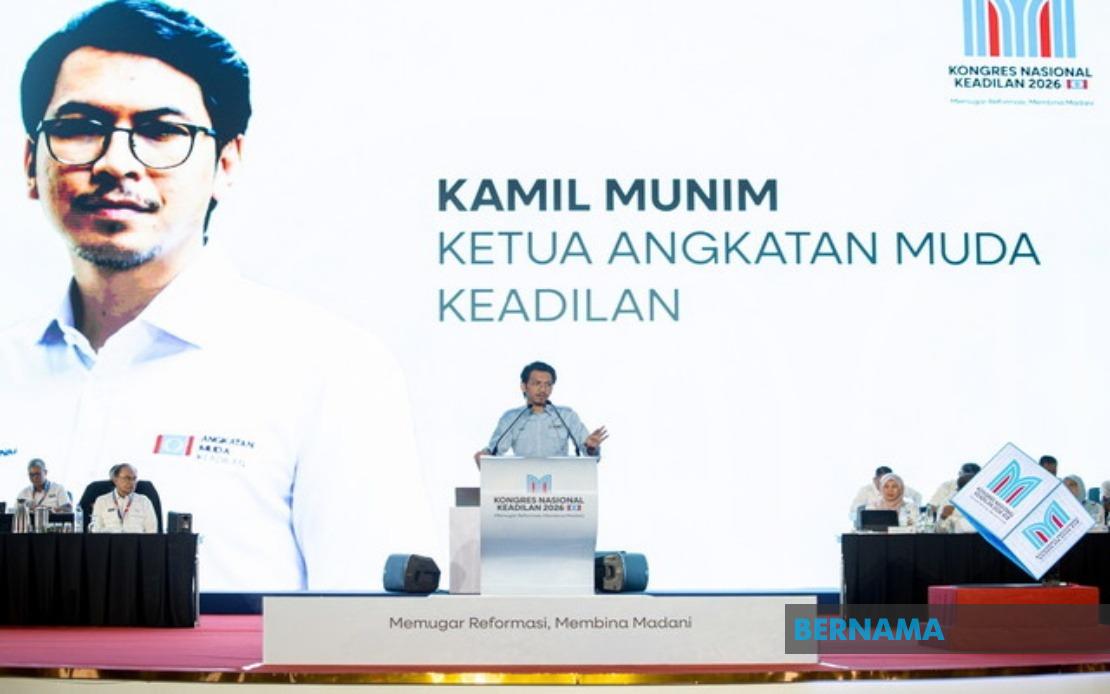
PKR Youth (AMK) must undergo substantial strategic overhaul to effectively reach voters aged 45 and below, who form the largest demographic on Malaysia's electoral roll, according to the party's youth wing chief Muhammad Kamil Abdul Munim. Speaking at the PKR National Congress in Melaka on August 16, Kamil emphasised that the party's recent electoral performance in Johor and Negeri Sembilan has exposed gaps that demand urgent reassessment of current approaches and organisational strengths.
The two state elections delivered disappointing results that have prompted wider reflection within the party's leadership about how to reconnect with the electorate. Rather than viewing these outcomes as mere setbacks, Kamil framed them as opportunities for the party machinery to fundamentally recalibrate its messaging and engagement tactics. The younger demographic's dominance in electoral lists means their preferences could become decisive in determining national election outcomes, making this recalibration essential for PKR's future viability.
Kamil highlighted a critical distinction between administrative competence and genuine leadership development, urging grassroots organisers to move beyond bureaucratic routines. The traditional focus on party machinery operations must yield to deeper engagement with community concerns and aspirations. This shift represents acknowledgment that structural presence alone—holding positions, managing party affairs—does not translate into genuine voter persuasion or popular support accumulation.
Despite largely positive public assessments of the MADANI Government's overall performance, the party cannot assume this translates automatically into electoral success. The disconnect between government approval ratings and voting behaviour in recent polls reveals sophisticated voter attitudes: citizens may appreciate some policy outcomes while harbouring reservations about party competence or direction. This nuance demands that PKR leaders develop more granular understanding of specific voter concerns rather than relying on aggregate satisfaction metrics.
Kamil stressed the importance of direct community engagement, particularly in rural constituencies where smaller population clusters require personalised attention and locally-calibrated solutions. The party's outreach strategy has historically concentrated resources on urban centres and administrative nodes, potentially neglecting dispersed communities where personal trust and direct leader accessibility carry outsized influence. Building confidence at this granular level requires sustained presence and genuine responsiveness to localised problems rather than one-off campaign visits.
The party must identify specific voids in its communication and service delivery to understand where voter alienation originates. These gaps may reflect policy failures, perception gaps between government action and public awareness, or inadequate articulation of reform achievements. Rather than assuming voters simply lack information, PKR should investigate whether its messaging fundamentally fails to address priority concerns or whether implementation failures undermine stated commitments.
Kamil invoked PKR's historical trajectory as evidence of the party's capacity for periodic renewal. The 2008 federal election breakthrough and the 2018 Pakatan Harapan victory demonstrated PKR's ability to catalyse political shifts at roughly decadal intervals. However, maintaining momentum between electoral milestones requires continuous adaptation rather than coasting on past victories. The party cannot rely on periodic surprises if it neglects systematic groundwork during intervening periods.
Reforming Malaysia's political landscape remains the underlying legitimacy claim for PKR's continued existence and expansion. This agenda requires sustained articulation and visible delivery, yet recent state election results suggest erosion in the party's ability to mobilise voters around reform narratives. Younger voters particularly may possess different expectations about what meaningful reform entails, requiring the party to evolve its reform platform rather than recycling earlier formulations.
The upcoming general election timeline demands immediate preparation and strategic repositioning. Waiting for the official campaign period to commence leaves insufficient opportunity for the depth of voter engagement and relationship-building that Kamil suggests is necessary. The party must treat the current intervening period as an extended campaign phase focused on identifying concerns, developing locally-relevant solutions, and rebuilding grassroots confidence through visible responsiveness.
Preparing the entire party apparatus—not merely senior leaders but the full organisational hierarchy—for national leadership responsibilities represents a parallel challenge. PKR must project not merely electoral competitiveness but governing readiness that extends beyond federal-level positions to encompass state and local administration. This requires developing bench strength and demonstrating administrative capacity at multiple governance tiers simultaneously.

