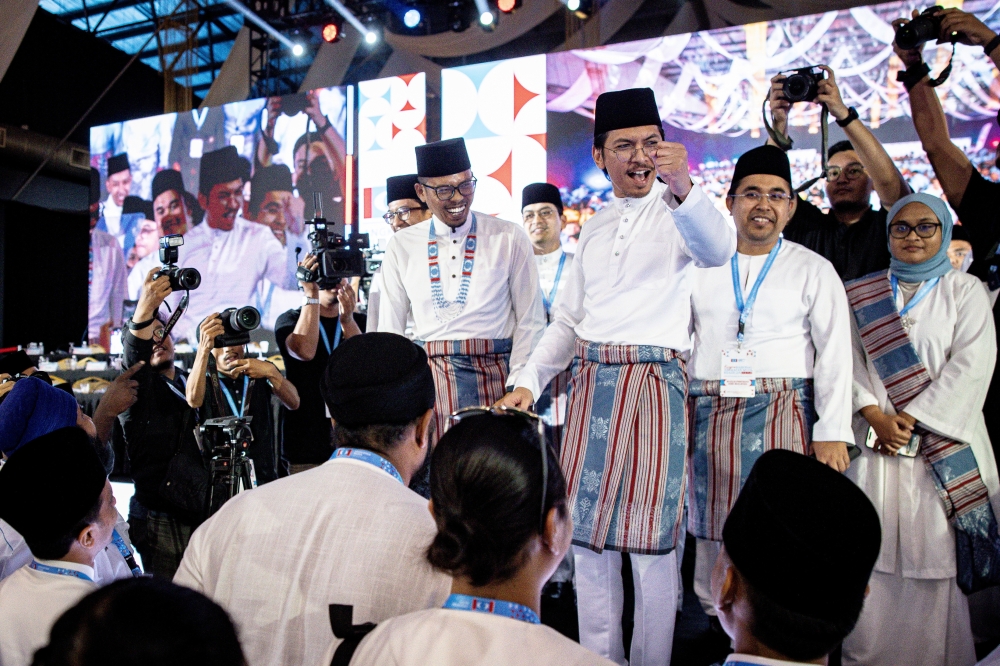
The youth wing of Pakatan Rakyat has moved to amplify Prime Minister Datuk Seri Anwar Ibrahim's commitment to repealing the Universities and University Colleges Act, signalling a generational shift within the ruling coalition towards greater campus freedoms. The backing from PKR Youth underscores broader momentum within the government to dismantle long-standing restrictions on student political expression that have governed Malaysian universities for decades.
Anwar's announcement to pursue the repeal represents one of the most significant educational policy reversals since the legislation took effect, as it would fundamentally alter the regulatory framework that currently prohibits university students from engaging in partisan political activities. PKR Youth's public endorsement transforms what might have remained a ministerial pledge into a coalition-wide initiative, suggesting the reform effort carries weight beyond any single political figure or department. The move reflects changing attitudes within ruling circles about the relationship between campus life and democratic participation.
Students have long chafed under restrictions embedded in the UUCA, which impose penalties on those who engage in political organising, attend rallies, or publicly support political parties while enrolled at public universities. The legislation, enacted to maintain campus stability, has instead created a generation of undergraduates operating under constraints unknown to their counterparts in democracies across the region. PKR Youth's call for students to become vocal advocates for change recognises that institutional reform often requires grassroots pressure rather than top-down implementation alone.
The political timing of this push matters significantly within Malaysia's domestic context. With government power consolidated across federal and most state levels, the ruling coalition faces pressure to deliver on transformation pledges made during recent electoral campaigns. Educational reform appeals to younger voters and urban constituencies who increasingly view campus restrictions as anachronistic. PKR Youth's intervention helps position the government's reform agenda as one embracing democratic participation rather than limiting it.
For Malaysian universities, repeal would mark a substantial departure from the controlled campus environment that has characterised higher education for generations. Students would gain freedoms to organise, protest, and publicly affiliate with political movements, bringing Malaysian campuses into closer alignment with regional peers like Thailand and Indonesia where student activism, though sometimes turbulent, is constitutionally protected. The transition period could prove contentious, as university administrators trained under restrictive frameworks adjust to managing more openly activist student bodies.
Yet significant obstacles remain before any legislative change materialises. The UUCA repealing process requires parliamentary passage, and potential resistance from education ministry officials who view student political engagement as destabilising cannot be discounted. Conservative voices within the broader coalition may question whether empowering campus activism serves institutional interests, particularly if student mobilisation subsequently targets government policies. The mechanics of enforcement also present complications—universities have developed sophisticated administrative systems to monitor and sanction political involvement, dismantling these apparatuses requires institutional will.
PKR Youth's emphasis on encouraging student voices to articulate their own reform priorities moves beyond merely supporting a legislative change. The faction is explicitly inviting undergraduates to organise around educational grievances more broadly, suggesting that UUCA repeal may open conversations about campus governance, academic freedom, and institutional autonomy that extend well beyond the political expression question. Students possess detailed knowledge of how restrictions affect daily university life, and their input could shape implementation in meaningful ways.
Regionally, Malaysia's movement towards campus liberalisation carries symbolic weight. Southeast Asia's student activism has historically catalysed major political transitions, from Thailand's pro-democracy mobilisations to the Philippines' Edsa People Power movement. A Malaysian government actively courting student political engagement signals confidence in democratic processes and distinguishes Kuala Lumpur's trajectory from regional competitors pursuing authoritarian consolidation. This positioning matters for Malaysia's standing as a functioning multi-party democracy.
The initiative also reflects generational attitudes within PKR itself. As younger politicians ascend within the party structure, they bring experiences from more open political environments and may view student restrictions as counterproductive to long-term party building. Empowering campus activists creates potential recruitment pipelines for political movements while simultaneously positioning supporting parties as democratic liberalisers. PKR Youth's backing thus serves both principled and strategic party interests simultaneously.
Implementation challenges extend to international dimensions as well. Malaysian universities participate in global academic networks and international student exchanges, and campus restrictions create reputational complications when foreign students face limitations unknown in their home countries. Removing statutory barriers to political expression could enhance Malaysia's attractiveness as a destination for regional student recruitment and strengthen university standings in international rankings increasingly emphasising academic and political freedoms.
For ordinary Malaysians observing these developments, the significance extends beyond campus gates. Educational policy shifts often presage broader governance orientations. A government willing to loosen campus controls may signal confidence in civil society more generally, or it may represent tactical positioning ahead of challenging policy reforms in other domains. Public response to PKR Youth's mobilisation could indicate whether grassroots constituencies view campus liberalisation as genuine democratic expansion or as largely symbolic gesture.
The path forward requires coordination between PKR Youth's advocacy activities, legislative processes in parliament, and sustained student organising to translate institutional permission into tangible campus changes. Success depends on whether the government's commitment to repealing UUCA endures through inevitable implementation complexities and potential political backlash from conservative constituencies. Students themselves must demonstrate that expanded freedoms facilitate constructive engagement rather than destabilisation, a challenge given decades of mutual suspicion between campus activists and university authorities under the restrictive regime.

