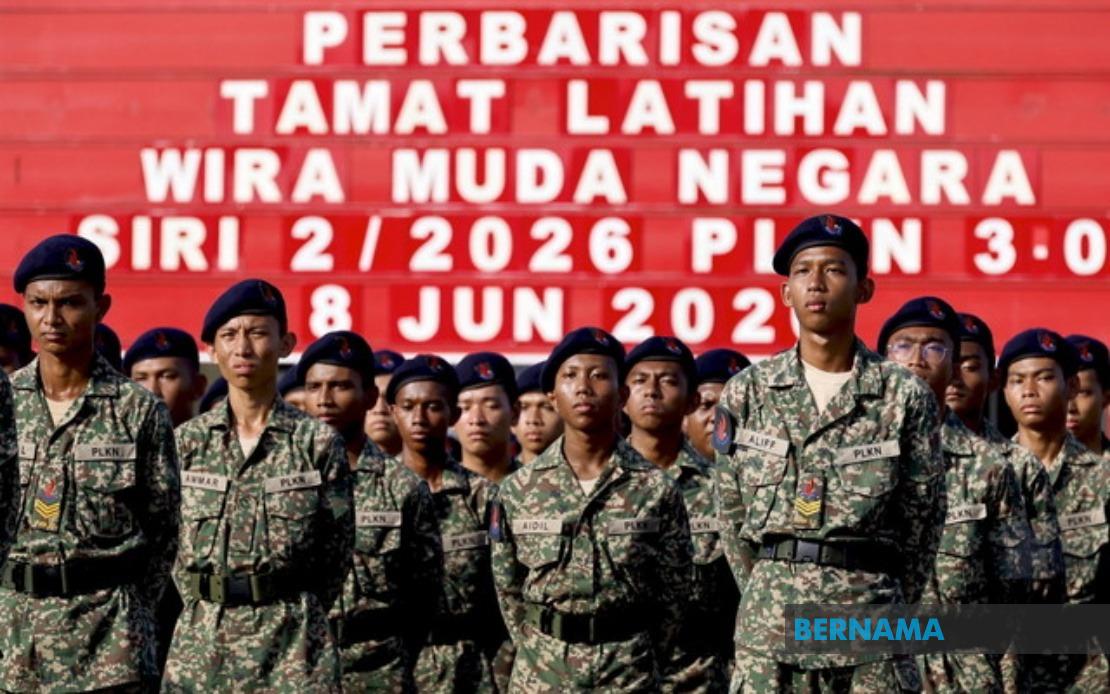
Malaysia's restructured National Service Training Programme, known as PLKN 3.0, has successfully delivered on its core objectives, with comprehensive impact assessments confirming positive outcomes across six critical dimensions of youth development, Deputy Defence Minister Adly Zahari revealed in Parliament this week. The programme, which represents a significant evolution from previous iterations, was designed to cultivate essential human capital qualities in young Malaysian citizens preparing for roles in society and potentially the public sector workforce.
The achievement of all key performance indicators marks a notable milestone for the initiative, which stipulates that participants must reach at least an 80 per cent benchmark across six designated competency areas. These developmental pillars encompass patriotism and national consciousness, social unity and cohesion, personal discipline coupled with self-directed transformation, psychological resilience and operational readiness, foundational military knowledge and skills, and a commitment to voluntary service and civic participation. The structured approach reflects a deliberate strategy to produce well-rounded individuals equipped with both technical competencies and values aligned with national aspirations.
The rigour of the assessment process underscores the programme's credibility, with evaluations conducted through multiple data-gathering methods before and after training cycles. Notably, the evaluation methodology involved partnerships with established academic institutions—Universiti Malaysia Sabah and the National Defence University of Malaysia—ensuring independent verification and scholarly rigour rather than purely administrative assessment. This collaborative approach lends weight to the findings and suggests a commitment to evidence-based programme refinement.
The performance metrics reveal particularly striking improvements in military knowledge acquisition, which surged from 56 per cent at baseline to 84 per cent post-training—representing a 28-percentage-point gain that substantially exceeds the minimum threshold. This substantial leap indicates that the training curriculum effectively imparts technical and procedural understanding to participants with minimal prior military exposure. Similarly compelling is the 8-percentage-point increase in volunteerism, rising from 75 per cent to 83 per cent, suggesting the programme successfully cultivates inclination towards community service and social contribution among youth previously untested in such dimensions.
Patriotism levels demonstrated meaningful enhancement, climbing from 82 per cent to approximately 89 per cent following the training experience, while unity consciousness registered a 9-percentage-point improvement. The most dramatic transformation occurred within the discipline and self-transformation dimension, which leapt from 77 per cent to 93 per cent—nearly a 15-point advancement that signals the programme's particular effectiveness in cultivating personal behavioural standards and internal motivation for self-improvement. Mental resilience, arguably increasingly vital in contemporary contexts, improved from 71 per cent to 83 per cent, demonstrating the programme's success in building psychological fortitude and adaptive capacity among participants.
These statistics derive specifically from the second training cohort conducted this year, providing recent validation of programme efficacy rather than relying on older data or theoretical projections. The consistency of improvements across diverse competency areas suggests the curriculum design and training delivery mechanisms function synergistically rather than developing isolated competencies, indicating thoughtful programme architecture that recognises interconnections between patriotism, discipline, resilience, and military knowledge.
While PLKN 3.0 deliberately maintains distance from functioning as direct employment placement, the programme has secured tangible career advancement incentives through partnerships with five public sector recruiting authorities. These organisations have committed to awarding additional merit points during recruitment and interview procedures to eligible PLKN 3.0 graduates, effectively translating training completion into competitive advantage within civil service pathways. This hybrid model acknowledges the programme's core developmental mission whilst recognising labour market realities and providing concrete motivation for youth participation.
Accessibility represents another deliberate design priority, with the programme explicitly structured to encompass young people from economically disadvantaged backgrounds and geographically marginalised rural communities. The integration of Technical and Vocational Education and Training modules into core training components creates bridging pathways for participants whose educational trajectories might otherwise limit advancement opportunities, addressing structural inequality whilst building human capital. This inclusive approach proves particularly significant for Malaysia's B40 demographic segment, whose development outcomes remain a pressing policy concern.
Participation momentum reflects growing acceptance of the restructured initiative, with 3,404 trainees engaged through two cohorts—1,202 during the inaugural year and 2,202 during the current second series. The growth trajectory from the first to second cohort represents an 83 per cent increase in participation, suggesting expanding awareness and acceptance among eligible youth and their families. Current infrastructure across three operational camps targets 4,200 participants by year-end, though this represents only partial realisation of planned expansion.
Capacity expansion emerges as a critical next phase, with Defence Ministry preparations advancing for nine additional training facilities projected to increase annual throughput to 9,200 trainees from the current constrained base. This approximately two-fold expansion would substantially broaden the programme's reach across the youth demographic, though implementation challenges regarding facility preparation, instructor training, and logistical coordination invariably accompany such rapid scaling. The expansion timeline and resource allocation will prove decisive for programme sustainability and penetration into target populations.
Non-completion analysis identifies health considerations and ongoing educational commitments as primary withdrawal causes among selected participants unable to report for training. This pattern suggests certain cohort segments maintain educational pursuits or face medical constraints that preclude simultaneous participation, prompting consideration of alternative scheduling models or deferred participation options that might recover such individuals without compromising programme outcomes. The relatively modest documented attrition appears manageable and does not fundamentally undermine confidence in the programme's design.
The programme's demonstrated effectiveness across multiple developmental dimensions positions PLKN 3.0 as a meaningful investment in Malaysian youth capital formation, addressing recognised gaps in discipline, resilience, and civic consciousness that policymakers increasingly identify as essential for both individual advancement and national cohesion. As regional youth development models gain prominence amid globalisation and socioeconomic disruption, Malaysia's structured approach offers comparative evidence of effectiveness in scaling character development alongside technical capability—a balance many neighbouring countries continue to refine.

