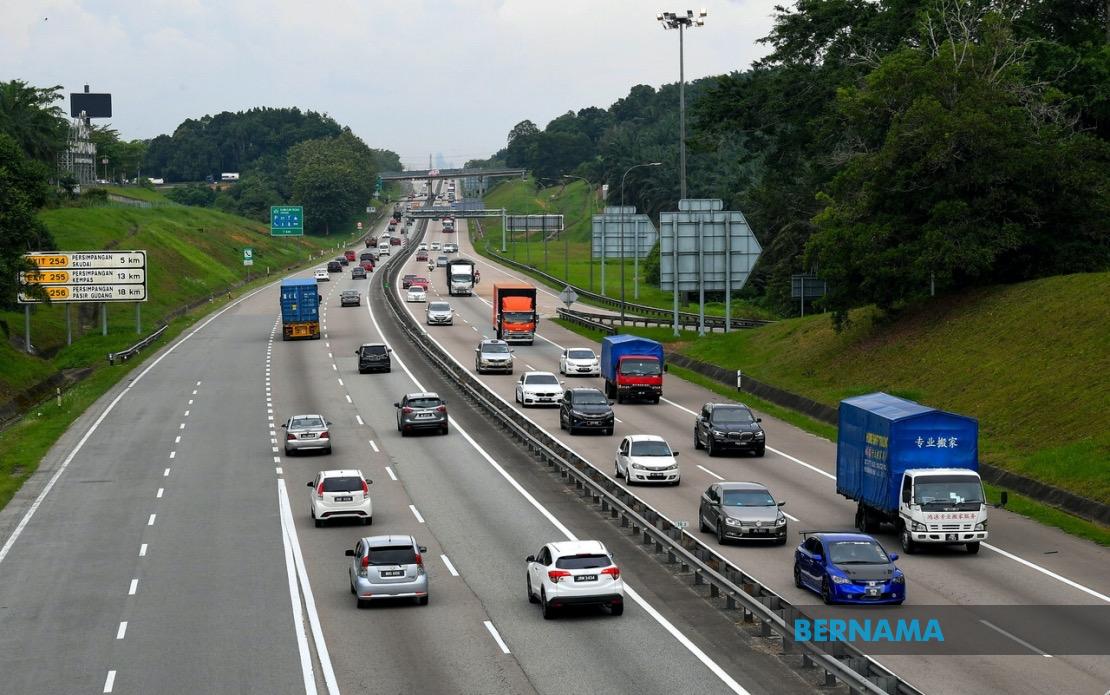
Malaysia's highway operator PLUS Malaysia Berhad is preparing for a significant surge in traffic as the nation approaches its National Day celebrations and school holiday period, forecasting up to 2.2 million vehicles traversing its network during peak days between August 28-31 and September 4-7. The projected volume reflects the annual pattern of holiday-driven congestion, as families across the country embark on interstate journeys for festivities and leisure breaks. PLUS's anticipatory messaging signals the scale of preparation required to manage the anticipated movement across the country's primary arterial routes.
To mitigate bottlenecks and distribute vehicles more evenly across travel windows, PLUS is encouraging motorists to adopt a strategic approach to their journeys rather than clustering departures during traditional peak hours. The operator has promoted its MyPLUS-TTA digital travel schedule, accessible through the PLUS mobile application, which provides real-time travel time predictions and route optimization suggestions. This technological intervention aims to flatten the traffic curve by encouraging drivers to shift departure times, thereby preventing the concentrated demand surges that typically characterise holiday periods on Malaysian highways. Such planning tools have become increasingly central to traffic management strategy, particularly as vehicle ownership continues rising across the Southeast Asian region.
Beyond route scheduling, the PLUS application offers an integrated suite of services designed to enhance journey experience and reduce friction points during heavy traffic periods. Users can access live incident reporting, estimated toll charges for their intended routes, locations of rest and service areas, and information regarding electric vehicle charging infrastructure. The inclusion of emergency assistance functionality through in-app SOS buttons provides direct connectivity to PLUS personnel, a feature that addresses safety concerns during congested conditions when accident response times may be extended. For drivers making unfamiliar journeys or using Malaysia's highway network infrequently, these digital resources substantially reduce navigation uncertainty and associated stress.
On the operational side, PLUS is implementing enhanced personnel deployment across its toll plazas and rest facilities to manage increased throughput and customer service demand. The company is intensifying PLUSRonda patrol activity—its highway patrol service—to enable faster incident response and clearance. The Traffic Monitoring Centre will maintain elevated surveillance and coordination throughout the peak period, enabling real-time adjustment of traffic management tactics based on observed conditions. This layered approach, combining personnel, technology, and coordination infrastructure, represents the institutional response to predictable but severe demand fluctuations characteristic of transportation systems in developing economies.
A notable innovation during this peak period is the activation of Smart Lanes at 33 strategically selected locations across the PLUS network. These lanes function as dynamic capacity additions that can be opened or closed based on real-time traffic conditions, typically allowing contraflow or additional directional capacity during periods of severe unidirectional congestion. Drivers must remain attentive to Smart Lane signage and maintain reduced speeds within these sections, while avoiding use of emergency lanes outside designated Smart Lane areas to prevent traffic violations and associated penalties. The deployment of 33 activation points suggests PLUS has identified specific corridor segments historically prone to bottleneck formation, concentrating resources where demand concentration is most likely.
Interagency coordination represents another critical dimension of PLUS's holiday readiness strategy. The company has established collaborative frameworks with the Royal Malaysia Police (PDRM) for traffic enforcement and incident management, the Road Transport Department (JPJ) for vehicle compliance oversight, and the Malaysian Highway Authority (LLM) for broader network coordination. This multi-agency approach reflects recognition that highway safety and efficiency require synchronized action across entities with distinct statutory responsibilities. During high-volume periods, such coordination prevents gaps in service delivery and ensures that incidents are escalated through appropriate channels with minimal delay.
Physical infrastructure maintenance, often overlooked in traffic management discussions, receives specific attention from PLUS during peak periods. Rest and service areas are being subjected to enhanced cleaning regimens and facility inspections to ensure that toilet facilities, prayer rooms, and common areas meet standards appropriate for high-volume usage. These facilities serve functional purposes beyond convenience—they provide mandatory rest opportunities for fatigue-affected drivers and enable compliance with Sharia requirements for Muslim travellers. Degraded facility conditions during peak periods can contribute indirectly to safety incidents by discouraging drivers from taking necessary rest breaks, thereby concentrating fatigue-related incidents.
PLUS is emphasizing vehicle preparation as a responsibility that extends to individual motorists rather than institutional operators alone. Drivers are advised to conduct pre-journey mechanical checks to minimize breakdown risk during peak traffic periods, when disabled vehicles contribute disproportionately to congestion through incident cascades. Additionally, PLUS recommends maintaining adequate balances on electronic toll payment systems—Touch 'n Go cards and e-wallet linked accounts—to prevent transaction failures at toll plazas that could cause delays and queue formation. The JustGO app, PLUS's proprietary payment platform, requires active payment method verification to function smoothly during high-transaction-volume periods.
Behavioural guidance issued by PLUS encompasses speed discipline, safe following distances, and distraction avoidance during periods when cognitive demands on drivers are elevated by traffic density and route complexity. The operator explicitly discourages mobile phone use while driving, addressing a documented contributor to accident risk that becomes particularly acute during congested conditions when driver attention spans are already fragmented. Fatigue management receives emphasis through encouragement of rest area utilisation, acknowledging that long-distance holiday travel combined with early morning departures creates physiological impairment risks during the actual driving period.
For travellers requiring real-time support, PLUS maintains its PLUSLine hotline at 180088-0000 for emergency assistance and general queries, while traffic information updates flow through the PLUS mobile application and social media channels. This multi-channel communication strategy ensures that drivers can access guidance through their preferred information sources, reducing barriers to obtaining assistance. Real-time information dissemination during peak periods enables dynamic route adjustments by drivers encountering unexpected congestion, converting the driver population from passive network users into active participants in congestion mitigation.
The 2.2 million daily vehicle forecast during peak periods represents not merely a traffic prediction but a reflection of Malaysia's transportation infrastructure absorption limits and the systemic challenge posed by concentrated holiday travel demand. Although PLUS's preparation encompasses technological innovation, personnel deployment, and interagency coordination, the underlying constraint remains structural—the highway network has fixed capacity that cannot be expanded through operational measures alone. Consequently, such periods reveal both the efficacy and limitations of demand management strategies that rely on voluntary traveller cooperation with advance journey planning rather than capacity augmentation. For Malaysian motorists, successful holiday travel increasingly depends on willingness to engage with digital planning tools and adopt departure strategies that prioritize flexibility over convenience of peak-hour travel.

