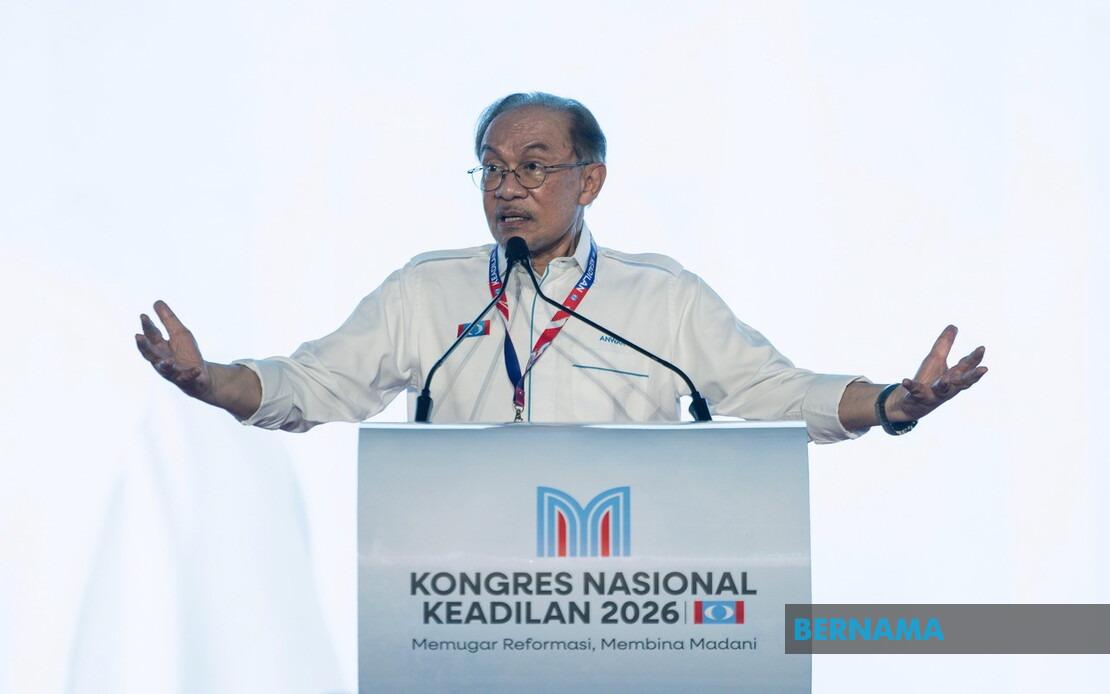
The government has committed to channelling an extra RM1 million to each of the country's parliamentary constituencies as part of efforts to strengthen welfare delivery at the grassroots level. Prime Minister Datuk Seri Anwar Ibrahim unveiled the initiative during his closing remarks at the 2026 PKR National Congress in Melaka, signalling the MADANI Government's determination to accelerate assistance to vulnerable communities while cutting through administrative red tape.
This targeted allocation represents a significant shift in how federal funds flow to local communities. Rather than requiring constituencies to navigate complex approval processes at the ministry level, the direct transfer of resources empowers elected representatives and local authorities to respond swiftly to pressing welfare issues, infrastructure gaps, and community concerns. The mechanism reflects a recognition that frontline officials and community leaders often understand local hardships better than central bureaucracies, and that faster decision-making at the constituency level can deliver tangible relief more effectively.
Anwar, who holds the dual portfolios of Prime Minister and Finance Minister, emphasised that this initiative does not come at the expense of existing programmes. The announcement underscores the government's confidence in managing public finances while expanding targeted spending. This point carries significance for Malaysian taxpayers and opposition critics who may question the fiscal sustainability of continuous allocations. The Prime Minister's assertion that funding has not been reduced suggests a reallocation of budgetary priorities rather than deficit spending, though the full budgetary implications warrant scrutiny from parliamentary observers.
The new RM1 million per constituency deployment complements an already substantial welfare architecture encompassing the Sumbangan Tunai Rahmah and Sumbangan Asas Rahmah programmes, which together mobilise RM16 billion. This layering of initiatives—from broad cash transfers to targeted constituency-level allocations—reflects a comprehensive approach to poverty mitigation and cost-of-living relief. For Malaysian households grappling with inflation and stagnant wages, the multiplicity of touchpoints offers various pathways to support, though uptake and awareness remain persistent challenges in rural and underserved urban areas.
The government's poverty reduction metrics provide important context. The hardcore poverty rate now stands at 0.09 per cent, a substantial improvement that anchors the administration's claims of economic progress trickling downward. However, relative poverty and income inequality remain pressing issues across much of Malaysia. The distinction between eliminating absolute destitution and addressing broader economic anxiety is crucial; while hardcore poverty figures suggest success in preventing extreme deprivation, the persistence of B40 and M40 financial vulnerabilities indicates that macroeconomic growth has not uniformly benefited all income groups.
Anwar's emphasis on bridging macroeconomic performance with microeconomic household realities speaks to a fundamental challenge facing the government. Flagship indicators such as GDP growth and inflation control matter little to families struggling with school fees, housing costs, or medical expenses. The breadth of assistance programmes—encompassing school subsidies, Rahmah price ceilings on essential goods, and housing finance support—suggests an attempt to address multiple pressure points simultaneously. Yet the coherence and complementarity of these overlapping programmes remain unclear, and duplicate or contradictory eligibility criteria could undermine effectiveness.
The announcement carries implicit political dimensions. By dedicating RM1 million per constituency directly to elected representatives, the government arguably strengthens the incumbency advantage, allowing sitting parliamentarians to claim credit for local improvements. PKR, as the ruling coalition's leading component party, benefits particularly from this direct resource allocation, potentially bolstering grassroots support ahead of electoral cycles. Opposition parties will likely scrutinise whether allocation mechanisms favour coalition-held constituencies or whether distribution truly follows need-based criteria.
For Malaysian states and local authorities, the new allocation presents both opportunities and administrative burdens. Determining which local needs receive priority, ensuring transparent procurement, and preventing rent-seeking or patronage in fund deployment will test the integrity of constituency-level governance. Without robust oversight mechanisms and community participation in budgeting processes, the funds risk being diverted toward politically connected contractors or projects that generate limited public benefit. The Prime Minister's call for party machinery to explain initiatives and ensure uptake suggests awareness of implementation risks, yet concrete accountability measures remain unspecified.
Regional implications merit consideration as well. In Southeast Asia, where several governments struggle with governance capacity and resource allocation inefficiencies, Malaysia's approach of devolving decision-making offers a potential model—or cautionary tale, depending on execution. Thailand, the Philippines, and Indonesia grapple with similar challenges of translating national prosperity into local welfare gains; Malaysia's experience with this latest allocation experiment could inform regional debates on decentralisation and grassroots development financing.
The sustainability of continuous allocations also warrants scrutiny. While the RM1 million per constituency announcement demonstrates political commitment to grassroots assistance, the cumulative long-term fiscal footprint remains uncertain. With 222 parliamentary constituencies nationwide, the annual cost of this initiative approaches RM222 million—a manageable figure for a federal budget exceeding RM300 billion, yet subject to pressure should economic growth decelerate or revenue underperforms. Future governments might face difficult choices between maintaining this commitment and addressing other pressing expenditures such as defence, education, or infrastructure development.
Effectiveness ultimately depends on implementation fidelity and community awareness. Anwar's directive to party leaders and grassroots machinery to communicate these schemes signals recognition that even well-designed programmes fail if constituents remain ignorant of eligibility criteria or application procedures. The digital divide, literacy variations, and language barriers in multi-ethnic Malaysia mean that some of the most vulnerable populations may struggle to access assistance without proactive outreach and simplified application processes. Whether constituency-level representatives possess the administrative capacity and commitment to bridge this awareness gap remains an open question.
The announcement reflects broader themes within the MADANI administration: an emphasis on inclusive growth, direct assistance over structural economic transformation, and reliance on targeted spending rather than systemic reforms. For Malaysian voters evaluating government performance, the visible roll-out of new allocations provides tangible evidence of effort, though sustained poverty reduction and cost-of-living relief depend on consistency, quality implementation, and complementary policies addressing underlying structural economic challenges.

