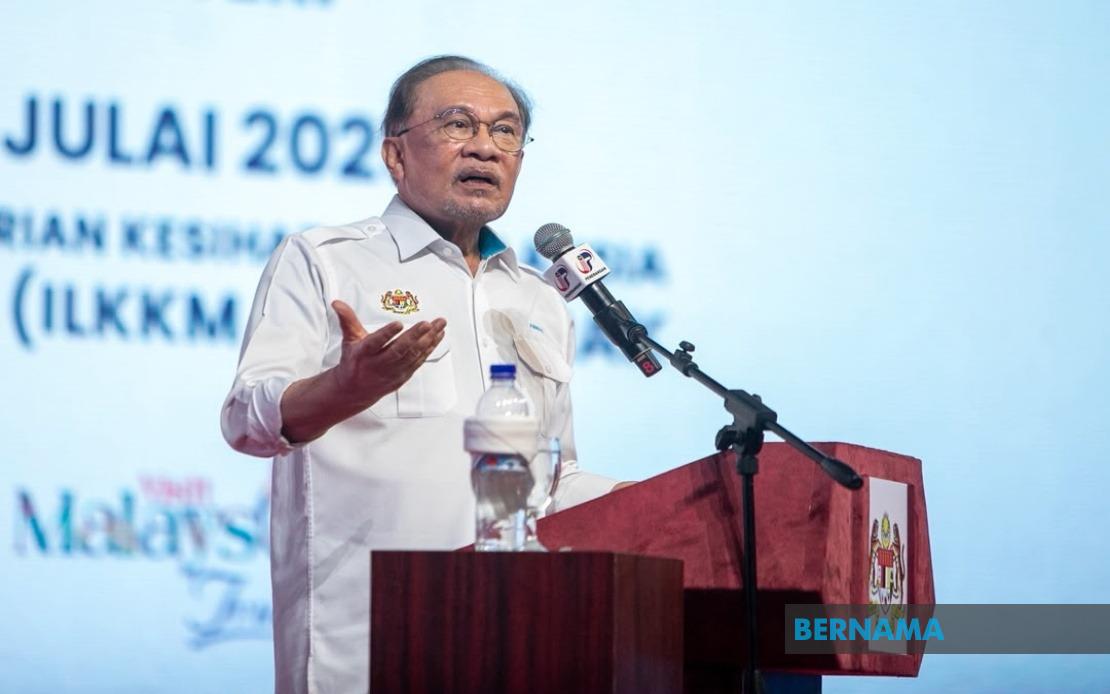
Prime Minister Datuk Seri Anwar Ibrahim has issued a pointed appeal to Malaysia's younger generation, urging them to move beyond superficial patriotism and develop a genuine understanding of the sacrifices embedded within the nation's independence struggle. Speaking during the launch of the 2026 National Month and Fly the Jalur Gemilang Campaign in Ipoh on July 19, Anwar framed national pride not as an automatic sentiment but as something that must be earned through historical awareness and reflection.
Anwar's remarks reflect a growing concern among Malaysia's leadership that successive generations lack adequate connection to the nation's founding narrative. The Prime Minister articulated this through a three-step framework: revisiting history's difficult pages, expressing unity through national symbols like the flag, and channeling that understanding toward collective progress. This educational approach suggests the government views the 2026 campaign as more than ceremonial pageantry, but rather as an opportunity to strengthen civic consciousness at a time of significant socioeconomic change.
Central to Anwar's message was the graphic nature of the independence struggle itself. By invoking the language of blood, sweat, and tears, he deliberately emphasized that Malaysia's sovereignty was not granted graciously but extracted through protracted effort and personal cost. This rhetorical choice carries particular weight given Malaysia's complex post-colonial history, where the transition from British rule involved negotiation alongside nationalist agitation. Anwar's direct address to "children" personalizes the message, suggesting an intergenerational responsibility to honor those who fought.
The timing of this campaign launch in Ipoh, the capital of Perak, carries historical significance. Perak was among the first Malay states to establish organized resistance to colonial administration and played a crucial role in Malaysia's path toward independence. By choosing this location, the government signals that understanding independence requires engaging with regional history and recognizing that the struggle was not monolithic but involved diverse communities and geographies across what would become Malaysia.
The presence of several cabinet ministers—including Communications Minister Datuk Seri Fahmi Fadzil, National Unity Minister Datuk Aaron Ago Dagang, and Perak Menteri Besar Datuk Seri Saarani Mohamad—indicates this initiative commands high-level government attention. The inclusion of the National Unity Ministry is particularly noteworthy, as it underscores the government's view that historical literacy serves broader nation-building objectives. Unity, from this perspective, flows from shared understanding rather than imposed consensus.
For Malaysian readers, Anwar's emphasis on appreciating rather than merely celebrating independence carries implications for contemporary civic engagement. The message suggests that authentic patriotism requires intellectual effort—citizens must study, reflect, and internalize rather than passively accept national narratives. This positioning could influence how schools approach history curricula and how public institutions frame national commemorations.
The Jalur Gemilang campaign itself serves as a tangible expression of these intangible ideals. A national flag flying from a home or building becomes, in Anwar's framing, not decoration but a statement of understanding and commitment. This transforms a visible symbol into something far more substantive—a marker of citizens who have absorbed historical lessons and chosen to participate consciously in the national project.
Regionally, Anwar's message resonates with broader Southeast Asian conversations about post-independence nation-building. Many countries in the region face similar challenges: how to maintain historical consciousness among generations born well after independence, how to balance modernization with continuity, and how to foster unity amidst diversity. Malaysia's approach—combining historical education, symbolic assertion, and leadership rhetoric—offers a template that other ASEAN nations are observing.
The campaign's 2026 timing deserves consideration as well. Malaysia will celebrate 69 years of independence that year, well into the nation's maturity as a sovereign state. Yet rather than assuming that independence is settled history, the government demonstrates that each generation must recommit to understanding its foundations. This suggests recognition that complacency about national identity poses genuine risks to social cohesion.
Anwar's insistence that young people not forget the struggles of their predecessors also implies a critique of contemporary attitudes. There may be an undertone of concern that material prosperity and technological progress have created distance from the historical consciousness that sustained earlier generations. By reclaiming the language of sacrifice and struggle, the Prime Minister attempts to bridge that gap and create continuity between past and present.
The 2026 National Month and Fly the Jalur Gemilang Campaign represents more than ceremonial patriotism; it reflects deliberate state strategy to deepen historical awareness and strengthen national consciousness. Anwar's framing positions independence not as a historical achievement to be archived but as a living responsibility that each generation must actively understand and defend. For Malaysian society, the campaign's success will depend on whether this message translates into sustained engagement with history or remains confined to the speeches and ceremonies of the campaign period itself.

