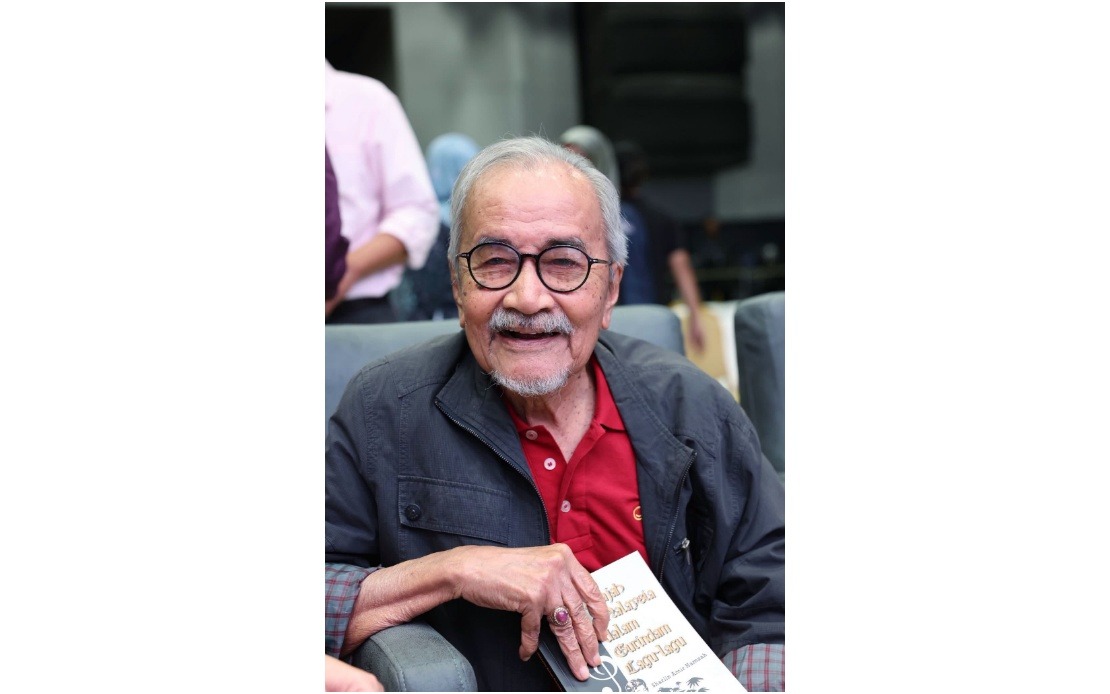
Prime Minister Datuk Seri Anwar Ibrahim has used the occasion of Datuk Rahim Razali's 87th birthday to publicly recognise the towering contributions of one of Malaysia's most respected cultural custodians. In a Facebook tribute, Anwar highlighted how Rahim has shaped the nation's artistic identity through decades of creative work that consistently emphasised human values and national pride. The message underscores the government's continued investment in honouring figures who have defined the country's soft power through the arts.
Rahim Razali stands as one of the most multifaceted talents in Malaysian creative history. Born on July 3, 1939 in Batu Gajah, Perak, he has spent more than six decades navigating an industry that would test most practitioners' versatility. His career trajectory reveals the breadth of his influence across cinema, television, journalism and sports broadcasting—a rare combination that demonstrates the interconnectedness of Malaysia's media and cultural spheres during transformative decades.
As a filmmaker and actor, Rahim built a body of work that consistently grappled with questions of national identity and social values. The film Matinya Seorang Patriot, in which he starred, exemplifies his commitment to narratives centred on patriotism and civic responsibility. This thematic consistency suggests an artist deeply engaged with Malaysia's self-understanding, particularly during periods when the nation was consolidating its post-independence identity.
Academic recognition from institutions like the Malaysian Film Festival has validated his artistic achievements. Multiple Best Director and Best Male Actor awards demonstrate his excellence across different creative roles. Such institutional acknowledgement is significant because it places Rahim within the formal pantheon of Malaysian cinema, ensuring that younger filmmakers and actors studying the national film canon encounter his work as foundational rather than peripheral.
Anwar's invocation of Rahim as an inspiration for "future generations of artistes and art enthusiasts" carries particular weight given the government's current cultural policy environment. By explicitly connecting historical achievement to future potential, the Prime Minister signals that the administration values continuity in creative practice—the transmission of established artistic values to emerging talent. This framing positions cultural work as integral to nation-building rather than supplementary entertainment.
The significance of such public recognition at the highest political level reflects evolving attitudes toward the arts in Malaysia. In many Southeast Asian democracies, cultural figures occupy ambiguous spaces in political discourse, sometimes celebrated, sometimes marginalised depending on political convenience. Anwar's substantive acknowledgement of Rahim's specific contributions—emphasising how his works "highlight human values, culture and national identity"—suggests a deliberate alignment between government messaging and established cultural authority.
Rahim's career also illuminates a period in Malaysian media history when individual practitioners could command influence across multiple platforms. His work in journalism and sports broadcasting, combined with film direction and acting, would be exceptionally rare today given the specialisation demanded by contemporary media industries. This versatility reflected an earlier era when creative professionals could develop multidisciplinary expertise relatively seamlessly.
The Prime Minister's prayer for Rahim's continued health and capacity to contribute to national arts and culture reveals an implicit concern about generational knowledge transfer. As Malaysia's most celebrated cultural figures age, questions about how their accumulated experience and aesthetic vision will be preserved become increasingly urgent. Public recognition of senior artists serves partly as a cultural preservation mechanism, ensuring documented appreciation of their influence.
Rahim Razali's career trajectory also provides context for understanding how Malaysian cinema and performing arts evolved during critical national periods. An artist who has worked continuously since the 1960s carries lived experience of how Malaysia's creative industries responded to political shifts, economic transformation, and changing social attitudes. His sustained productivity across multiple decades suggests resilience and relevance—qualities that warrant the government's acknowledgement as the country navigates contemporary challenges to cultural production.
The birthday tribute, while seemingly ceremonial, functions as a broader statement about institutional memory and national values. By publicly honouring an octogenarian cultural figure, the government implicitly asserts that artistic contribution matters, that longevity in creative work commands respect, and that the arts remain central to Malaysian identity. For a region where cultural policy sometimes struggles for political priority, such gestures—when delivered by a sitting Prime Minister—carry symbolic significance beyond the immediate occasion.

