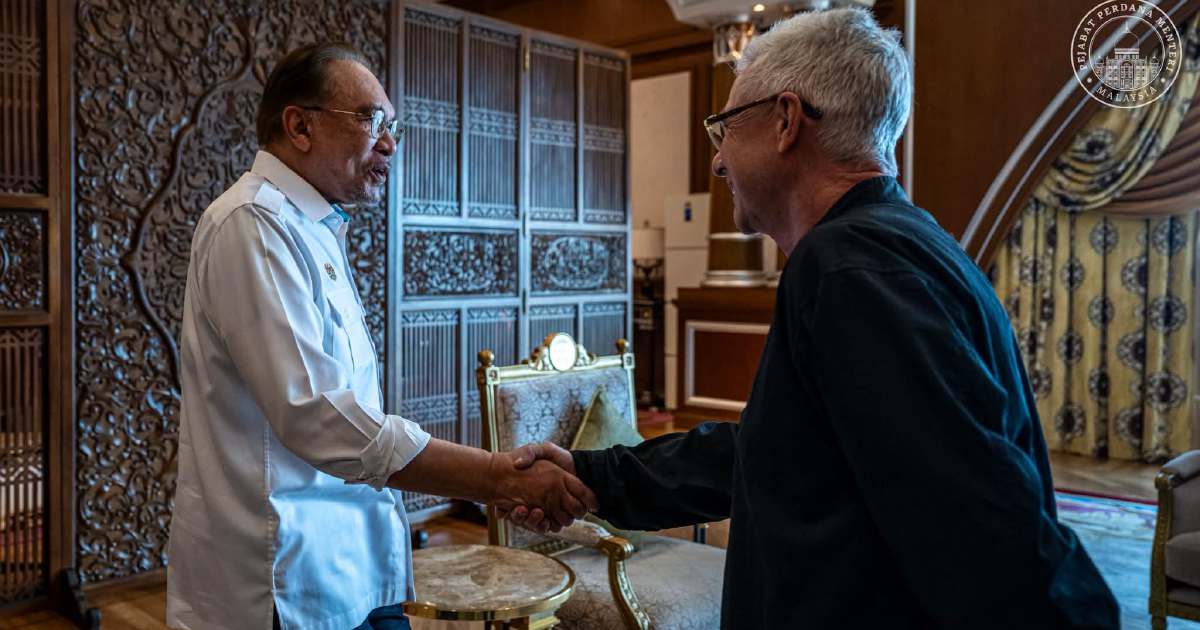
Prime Minister Datuk Seri Anwar Ibrahim convened with Michael Roche, executive director of the Singapore Grand Prix, to exchange insights on world-class motorsport event administration and operational excellence. The meeting, held in Kuala Lumpur, comes as preparations intensify for Malaysia's upcoming Formula 1 Gulf Air Bahrain Grand Prix, scheduled to take place at the Sepang International Circuit in October.
The engagement between the Prime Minister and the Singapore GP leadership reflects the strategic importance Malaysia places on its automotive and motorsport sector. Singapore's Grand Prix has established itself as one of Asia's most prestigious Formula 1 events since its debut in 2008, earning recognition for its innovative night-race format and seamless execution. By consulting with those directly responsible for Singapore's success, Malaysia aims to enhance its own hosting capabilities and ensure the Sepang event meets international standards that satisfy both governing bodies and spectators.
The Sepang International Circuit has been a fixture on the Formula 1 calendar since 1999, hosting the Malaysian Grand Prix for two decades before transitioning to different race designations. The venue remains one of Asia's most technically demanding circuits, featuring sweeping curves and high-speed sections that challenge drivers and showcase automotive engineering. Malaysia's motorsport infrastructure, built around this championship-standard facility, positions the nation as a serious competitor in Asia's motorsport tourism market.
Michael Roche's expertise spans decades of international motor racing management, and his insights into crowd control, broadcast logistics, sponsorship coordination, and emergency services integration would prove invaluable for the Sepang operation. Singapore's ability to manage over 400,000 spectators across a race weekend while maintaining safety and entertainment value demonstrates operational mastery that transcends routine event management. The knowledge exchange likely covered crowd flow dynamics, traffic management for a city-adjacent circuit, and maximisation of corporate hospitality opportunities that generate substantial revenue.
Formula 1 races command extraordinary logistical complexity beyond the two-hour competition itself. International broadcasters require state-of-the-art technical infrastructure, teams need secure facilities for confidential automotive development, and spectators demand comprehensive amenities including food, sanitation, and safety provisions. Every detail, from paddock access protocols to emergency medical positioning, requires meticulous planning. Singapore's proven track record executing this demanding checklist year after year makes it a template worth studying.
The October timing for Malaysia's grand prix aligns with the F1 calendar's Asian leg, making it strategically positioned to attract regional tourism and international visitors. Hotels, restaurants, transportation networks, and retail businesses throughout the Klang Valley benefit from the influx of enthusiasts, journalists, and VIP guests. The economic multiplier effect extends well beyond the circuit, supporting adjacent industries and boosting Malaysia's international profile as a premier sporting destination.
Anwar's personal involvement in these preparatory discussions signals governmental commitment to motorsport as more than entertainment. The automotive industry remains significant to Malaysia's manufacturing base, with multiple multinational facilities and component suppliers operating throughout the nation. Grand Prix events serve as global showcases for engineering prowess and industrial capability, attracting investment and talent to hosting nations. By elevating the hosting experience, Malaysia reinforces its competitive positioning within Southeast Asia's economic landscape.
The dialogue between Malaysian and Singapore leadership on motorsport excellence represents pragmatic regional cooperation. Despite competitive dynamics in other sectors, both nations benefit from establishing Southeast Asia as a globally recognised motorsport destination. Shared learning on event management, safety protocols, and spectator experience raises the standard across the region, creating a virtuous cycle where higher-quality events attract greater international attention and sponsorship investment.
Sepang's October date and established infrastructure provide foundation advantages, yet execution ultimately determines success. International media coverage of Malaysian grands prix reaches audiences numbering in the hundreds of millions globally, translating broadcast attention into brand value for the host nation. Seamless operations, memorable experiences, and professional management determine whether viewers develop positive associations with Malaysia or leave disappointed.
The consultation underscores recognition that hosting Formula 1 demands continuous improvement rather than complacency. Circuit upgrades, hospitality enhancements, and technological innovations must evolve to maintain competitiveness within the calendar. Teams and sponsors increasingly select races based on fan experience quality, safety records, and operational reputation. By engaging proactively with Singapore's leadership, Malaysian officials demonstrate commitment to excellence and willingness to learn from regional peers' demonstrated expertise.
This preparatory work extends beyond October's single event, establishing Malaysia's credibility as a long-term motorsport host. Should the upcoming grand prix execute flawlessly, it strengthens Malaysia's negotiating position for future calendar placements and potentially attracts additional international racing series. The cumulative effect of hosting world-class events builds institutional knowledge, develops trained personnel, and establishes Malaysia as a destination serious about motorsport tourism within the Asia-Pacific region.

